
For commercial buildings, solar energy and battery storage are increasingly being combined to reduce electricity costs, improve energy independence, and provide backup capability. However, the performance of a solar-plus-storage system depends heavily on whether the inverter capacity, solar generation, and battery storage are properly balanced.
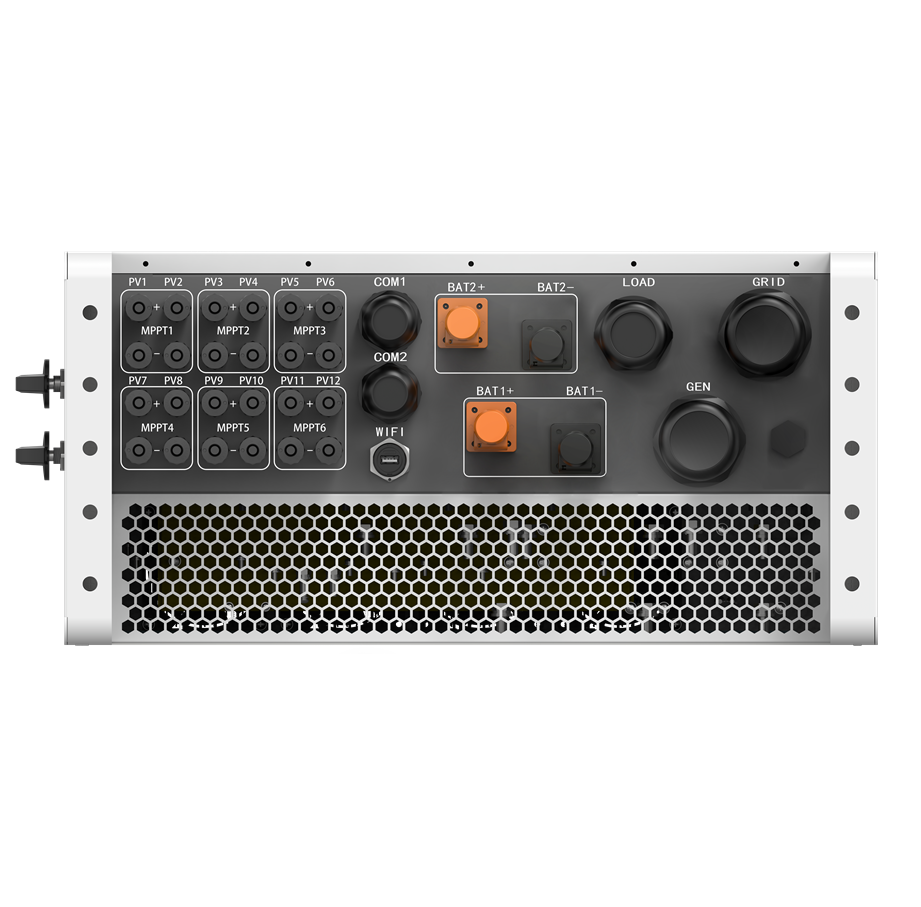
A 60kW hybrid solar inverter is designed for commercial applications that require coordinated control between photovoltaic (PV) generation, battery storage, loads, and the grid. Unlike a standard solar inverter, it can manage both solar conversion and battery charging or discharging within one integrated system.
Selecting the right configuration requires understanding how solar capacity and battery storage work together. An effective design should not only meet current energy demand but also support future operational requirements.
Why a 60kW Hybrid Solar Inverter Is Suitable for Commercial Applications
Commercial buildings often have more complex energy patterns than residential properties. Electricity consumption may vary significantly throughout the day due to office equipment, production processes, HVAC systems, and other high-power loads.
A 60kW hybrid solar inverter provides a balance between system scale and operational flexibility. It is typically suitable for small to medium commercial facilities that need greater control over renewable energy utilization without immediately moving to large utility-scale systems.
The main advantage of a hybrid configuration is that it allows solar energy to be used in different ways. During periods of strong solar production, electricity can directly supply building loads. Excess energy can be stored in batteries and used later when solar output decreases or electricity demand increases.
This flexibility makes hybrid systems valuable for businesses that want to improve energy efficiency while maintaining reliable power availability.
How to Match Solar Capacity with a 60kW Inverter
One of the most important design considerations is the relationship between PV capacity and inverter power rating.
A 60kW inverter does not necessarily mean the solar array must be exactly 60kW. In many commercial projects, the installed PV capacity may be adjusted according to local sunlight conditions, available roof space, and expected electricity consumption.
If the solar array capacity is too small, the inverter may not operate close to its designed capability, reducing the overall value of the system. On the other hand, if the PV capacity is too large, excess generation may exceed what the inverter can process during peak production periods.
The ideal balance depends on the building’s energy profile. Facilities with consistent daytime electricity demand may prioritize direct solar consumption, while buildings with lower daytime demand may benefit from storing more excess solar energy.
A proper system design evaluates solar production patterns rather than focusing only on equipment ratings.
Determining the Right Battery Size for Energy Storage
Battery capacity is another key factor when designing a hybrid solar system. The battery determines how much solar energy can be stored and how long stored electricity can support the building.
The required battery size depends on the purpose of the system. A facility focused on reducing electricity costs may need enough storage for daily energy shifting, charging batteries when electricity is available and using stored energy during expensive periods.
For backup applications, battery sizing is based on critical load requirements and expected backup duration. A building that only needs emergency support for essential equipment will require a different battery configuration compared with a facility aiming for longer independent operation.
Hybrid energy storage solutions allow businesses to combine solar generation, battery storage, and grid power in a flexible way. The system can be configured according to energy priorities, whether the goal is demand management, backup power, or renewable energy optimization.
Managing Different Operating Modes with Hybrid Inverter Technology
A major difference between hybrid and conventional inverters is the ability to manage multiple energy sources.
In a typical grid-connected system, the inverter converts solar energy and sends electricity to building loads or the grid. A hybrid inverter adds battery management functions, allowing stored energy to be used when needed.
For commercial users, this creates several operating options:
During normal operation, solar power can supply building loads while charging batteries with excess energy.
During peak demand periods, stored battery energy can reduce dependence on grid electricity.
During grid interruptions, the system can provide backup power for selected critical loads.
An on-off-grid hybrid inverter provides additional flexibility because it can support both grid-connected operation and backup operation. This makes it suitable for businesses that require energy resilience while maintaining normal grid access.
What Factors Determine the Best Commercial Hybrid Inverter Choice?
Many businesses ask, “Which inverter is best for commercial use?” The answer depends on the facility’s energy objectives rather than inverter capacity alone.
For a commercial project, several factors should be evaluated:
First, the inverter power rating should match the expected electrical demand. A 60kW system should be selected based on actual load requirements instead of estimated consumption.
Second, battery compatibility is important. The inverter should support the required battery voltage range, charging strategy, and communication functions.
Third, control capability matters. Commercial systems often require monitoring, energy scheduling, and coordination between solar generation, storage, and grid power.
Fourth, future expansion should be considered. Energy demand may increase as businesses add equipment, electric vehicle charging, or additional renewable generation.
At Enjoypowers, system design focuses on matching inverter capability with practical commercial energy requirements instead of applying a fixed configuration to every project.
The Role of Advanced Energy Management in 60kW Systems
A hybrid solar inverter is not only a power conversion device; it is also part of a broader energy management system.
Modern commercial facilities need better visibility into how energy is produced, stored, and consumed. Monitoring functions help operators understand solar generation patterns, battery performance, and electricity usage.
With intelligent control strategies, businesses can optimize when to charge batteries, when to use stored energy, and how to respond to changing electricity conditions.
A properly designed 60kW hybrid solar inverter system can therefore support both immediate energy savings and long-term operational flexibility.
Conclusion
A 60kW hybrid solar inverter provides a practical solution for commercial buildings that want to combine solar generation with battery storage. However, achieving the best performance requires careful coordination between PV capacity, battery size, load demand, and operating goals.
The right system is not determined by inverter power alone. Businesses need to evaluate their energy consumption patterns, backup requirements, and future expansion plans before selecting equipment.
By creating a balanced relationship between solar production and energy storage, commercial users can improve renewable energy utilization, strengthen power reliability, and build a more flexible energy system. Enjoypowers continues to support practical energy storage applications through advanced inverter and power management technologies.