
Power quality that holds up when your facility actually runs.
Four ways industrial sites lose money to power quality problems without realizing it.
Arc furnaces, large welders, and rolling mills cause sub-second voltage flicker that doesn’t trip protection but does cause: lighting flicker (operator complaints), VFD trips on sensitive lines, sensitive instrumentation errors, and weld quality variation. SVG with fast response stabilizes the supply.
Two architectural choices, depending on your harmonic profile.
Industrial power quality has two distinct technology paths. Choose based on your dominant problem (harmonics vs steady reactive demand) and cost sensitivity per kVAR.
- Harmonic + reactive + unbalance from one product family
- Adapts to future load changes via firmware
- SinL Pro: 5 ms response (SiC) · SinE: 10 ms (IGBT)
- Easy to expand modularly as plant grows
- 40-60% lower CapEx vs pure SVG for large reactive demand
- Capacitors for bulk · SVG for precision
- Integrates existing capacitor banks
- Best $/kVAR economics at MVAR scale
Three sized configurations covering 90% of industrial installations.
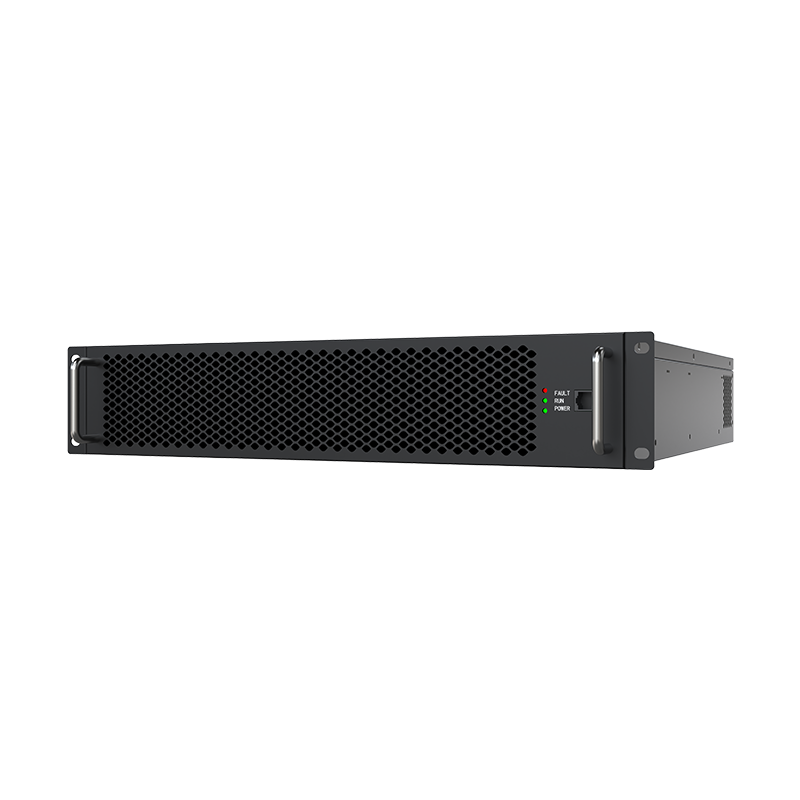
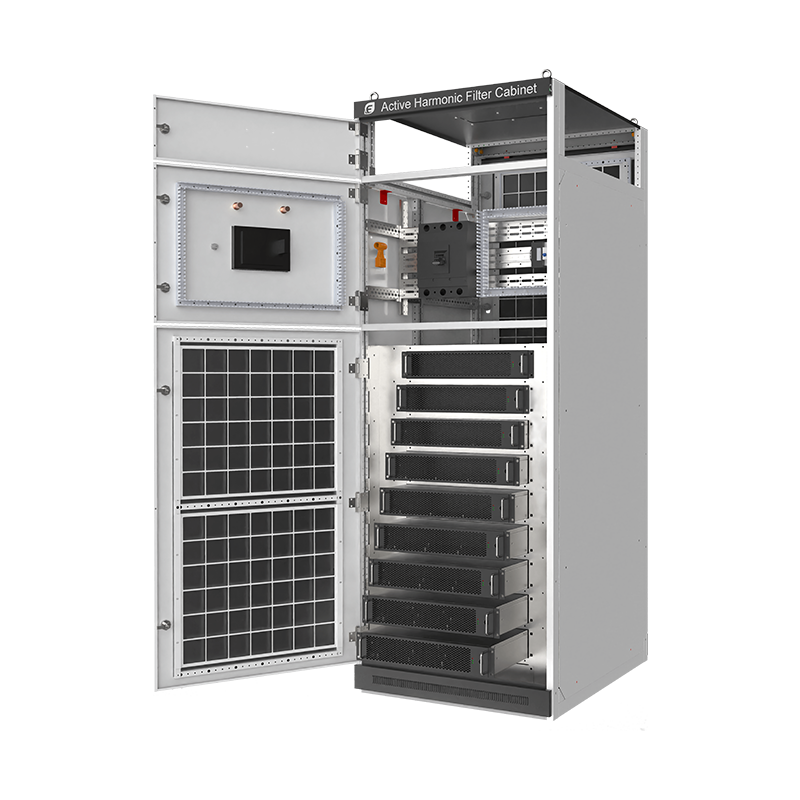
- AHF: 2-5 × SinE-AHF-100/150/200A modules in cabinet OR SinL Pro for high-density
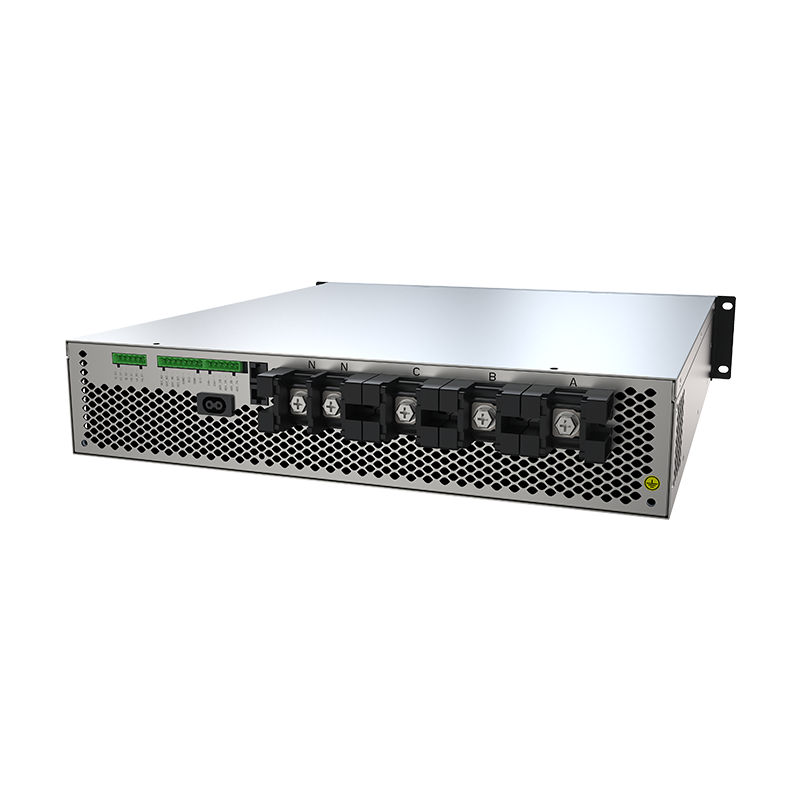
- SVG: SinE-SVG modules sized to reactive demand
- Voltage: 400 V (most common) or 690 V for large motors
- Form factor: Single SinE Cabinet (4 modules) or wall-mount
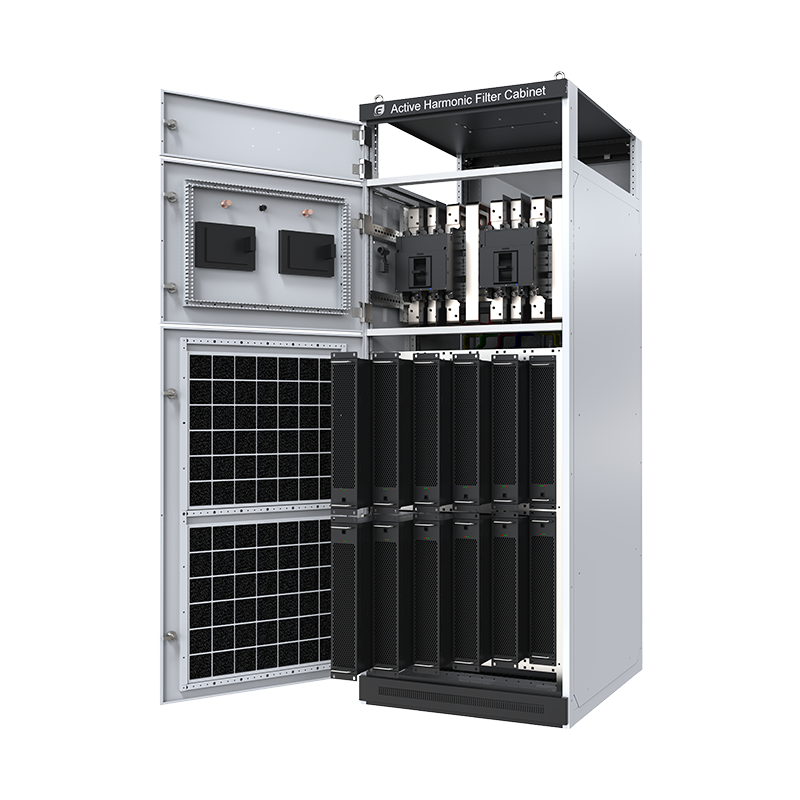
- Cabinet: Multiple SinE or SinL Pro Cabinets (up to 12 modules per SinL Pro Cabinet)
- Mixed: AHF + SVG slots configurable per cabinet
- Voltage: 400 V / 690 V (most common at this scale)
- Coordination: Multi-cabinet master-slave control
- SVG: 30-50% of total — handles fast-varying portion
- Capacitor bank: 50-70% via thyristor-switched capacitors
- Controller: Coordinated for seamless capacitor switching
- Voltage: 400 V / 690 V (MV step-down via dedicated transformer)
Questions our application engineers get most often.
We need: (1) 15-minute interval power data from one operating week (or longer); (2) representative harmonic spectrum measurement at the PCC; (3) load list with dominant problem loads identified (VFDs, welders, arc furnaces, rectifiers).
For sites without measurement equipment, we offer remote harmonic survey services — connect a power-quality logger for one week, ship it back, we analyze and quote.
From contract to commissioned: typically 12-16 weeks for cabinet-integrated systems (most components factory-pre-integrated). 8-10 weeks for single-cabinet installations.
The longest single phase is usually the utility shutdown window for installation — we work with the site’s planned maintenance shutdowns when possible to minimize production disruption.
Almost always integrate, not replace. The existing fixed capacitor banks (or step-switched banks) continue to handle bulk reactive power. The new SVG retrofits in parallel, handling the harmonics, voltage stabilization, and fine-tuning that capacitors can’t.
Integration is straightforward — SVG monitors the bus voltage and current; capacitor bank controls stay independent. Total project CapEx is significantly less than full SVG replacement.
Resonance is a risk with passive (capacitor-only) filtering — capacitor impedance combined with transformer reactance creates resonance peaks. With active filtering, the filter monitors the network in real-time and actively avoids creating resonance conditions.
Pre-installation harmonic study (we do these as part of project engineering) identifies any potential resonance frequencies. Post-installation commissioning verifies no resonance is created.