
Energy storage systems are becoming increasingly important for industrial facilities, commercial buildings, and utility projects that require stable, flexible, and efficient power management. However, one common question among project developers and system integrators is whether a Power Conversion System (PCS) is the same as an inverter.
Although both technologies involve power conversion, they serve different roles in modern energy systems. An inverter mainly focuses on converting DC electricity into AC electricity, while a PCS provides broader control over battery charging, discharging, grid interaction, and energy management.
At Enjoypowers, we focus on developing grid-forming power conversion solutions designed for demanding industrial environments. Our energy storage PCS and power quality solutions support applications across more than 70 countries, helping industries improve reliability, efficiency, and power stability.
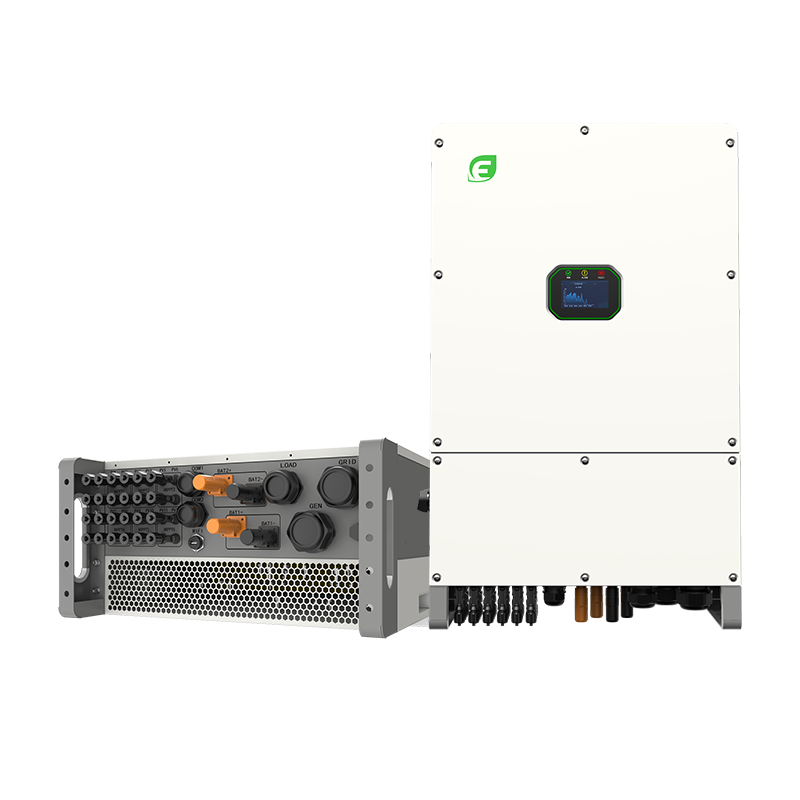
Power Conversion System and Inverter: Similar Function, Different Roles
An inverter is a key electronic device that converts direct current (DC) from sources such as solar panels or batteries into alternating current (AC) that can be used by electrical loads or connected to the grid. It is widely applied in photovoltaic systems, backup power solutions, and renewable energy installations.
A Power Conversion System (PCS) is a key component in energy storage systems that integrates bidirectional AC/DC conversion, control, and communication functions. A PCS integrates bidirectional AC/DC conversion, control systems, and communication functions to manage both charging and discharging processes of batteries.
For battery energy storage systems, electricity must flow in two directions. During charging, the PCS converts AC power from the grid into DC power stored in batteries. During discharge, it converts stored DC energy back into AC power. This bidirectional capability is one of the most important differences between a traditional inverter and an energy storage PCS.
Why Energy Storage PCS Requires More Advanced Control
The growth of renewable energy has created new challenges for industrial power systems. Solar and wind generation can fluctuate, while factories and critical facilities require continuous and stable electricity. This is where an energy storage PCS provides additional value beyond basic DC-to-AC conversion.
A modern PCS manages active and reactive power, supports grid stability, and communicates with battery management systems (BMS) and energy management systems (EMS). These functions enable applications such as peak shaving, frequency regulation, backup power, and microgrid operation.
For industrial users, power quality is another major concern. Voltage fluctuations, harmonics, and unstable grid conditions can affect sensitive equipment and production efficiency. By combining energy storage with advanced control technology, a PCS can contribute to better active power quality and more reliable electrical performance.
Energy Storage PCS Supports Industrial Energy Management
For commercial and industrial projects, selecting the right power conversion technology directly affects system performance and investment returns. An energy storage PCS allows businesses to optimize energy usage by storing electricity during low-demand periods and releasing it during peak demand.
Enjoypowers provides C&I and utility-scale PCS solutions designed for different energy storage requirements. Our product portfolio covers systems from 30kW to 100MW, supporting grid-connected, hybrid, and microgrid applications.
For example, our 105/125kW BESS PCS modules support flexible configurations and feature a wide DC voltage range suitable for commercial and industrial energy storage projects. The modules support advanced operating modes, including grid-connected operation, off-grid parallel operation, and black start functions.
For larger-scale applications, our 215/250kW BESS PCS provides high-voltage energy conversion with a 1500V DC design, IP66 protection, and a maximum conversion efficiency of up to 99%. These features make it suitable for harsh environments and large energy storage installations.
Choosing Between an Inverter and a PCS for Your Project
The choice between an inverter and a PCS depends on the application requirements. For simple renewable energy systems where the primary goal is converting generated DC power into usable AC power, an inverter may be sufficient.
However, for battery energy storage projects that require flexible energy management, grid support, and long-term operational reliability, an energy storage PCS may be more suitable for projects requiring bidirectional energy management and grid support functions. It provides more comprehensive control and allows system operators to maximize battery value.
Industrial users should consider factors such as power capacity, grid conditions, scalability, response speed, and future expansion needs. A well-designed PCS solution can help reduce energy costs, improve resilience, and support smarter energy strategies.
Building Reliable Energy Systems with Advanced Power Conversion
The difference between a PCS and an inverter is not only about conversion direction but also about system intelligence and control capability. While an inverter performs essential DC-to-AC conversion, a PCS acts as the energy management center of modern storage systems.
At Enjoypowers, we develop power conversion technologies that help businesses achieve reliable energy storage and improved power performance. From off-grid microgrids in Myanmar to industrial facilities in Europe and energy projects worldwide, our solutions are designed for real operational challenges. With advanced energy storage PCS technology, we continue helping customers build more stable, efficient, and sustainable power systems.