
Energy costs, demand charges, and power reliability have become major concerns for facility managers across commercial and industrial sectors. As electricity prices continue to fluctuate and businesses require stronger energy resilience, investing in the right storage solution has become a strategic decision rather than a simple equipment purchase.
At Enjoypowers, we develop C&I energy storage systems designed to help factories, commercial buildings, and industrial parks reduce energy expenses, improve backup capabilities, and optimize power usage. Our C&I ESS solution is sized according to real site conditions, including interval meter data, peak demand, energy consumption patterns, and tariff structures.
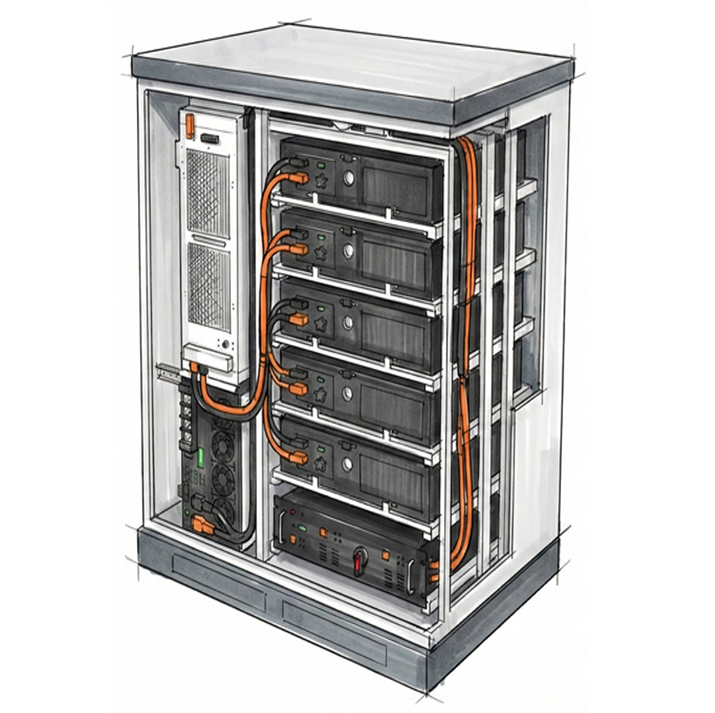
Why Facility Managers Are Turning to C&I Energy Storage Systems
Traditional energy management strategies often focus on reducing consumption, but modern facilities need more flexible approaches. Energy storage allows businesses to store electricity when costs are lower and use stored energy during peak demand periods.
For commercial and industrial users, demand charges can represent a significant portion of monthly electricity bills. A properly designed C&I energy storage system can reduce peak power demand through peak shaving, helping facilities avoid expensive demand spikes.
Beyond cost savings, energy storage also improves operational resilience. Manufacturing plants, hospitals, industrial parks, and commercial buildings can use stored energy as backup power during grid interruptions, protecting critical operations from unexpected downtime.
Key Considerations Before Selecting a C&I ESS Solution
Choosing a suitable C&I ESS solution requires a detailed understanding of the facility’s energy profile. Facility managers should evaluate peak load, daily energy consumption, backup requirements, available installation space, and local electricity pricing structures.
Battery capacity is one of the most important factors. A system that is too small may not provide sufficient savings or backup duration, while an oversized system may increase unnecessary investment costs.
Power conversion capacity is equally important because the PCS determines how quickly stored energy can be charged and discharged. The right balance between battery capacity and PCS rating ensures efficient operation and better return on investment.
At Enjoypowers, we design systems based on actual operating data rather than standard assumptions. By analyzing interval meter information and utility tariffs, we help customers select an energy storage configuration that delivers measurable financial benefits.
Three Configurations Designed for Different Facility Requirements
Different commercial and industrial sites have different energy challenges. Enjoypowers provides three scalable C&I energy storage system configurations ranging from 100 kW to 5 MW to meet various application requirements.
For small and medium commercial facilities, Tier A supports applications from 100 kW to 500 kW. This configuration is suitable for single factory floors, mid-size commercial buildings, and small office complexes.
The system uses one to four EPCS105/125-AM PCS modules with 200–1000 kWh LFP battery racks. For facilities requiring critical-load protection, the ESTS250-M static transfer system can be added for backup applications.
This configuration can be installed in indoor switchrooms or outdoor cabinets. Typical applications include buildings between 5,000 and 15,000 square meters, with peak loads of 200–500 kW and backup requirements of four to eight hours.
For larger commercial sites and smaller industrial facilities, Tier B provides a 500 kW to 2 MW solution. It is designed for multi-building commercial properties, mid-size factories, and mixed-use industrial parks.
This configuration uses one to four 500 kW PCS cabinets, with each cabinet integrating four EPCS125-AM modules. Battery systems range from 1 to 4 MWh using LFP container or rack-based designs.
Tier B solutions can integrate ESTS500/1000-M systems for industrial backup and include EMS functions for multi-revenue stream optimization. They are ideal for facilities where demand charges contribute significantly to electricity costs.
For large industrial applications, Tier C provides 2–5 MW utility-scale C&I energy storage capabilities. This configuration supports industrial parks, automotive manufacturing plants, steel mills, and large hospitals.
The system uses 1500 Vdc PCS solutions, such as the EPCS215-AM-HX series, combined with container-scale LFP battery systems. Available configurations include 2.5 MW systems in 20-foot containers and 5 MW systems in 40-foot containers.
With SCADA-integrated EMS capabilities, Tier C solutions support advanced energy management, utility coordination, demand response programs, and capacity market participation.
How Energy Storage Creates Measurable Business Value
The primary goal of a C&I ESS solution is not simply storing electricity but creating measurable operational value. By analyzing utility bills and energy patterns, businesses can identify opportunities for peak shaving, demand charge reduction, and improved power management.
For manufacturing facilities, energy storage can support production continuity and reduce exposure to unstable grid conditions. For commercial buildings, it can optimize electricity usage while supporting sustainability goals.
Energy storage also provides flexibility for future energy strategies. As renewable energy adoption increases, facilities with storage systems can better integrate solar generation, participate in energy programs, and improve overall energy independence.
Building Smarter Industrial Energy Solutions with Enjoypowers
Selecting the right C&I energy storage systems requires careful planning, accurate sizing, and a clear understanding of business objectives. From small commercial buildings to large industrial facilities, the ideal solution depends on energy demand, operating conditions, and financial goals.
At Enjoypowers, we focus on delivering practical C&I ESS solutions that provide real economic value. Our systems support applications from 100 kW to 5 MW, helping customers manage demand costs, strengthen backup capabilities, and improve energy efficiency.
From factories and industrial parks to commercial facilities worldwide, we continue developing reliable energy storage technologies that help businesses build smarter, more resilient power systems.