
The rapid growth of renewable energy, industrial electrification, and changing electricity pricing models has increased the demand for advanced energy management technologies. Among these technologies, battery energy storage systems have become an important solution for commercial and industrial facilities seeking better control over energy usage.
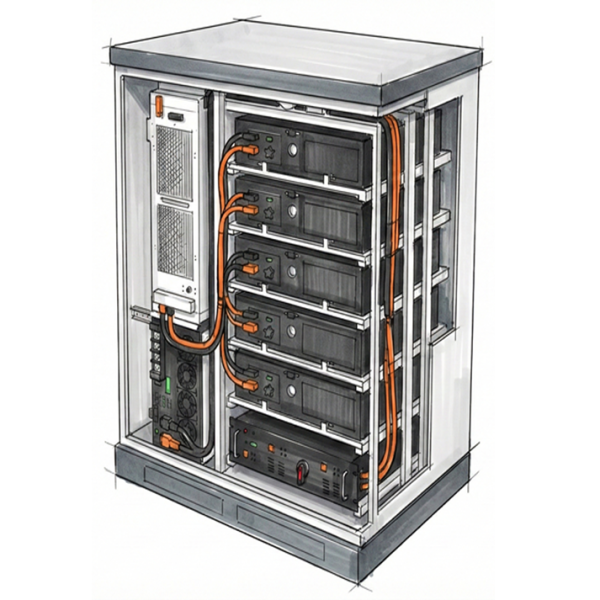
For system integrators, designing an effective storage project requires more than selecting batteries with sufficient capacity. A complete system includes multiple interconnected components, such as battery modules, battery management systems, power conversion systems, energy management platforms, and safety equipment.
At Enjoypowers, we understand that successful energy projects depend on the coordination between electrical equipment, control strategies, and application requirements. A clear understanding of each component helps integrators build systems that achieve stable operation and meet customer expectations.
This article explains the essential components of a battery energy storage system and highlights the key factors integrators should consider during system planning and implementation.
Battery Energy Storage System Architecture: More Than Just Batteries
A battery energy storage system is an integrated platform designed to store electrical energy and release it when required. While batteries are the core storage medium, they represent only one part of the complete architecture.
The battery module is responsible for storing energy in electrochemical form. Depending on project requirements, integrators must evaluate capacity, discharge duration, cycle requirements, and operating environment before selecting the appropriate battery configuration.
Battery cells are typically organized into modules and packs, which are then connected with monitoring and protection systems. These structures allow the system to operate safely while providing the required energy output.
However, batteries cannot directly interact with most industrial electrical systems. Additional components are required to control energy flow, manage operating conditions, and maintain communication between different devices.
For this reason, understanding the relationship between each component is essential when developing a battery energy storage system for commercial and industrial applications.
Battery Management System: Ensuring Safe Battery Operation
The battery management system (BMS) is one of the most important control components in a storage installation. Its primary function is to monitor battery conditions and maintain safe operating performance.
The BMS collects information such as cell voltage, temperature, current, and state of charge. By continuously analyzing this data, it can identify abnormal conditions and adjust charging or discharging behavior when necessary.
For integrators, the BMS is not only a monitoring device but also a safety management system. Poor battery control may reduce system lifespan or create operational risks, especially in large-scale industrial applications.
A properly configured BMS helps maintain battery balance, prevents excessive charging or discharging, and provides important information for higher-level energy management systems.
When designing storage projects, integrators should ensure that the BMS is compatible with other control platforms and can communicate effectively with the overall system architecture.
22 GW Power Electronics: The Importance of Power Conversion Systems
Power conversion is a critical stage between stored energy and actual electricity usage. The power conversion system (PCS) manages the exchange of energy between batteries and the electrical grid by converting direct current (DC) into alternating current (AC), and vice versa.
The PCS controls charging and discharging processes based on system requirements. During periods of low electricity demand, it can help store energy. When demand increases, it enables stored energy to support facility operations.
Power electronics technology determines important system characteristics, including conversion efficiency, response speed, and operational flexibility. With accumulated experience in power electronics applications, Enjoypowers recognizes that advanced conversion technology plays a central role in modern energy infrastructure.
The concept of 22 GW power electronics reflects the significant scale of power conversion applications in today’s energy industry. For integrators, selecting a suitable PCS requires consideration of power rating, grid compatibility, communication functions, and environmental conditions.
A well-matched PCS improves the overall coordination between the battery system and the facility’s electrical network, allowing storage systems to perform functions such as peak demand management and renewable energy utilization.
Energy Storage Solution Integration: Connecting Hardware and Control Systems
A complete energy storage solution requires effective integration between hardware components and intelligent control systems. The energy management system (EMS) acts as the decision-making layer by analyzing energy usage data and controlling system operation.
The EMS can coordinate charging and discharging strategies based on factors such as electricity demand, renewable generation, and operational schedules. This allows businesses to use stored energy more effectively.
Communication between the EMS, BMS, and PCS is essential for maintaining system coordination. Without proper communication, individual components may operate independently, reducing overall system performance.
For commercial and industrial projects, integrators need to consider the customer’s actual energy profile rather than applying the same design approach to every site. Load characteristics, electricity pricing structures, and operational goals all influence the final configuration.
A well-designed energy storage solution combines electrical hardware, control software, and application strategies into one coordinated system.
Thermal Management and Safety Systems: Protecting Long-Term Performance
Safety management is another essential part of storage system design. Battery operation generates heat, and temperature variations can influence performance, efficiency, and service life.
Thermal management systems help maintain suitable operating conditions by controlling heat generated during charging and discharging cycles. Depending on project scale and installation environment, different cooling approaches may be applied.
Safety systems may also include monitoring devices, protective mechanisms, and emergency response equipment. These elements work together to reduce operational risks and improve system reliability.
For integrators, safety planning should begin during the early design stage. Factors such as installation location, climate conditions, maintenance requirements, and regulatory considerations should be evaluated before final equipment selection.
A balanced design approach ensures that energy performance and safety requirements are considered together.
How Integrators Should Evaluate Storage System Components
Selecting individual components is only one part of project development. Integrators must also evaluate how all components work together as a complete system.
Several factors should be considered during the planning process:
Required power output and energy capacity
Facility electricity consumption patterns
Grid connection requirements
Future expansion possibilities
Communication compatibility between devices
Maintenance and operational requirements
A modular design approach can provide additional flexibility because system capacity can be adjusted according to changing business needs.
At Enjoypowers, we believe that understanding customer applications is essential when developing industrial energy solutions. The most effective systems are not simply based on individual equipment specifications but on how different technologies cooperate within a complete electrical environment.
For integrators, strong technical knowledge of each component allows better system design decisions and improves project outcomes.
Component Knowledge Builds Better Storage Systems
A battery energy storage system is a combination of multiple technologies working together. Batteries provide energy storage, BMS manages battery safety, PCS controls power conversion, and EMS coordinates overall operation.
For integrators, understanding these components is the foundation for creating efficient and reliable storage projects. Each component influences system performance, and successful integration requires careful evaluation of both technical requirements and application conditions.
As the energy industry continues to develop, storage systems will become increasingly important for industrial power management. Enjoypowers continues to focus on power electronics and energy technologies, helping industry professionals better understand system design considerations.
By selecting suitable components and creating a coordinated architecture, integrators can develop storage solutions that provide practical value for commercial and industrial energy users.