
Poor power quality is a common challenge for industrial and commercial facilities, but many companies focus on buying equipment before understanding the real cause of the problem. This approach can lead to ineffective investments because different electrical issues require different corrective methods.
At Enjoypowers, we believe accurate diagnosis should come before any improvement plan. Problems such as voltage instability, harmonic distortion, reactive power issues, and equipment interference often have different origins, so identifying the actual cause is the first step toward a reliable solution.
Before selecting power factor correction solutions, facility operators should evaluate their electrical systems, load characteristics, and operating conditions. A correct diagnosis helps businesses choose suitable technologies instead of applying a general solution that may not address the core problem.
Common Causes Behind Poor Power Quality
Poor power quality usually develops from the interaction between the power supply system and connected electrical loads. Modern industrial facilities often use variable frequency drives, automation equipment, data systems, and power electronic devices, which can create complex electrical conditions.
One major cause is harmonic distortion. Nonlinear loads draw current in irregular waveforms, creating harmonic currents that can affect transformers, motors, cables, and sensitive electronic equipment. These disturbances may reduce equipment efficiency and increase operational risks if they are not properly managed. Enjoypowers provides solutions designed to address harmonic-related challenges in industrial environments through advanced power quality technologies.
Another common issue is low power factor. Motors, transformers, and other inductive loads require reactive power to operate, but excessive reactive power increases current demand and can reduce system efficiency. Understanding the relationship between active power and reactive power is essential when evaluating electrical performance.
Voltage fluctuations are also a frequent concern, especially in facilities with rapidly changing loads. Equipment such as welding machines, large motors, and production systems with frequent starting and stopping cycles can create voltage variations that influence sensitive devices.
Power Factor Correction Solutions: Start With Accurate Diagnosis
Choosing the right power factor correction solutions requires more than checking a monthly electricity bill. A detailed electrical assessment should include power factor measurements, load analysis, voltage conditions, and operating patterns.
Traditional capacitor-based approaches may work well in stable load conditions, but facilities with rapidly changing demand may require more dynamic technologies. Static Var Generator (SVG) systems can provide fast reactive power compensation and help maintain stable power factor performance under changing loads.
At Enjoypowers, we focus on matching solutions with actual site conditions. A factory with motors, compressors, and fluctuating production schedules may need a different approach compared with an office building or a data center. The correct solution depends on the electrical environment, not simply the size of the facility.
A professional assessment also helps avoid common mistakes, such as installing equipment with insufficient capacity or selecting a technology that cannot handle harmonic conditions. When reactive power and harmonic problems exist together, a combined approach may provide better results than addressing only one issue.
Understanding Power Quality Management for Long-Term Stability
Effective power quality management requires continuous attention rather than a one-time equipment installation. Electrical systems change over time as companies add production lines, upgrade machines, or integrate renewable energy sources.
Monitoring electrical parameters allows operators to understand when problems occur and what loads are responsible. Important measurements may include harmonic levels, voltage variations, current imbalance, and reactive power demand.
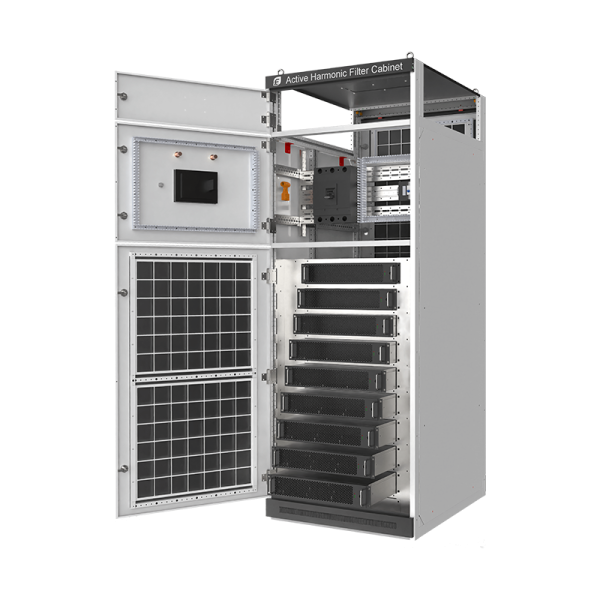
Modern power quality management combines measurement, analysis, and corrective technologies. Active Harmonic Filters, SVG systems, and other power electronic solutions can help companies maintain more stable electrical conditions while improving the efficiency of their operations.
For industrial users, the goal is not only to correct existing problems but also to prevent future disruptions. A well-planned strategy considers current requirements and future expansion, ensuring that the electrical infrastructure can support changing operational needs.
How to Diagnose Problems Before Investing in a Fix
The first step in diagnosis is collecting accurate operating data. Facility managers should monitor electrical performance during different production periods because power quality issues may only appear when specific machines are running.
The second step is identifying the type of disturbance. Harmonic problems, poor power factor, voltage imbalance, and voltage fluctuations require different corrective methods. Installing a device without understanding the problem may increase costs without delivering expected improvements.
The third step is evaluating the complete electrical system. Engineers should consider transformer capacity, load types, distribution design, and future expansion plans. This information helps determine whether the facility needs reactive power compensation, harmonic filtering, or a combined solution.
Enjoypowers works with customers to analyze these factors and develop practical improvement strategies. Our approach is based on understanding the electrical characteristics of each application rather than offering a standard product recommendation.
Building a More Reliable Electrical Future
Industrial companies increasingly depend on advanced electrical equipment, making stable power systems more important than ever. Poor power quality can affect production efficiency, equipment reliability, and maintenance requirements.
A successful improvement project begins with knowledge. By identifying the real causes of electrical problems, companies can make better decisions and avoid unnecessary investments.
Long-term success requires modern power quality management practices that combine measurement, technology selection, and ongoing system evaluation. With the right strategy, businesses can create more reliable electrical environments and support future growth.
Enjoypowers continues to develop power quality and energy solutions that help industrial customers improve electrical stability and efficiency. Through careful diagnosis and customized designs, we help customers move from problem identification to practical solutions.
Conclusion
Poor power quality should not be treated as a problem solved by simply purchasing new equipment. The most effective approach is to first understand the source of disturbances and then select the appropriate technology.
By analyzing electrical conditions, identifying specific challenges, and applying suitable solutions, businesses can improve system reliability and operational performance. A diagnostic-first approach ensures that investments deliver meaningful value and create a stronger foundation for future energy management.