
Power factor problems are common challenges in commercial and industrial electrical systems. Motors, transformers, welding equipment, variable frequency drives, and other inductive loads can consume reactive power, causing inefficient energy usage and increasing demand on electrical infrastructure.
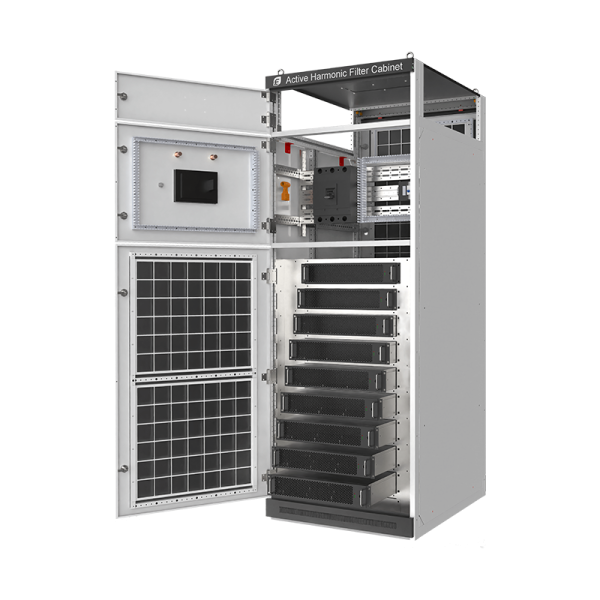
At Enjoypowers, we understand that solving these challenges requires more than installing compensation equipment. A proper solution starts with identifying the root cause, analyzing the electrical system, selecting suitable technology, and verifying performance after installation. Effective electrical power quality solutions help businesses improve system efficiency, maintain stable operation, and manage reactive power more effectively.
Many facility operators ask: How can power factor correction problems be solved step by step? This guide explains a practical approach that helps engineers and energy managers make better decisions.
Step 1: Identify the Causes of Low Power Factor
The first step in solving power factor issues is understanding why the problem exists. Power factor represents how efficiently electrical power is converted into useful work. A low value usually means that a large amount of reactive power is flowing through the system without contributing directly to production.
Common causes include induction motors operating below rated load, transformers with poor loading conditions, and equipment with fluctuating reactive power demand. Industrial facilities with many motors, compressors, pumps, and HVAC systems often experience these issues.
Before selecting compensation equipment, we recommend conducting a power quality assessment. Measuring voltage, current, active power, reactive power, and power factor provides a clear picture of the system condition.
Step 2: Analyze Electrical Loads and Operating Conditions
After identifying low power factor conditions, the next step is analyzing the types of loads connected to the electrical network.
Different loads create different compensation requirements. Fixed loads may be suitable for traditional capacitor-based correction, while rapidly changing loads often require dynamic compensation technologies.
For example, production lines with frequent motor starts and stops may experience continuously changing reactive power demand. In these cases, fixed compensation may not respond quickly enough, leading to unstable results.
Our experience at Enjoypowers shows that accurate load analysis is essential when designing industrial power quality solutions because every factory has different operating characteristics. Factors such as transformer capacity, load variation, harmonic levels, and future expansion plans should all be considered.
Step 3: Calculate Required Compensation Capacity
Once the system data is collected, engineers can calculate the required reactive power compensation capacity.
The basic calculation considers the existing power factor, target power factor, and active power demand. The required compensation capacity is usually expressed in kVar.
A simple approach is:
Required kVar = Active Power × (tan existing angle − tan target angle)
However, real industrial systems require additional considerations. Engineers should evaluate load fluctuations, harmonic distortion, and whether the system contains nonlinear equipment.
Oversizing compensation equipment can create overcompensation problems, while undersizing may fail to achieve the desired power factor improvement. A balanced design ensures reliable operation and avoids unnecessary investment.
Step 4: Select the Right Power Factor Correction Technology
Choosing the correct technology is one of the most important steps in solving power factor correction problems.
Traditional capacitor banks can provide reactive power compensation for stable loads. However, they may not perform effectively when loads change quickly or when harmonic distortion is present.
For dynamic industrial environments, Static Var Generators (SVGs) provide a more flexible approach. SVG technology can adjust reactive power compensation in real time and support applications with rapidly changing loads.
In many modern facilities, power factor issues are combined with harmonic problems caused by power electronic equipment. In these situations, combining reactive power compensation with harmonic management can provide a more complete solution.
At Enjoypowers, we provide advanced solutions that integrate power electronics technology to address different power quality challenges, including reactive power compensation and harmonic control.
Step 5: Consider Harmonics Before Installation
A common mistake in power factor correction projects is focusing only on reactive power while ignoring harmonics.
Modern industrial equipment such as variable frequency drives, UPS systems, and power converters can introduce harmonic currents into electrical systems. These harmonics may affect capacitor performance and create additional power quality concerns.
Before installing correction equipment, harmonic measurements should be performed. If harmonic distortion is significant, an active filtering solution may be required together with compensation equipment.
By evaluating both power factor and harmonic conditions, companies can avoid repeated upgrades and achieve more stable electrical performance.
Step 6: Install and Configure the System Correctly
Proper installation directly affects the performance of any correction system.
Important installation factors include equipment location, ventilation, protection settings, current transformer placement, and communication configuration. The compensation device should be installed where it can accurately monitor the electrical system and respond effectively to load changes.
Engineers should also verify compatibility with existing switchgear and distribution systems. A well-designed installation improves reliability and simplifies future maintenance.
For industrial facilities, professional design and commissioning are important parts of successful electrical power quality solutions implementation. The solution should match the actual operating environment rather than relying on a standard configuration.
Step 7: Monitor Performance After Installation
Power factor correction is not complete after equipment installation. Continuous monitoring helps confirm whether the system is achieving the expected results.
Key performance indicators include improved power factor, reduced reactive power demand, stable voltage conditions, and reduced electrical stress on equipment.
Real-time monitoring platforms can help operators identify changes in load behavior and optimize system operation over time.
Regular evaluation is especially valuable for factories where production conditions change frequently. Monitoring ensures that the compensation system continues to support efficient operation.
A Systematic Approach Creates Better Results
Solving power factor correction problems requires a structured process. The most effective approach includes identifying the causes, analyzing loads, calculating compensation requirements, selecting suitable technology, and monitoring long-term performance.
Power factor improvement is not only about reducing reactive power consumption. It is also about creating a more stable and efficient electrical environment for industrial operations.
With professional experience in power electronics and energy management, Enjoypowers helps customers develop practical solutions for modern electrical challenges. By combining accurate analysis with advanced technologies, businesses can improve reliability and optimize their power systems.
For companies looking for industrial power quality solutions, a step-by-step evaluation process is the foundation for achieving better electrical performance and sustainable energy management.