
Industrial facilities are facing increasing pressure to control electricity costs, improve energy efficiency, and maintain reliable operations. One of the most effective approaches is deploying industrial energy storage systems that can store electricity during lower-demand periods and release power when demand peaks.
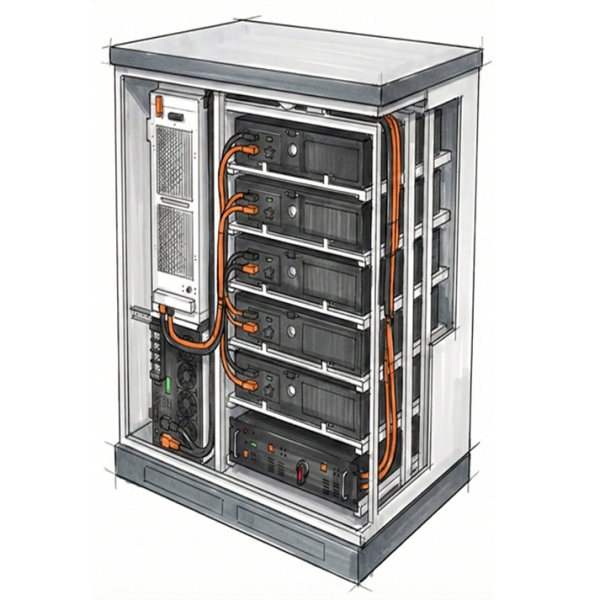
However, selecting the right storage capacity is not simply about choosing the largest battery available. Oversizing can increase investment costs, while undersizing may fail to reduce peak demand effectively. A detailed understanding of load patterns, energy goals, and operating conditions is essential before designing a storage system.
At Enjoypowers, we help industrial customers evaluate their energy requirements and develop practical storage strategies. Proper capacity matching allows businesses to achieve better performance while ensuring the system supports long-term operational needs.
Understanding Peak Demand and Energy Storage Capacity
Peak demand refers to the highest level of electricity consumption within a specific period. For many industrial users, peak demand charges represent a significant part of electricity expenses because utilities often calculate fees based on maximum power usage rather than total energy consumption.
Industrial energy storage systems are designed to reduce these demand peaks by supplying stored electricity during high-load periods. The battery capacity determines how much energy can be stored, while the power rating determines how much energy can be delivered at a given moment.
When sizing a system, companies should analyze both power and energy requirements. A facility that experiences short but intense demand spikes may require a system with high discharge power. A site with several hours of elevated consumption may need greater battery capacity to maintain peak shaving performance.
Factors Affecting Storage System Capacity Selection
The first factor to consider is the facility’s load profile. Different industries have different energy consumption patterns. Manufacturing plants may experience predictable production peaks, while commercial facilities may have demand changes based on business hours and seasonal conditions.
A detailed analysis of historical electricity data helps identify when peaks occur and how long they last. This information provides a foundation for determining the required battery size and operating strategy.
The second factor is the customer’s energy objective. Some companies focus mainly on reducing demand charges, while others need backup capability, renewable energy integration, or improved energy flexibility. Sustainable energy storage solutions for 2026 will increasingly require flexible designs that can support multiple applications instead of serving only one purpose.
The third factor is future expansion. Industrial facilities often add new equipment or production lines over time. A scalable design can provide additional capacity when energy requirements increase. Enjoypowers develops modular solutions that allow businesses to adapt storage systems according to changing operational needs.
Sustainable Energy Storage Solutions for 2026: Designing for Future Needs
As energy management becomes more complex, companies are looking beyond basic battery backup functions. Modern storage systems combine batteries, Power Conversion Systems (PCS), Energy Management Systems (EMS), and monitoring technologies to optimize energy usage.
Sustainable energy storage solutions for 2026 are expected to focus on intelligent control, renewable integration, and flexible operation. These systems can help businesses manage electricity costs while supporting cleaner energy strategies.
The PCS plays an important role because it controls the energy flow between the battery, grid, and facility loads. A high-performance PCS enables efficient charging and discharging while responding quickly to changes in electricity demand.
For industrial users, storage systems must also consider safety, reliability, and maintenance requirements. Proper thermal management, monitoring functions, and system protection are important elements of a successful project. Enjoypowers integrates advanced power electronics technologies into storage solutions to support stable operation in demanding industrial environments.
Advanced Energy Storage Solutions for Peak Shaving Applications
Peak shaving is one of the most common applications for industrial storage systems. The basic principle is simple: charge the battery when electricity demand is lower and discharge stored energy when facility demand approaches peak levels.
However, effective peak shaving requires accurate control strategies. A system must understand production schedules, electricity tariffs, and real-time load conditions. Poorly configured charging and discharging schedules may reduce economic benefits.
Advanced energy storage solutions use intelligent energy management to optimize operation automatically. These systems can analyze energy patterns and adjust strategies based on actual demand conditions.
For example, a factory operating continuously may use storage to reduce repeated daily demand peaks. The battery can charge during lower-cost periods and provide additional power support when production equipment creates high demand. Enjoypowers has supported industrial applications where energy storage systems help improve peak management and energy efficiency.
How to Determine the Right Storage Capacity
Before investing in a storage project, businesses should complete several evaluation steps.
First, collect electricity consumption data from utility bills and energy monitoring systems. Understanding peak periods, average consumption, and load fluctuations provides a realistic picture of energy requirements.
Second, define the main objective of the project. A system designed for peak shaving may require a different configuration compared with one designed for backup power or renewable energy storage.
Third, evaluate system scalability and integration requirements. Industrial facilities should consider how the storage system connects with existing electrical infrastructure, including transformers, distribution systems, and control platforms.
Finally, conduct an economic analysis. The ideal storage capacity should balance investment cost, expected energy savings, operational benefits, and future energy needs.
Building a More Efficient Industrial Energy Strategy
Energy storage is becoming an important tool for companies seeking greater control over electricity consumption. However, successful deployment depends on correct system sizing and careful planning.
Advanced energy storage solutions are not one-size-fits-all products. Each industrial facility has unique operating conditions, energy patterns, and business objectives. A customized approach helps ensure that storage capacity matches actual demand requirements.
Enjoypowers works with customers to analyze energy challenges and create storage solutions that support reliable and efficient operations. By combining intelligent control technology with practical engineering experience, we help businesses improve their energy management strategies.
Conclusion
Matching storage capacity to peak demand is a critical step in designing an effective industrial energy project. The right system should consider load characteristics, operating goals, future expansion, and economic factors.
Industrial energy storage systems can provide valuable support for peak shaving, energy optimization, and long-term sustainability when properly designed. By focusing on accurate assessment and intelligent system planning, businesses can maximize the value of their energy storage investment.
As energy requirements continue to evolve, companies that adopt flexible and scalable storage strategies will be better prepared for future challenges. A well-designed storage system is not only an energy asset but also an important part of modern industrial energy management.