
Commercial and industrial (C&I) facilities are experiencing increasingly complex energy management challenges. Rising electricity costs, changing production schedules, renewable energy integration, and stricter requirements for energy efficiency are driving companies to seek more flexible power solutions.
Traditional fixed-capacity energy storage systems may not always match the changing needs of businesses. A system that is suitable today may become insufficient as production expands or electricity consumption patterns change. This is why scalability has become an important consideration in modern energy storage design.
A modular energy storage system allows companies to expand capacity according to actual requirements, helping them avoid unnecessary initial investment while maintaining the ability to adapt in the future. Applications such as ToU arbitrage battery storage and demand management can benefit from this flexible architecture, enabling businesses to optimize energy usage based on operational conditions and electricity pricing structures.
What Is a Modular Energy Storage System?
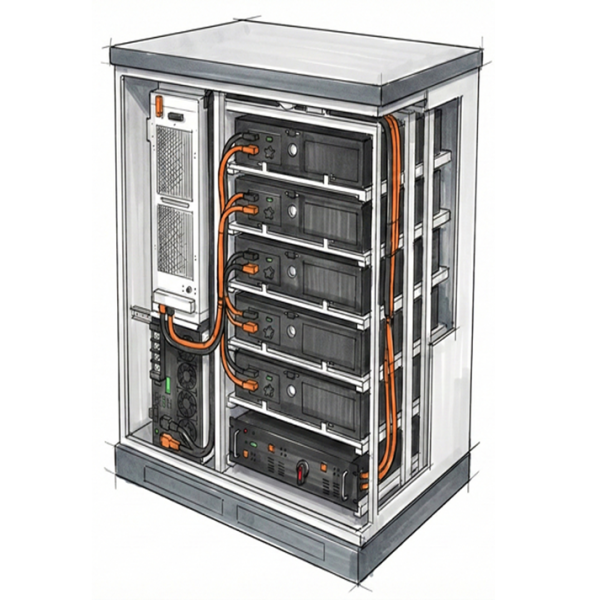
A modular energy storage system is an energy solution built with independent battery modules, power conversion equipment, and control units that work together as a complete system. Unlike conventional storage solutions with fixed capacity, modular designs allow customers to increase storage capacity by adding additional units when needed.
For C&I projects, this approach provides significant advantages because energy requirements are rarely static. A manufacturing plant may expand production lines, a logistics center may add new equipment, or a commercial building may increase its electricity demand due to business growth.
With a modular structure, companies do not need to replace the entire system when their energy requirements change. Instead, they can gradually expand the system based on actual demand, making energy storage investment more flexible and sustainable.
Why Scalability Matters in C&I Energy Storage Projects
Supporting Future Energy Demand Growth
One of the biggest challenges in commercial and industrial energy projects is predicting future electricity demand. Businesses often need to make investment decisions based on current conditions while considering possible expansion plans.
A scalable storage system solves this challenge by allowing capacity growth over time. Companies can start with a system size that meets current requirements and add additional battery modules as energy consumption increases.
For example, a factory may initially use storage mainly for reducing peak electricity demand. As production capacity increases, the company can expand the storage system to provide greater energy management capability without redesigning the entire installation.
This flexibility reduces the risk of selecting a system that becomes outdated shortly after deployment.
Improving Investment Efficiency Through Modular Expansion
Energy storage projects require careful financial planning. Installing a large system from the beginning may increase upfront costs, especially when future energy demand is uncertain.
A modular energy storage system provides a more practical investment model. Businesses can match their initial investment with current operational needs and expand capacity when additional benefits become clear.
This is particularly useful for companies considering ToU arbitrage battery storage strategies. Electricity consumption patterns, production schedules, and tariff structures may change over time. A scalable system allows businesses to adjust storage capacity according to actual economic conditions.
Instead of investing in unused capacity, companies can develop their energy storage infrastructure step by step.
How Modular Systems Improve ToU Arbitrage Battery Storage Performance
Electricity prices often vary throughout the day due to time-of-use (ToU) pricing policies. During low-price periods, businesses can charge energy storage systems, then use stored electricity during high-price periods to reduce electricity expenses.
ToU arbitrage battery storage helps companies optimize energy purchasing by shifting electricity consumption from expensive periods to more economical periods. However, the effectiveness of this strategy depends on having the right storage capacity and operational flexibility.
A modular system allows businesses to adjust storage size according to changing electricity consumption patterns. If energy demand increases or electricity price differences become more significant, additional battery modules can be added to improve energy-shifting capability.
This makes the storage system adaptable to long-term business development rather than being limited to the conditions at the time of installation.
The Importance of Scalability for Peak Demand Management
Many industrial and commercial users are concerned about high electricity demand charges. A common question is: what is peak shaving?
Peak shaving is an energy management strategy that reduces the highest power demand drawn from the grid. During periods when electricity consumption reaches a peak level, an energy storage system can discharge stored energy to reduce the amount of electricity supplied by the grid.
For facilities with large motors, production equipment, or fluctuating loads, peak demand can significantly affect operating costs. A properly configured storage system helps maintain more stable electricity demand.
A scalable design provides additional advantages because energy requirements can increase as businesses grow. When peak demand rises due to new equipment or expanded operations, additional storage capacity can be integrated to maintain effective demand management.
This approach enables companies to build a flexible energy infrastructure that develops together with their operations.
Key Technologies Behind a Scalable Energy Storage System
Modular Battery Architecture
The battery system determines the available energy capacity of the storage solution. Modular battery cabinets allow additional units to be added without major modifications to the existing system.
This design simplifies future expansion and helps businesses manage investment timing more effectively.
Flexible Power Conversion System
The Power Conversion System (PCS) controls the conversion between stored battery energy and electrical power used by the facility or supplied to the grid.
A scalable PCS configuration allows the system to handle different power requirements and maintain efficient operation as storage capacity increases.
Intelligent Energy Management System
The Energy Management System (EMS) plays an important role in coordinating charging and discharging operations. It analyzes electricity prices, load conditions, and energy usage patterns to optimize system performance.
With intelligent control strategies, modular storage systems can support multiple applications, including energy cost optimization, demand management, and renewable energy integration.
Factors to Consider When Selecting a Modular Storage Solution
Before investing in a scalable energy storage project, companies should evaluate several important factors.
First, businesses should analyze current electricity consumption and future expansion plans. Load characteristics, operating schedules, and peak demand patterns help determine the appropriate initial system configuration.
Second, companies should define their main objectives. Some users may prioritize electricity cost reduction, while others may focus on demand control, renewable energy utilization, or energy reliability.
Third, the storage system should provide sufficient expansion capability. Battery modules, PCS capacity, and energy management functions should support future upgrades.
Finally, system design should consider the actual operating environment. Industrial facilities often have unique electrical characteristics, so the solution should be customized according to real application requirements.
Conclusion: Scalability Creates Long-Term Benefits for C&I Energy Storage
As commercial and industrial energy requirements continue to evolve, flexibility has become a critical factor in energy storage planning. A system designed only for current needs may struggle to support future growth.
A modular energy storage system provides businesses with a practical way to expand capacity, improve investment efficiency, and support applications such as ToU arbitrage battery storage and peak demand management.
By selecting a scalable solution, companies can build an energy infrastructure that adapts to changing operational requirements. Enjoypowers focuses on providing flexible power management technologies that help C&I users improve energy efficiency and achieve more sustainable energy operations.
A well-designed storage system should not only solve today’s challenges but also provide the foundation for future energy strategies. Scalability ensures that businesses can continue optimizing their energy performance as their needs change.