
As renewable energy and energy storage applications continue to expand, inverter installation flexibility has become an important consideration for system designers and end users. Different projects have different space limitations, environmental conditions, and operational requirements, making equipment adaptability increasingly valuable.
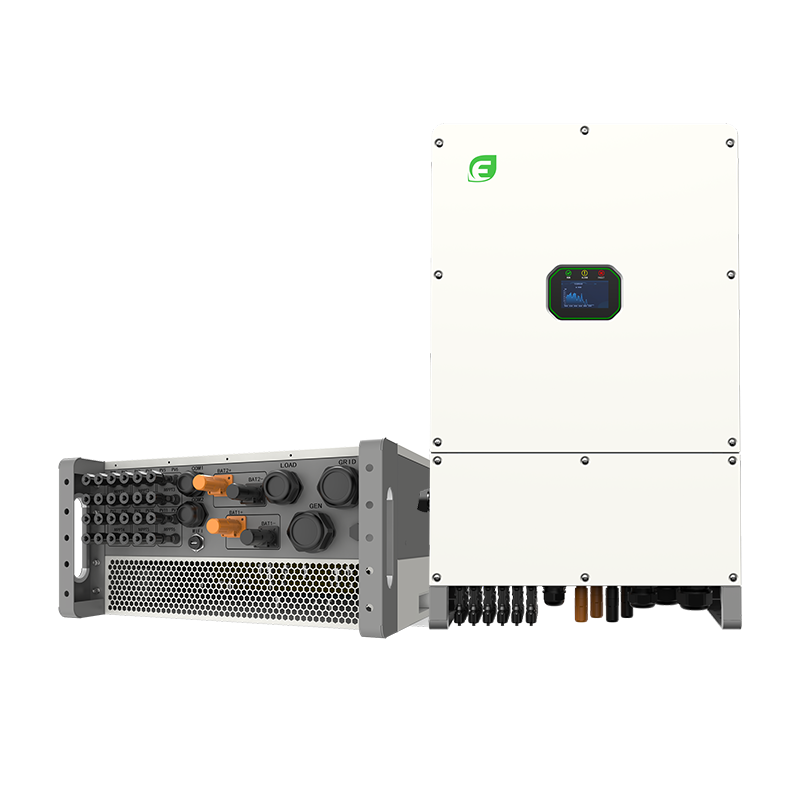
An inverter installed in an outdoor environment must handle factors such as dust, moisture, temperature changes, and other external conditions. An IP66 hybrid inverter is designed with enhanced enclosure protection, allowing energy systems to be deployed in more locations while maintaining reliable operation.
Many users also ask, “Is a hybrid inverter better than an inverter?” The answer depends on the project requirements. A hybrid inverter provides additional functions by integrating battery management and energy control capabilities, making it suitable for systems that require energy storage and flexible power management.
What Makes an IP66 Hybrid Inverter Suitable for Outdoor Installation?
The IP66 rating represents a high level of protection against environmental exposure. The first number indicates complete protection against dust, while the second number represents resistance against water exposure from different directions.
For energy systems installed outdoors, this protection helps reduce the risk of environmental factors affecting internal electronic components. Compared with equipment designed only for indoor installation, an IP66 hybrid inverter provides more options when selecting installation locations.
This flexibility is especially useful for commercial and industrial projects where electrical rooms may have limited space. Instead of redesigning existing infrastructure to accommodate inverter equipment, project developers can consider outdoor areas that meet installation requirements.
Outdoor installation can also simplify system layouts. When solar panels, batteries, and electrical equipment are positioned in different areas, flexible inverter placement can help reduce unnecessary wiring complexity and improve overall project organization.
How Outdoor Rating Improves Installation Flexibility
One major advantage of outdoor-rated hybrid inverter technology is that it allows energy systems to adapt to different application environments.
For example, commercial buildings may not have sufficient indoor electrical space for additional energy equipment. Industrial facilities may prefer placing energy storage equipment closer to production areas or renewable energy sources. In these cases, outdoor-compatible equipment provides more design freedom.
An IP66 hybrid inverter can support various installation scenarios, including solar-plus-storage systems, commercial energy projects, and industrial energy management applications. However, proper installation planning remains important. Factors such as airflow, direct sunlight exposure, drainage, and maintenance access should still be considered.
Outdoor protection does not replace good engineering practices. Instead, it provides more flexibility for creating an efficient and practical system design.
Is a Hybrid Inverter Better Than an Inverter?
A common question from customers is: Is a hybrid inverter better than an inverter?
The answer depends on whether energy storage and advanced energy management are required. A conventional inverter mainly converts electricity generated by solar panels from DC power into AC power for household, commercial, or grid use.
A hybrid inverter performs the same conversion function but adds battery integration and intelligent energy management capabilities. It can coordinate power flow between solar panels, batteries, loads, and the grid according to system conditions.
For users with simple solar generation needs, a traditional inverter may meet their requirements. However, for applications that involve battery storage, backup power, or energy cost optimization, a hybrid inverter offers greater flexibility.
This additional capability allows users to store excess solar energy and use it when solar production decreases or electricity costs increase. As energy systems become more complex, hybrid inverter technology provides more control over energy usage.
What Is the Difference Between a Normal Inverter and a Hybrid Inverter?
Understanding the difference between these two inverter types helps users choose the right solution for their projects.
A normal inverter is mainly designed for electricity conversion. It takes DC electricity from solar panels and converts it into AC electricity that can be used by electrical loads or supplied to the grid.
A hybrid inverter includes additional control functions. Besides converting electricity, it manages battery charging and discharging, monitors energy flows, and helps optimize the interaction between different power sources.
The main differences include:
A normal inverter generally works with solar generation only, while a hybrid inverter can integrate battery storage.
A normal inverter has fewer energy management functions, while a hybrid inverter can control when energy is stored or used.
A hybrid inverter can support more flexible applications, including backup power and energy consumption optimization.
For businesses planning future expansion of their renewable energy systems, hybrid inverter technology can provide a stronger foundation.
The Role of IP66 Hybrid Inverters in Energy Storage Applications
Energy storage systems often need to operate in environments where indoor installation is not always practical. This makes equipment protection and installation flexibility important factors.
An IP66 hybrid inverter supports energy storage applications by providing a more adaptable installation option. It can be integrated into systems where batteries, solar arrays, and electrical loads are distributed across different areas.
For example, a commercial facility may combine solar generation with battery storage to improve energy efficiency. An industrial site may use storage systems to manage electricity demand and improve operational flexibility. In these applications, reliable inverter performance is essential.
At Enjoypowers, we focus on developing power conversion technologies that support flexible energy applications. By combining inverter functions with advanced energy management capabilities, our solutions help users build systems that can adapt to changing energy requirements.
Key Considerations When Choosing an Outdoor Hybrid Inverter
Although IP66 protection provides strong environmental resistance, several factors should still be evaluated before installation.
First, users should consider the actual operating environment. Extreme temperatures, exposure to direct sunlight, and installation location can affect long-term performance.
Second, system compatibility is important. The inverter should match the battery system, solar generation capacity, electrical loads, and grid requirements.
Third, maintenance accessibility should not be overlooked. Even outdoor-rated equipment requires regular inspection and service. A suitable installation location helps technicians maintain the system efficiently.
Choosing the right inverter is not only about protection level. It also requires evaluating the complete energy system design and future operational needs.
IP66 Protection Creates More Flexible Energy System Designs
As energy systems become more integrated with renewable generation and battery storage, installation flexibility is becoming increasingly important. An IP66 hybrid inverter provides stronger environmental protection while allowing more options for system deployment.
Compared with conventional inverters, hybrid inverters offer additional energy management functions through battery integration and intelligent control. This makes them suitable for applications that require greater flexibility and future expansion capability.
For customers considering “Is a hybrid inverter better than an inverter?” or “What is the difference between a normal inverter and a hybrid inverter?”, the best choice depends on specific project goals, energy requirements, and installation conditions.
With experience in power conversion and energy management technologies, Enjoypowers helps customers develop adaptable energy solutions that support efficient and reliable operation in different environments.