
Commercial solar projects require careful equipment selection to ensure reliable energy conversion, efficient operation, and long-term system performance. Among the key components, the hybrid inverter plays an important role by managing energy flow between photovoltaic (PV) arrays, battery storage systems, and electrical loads.
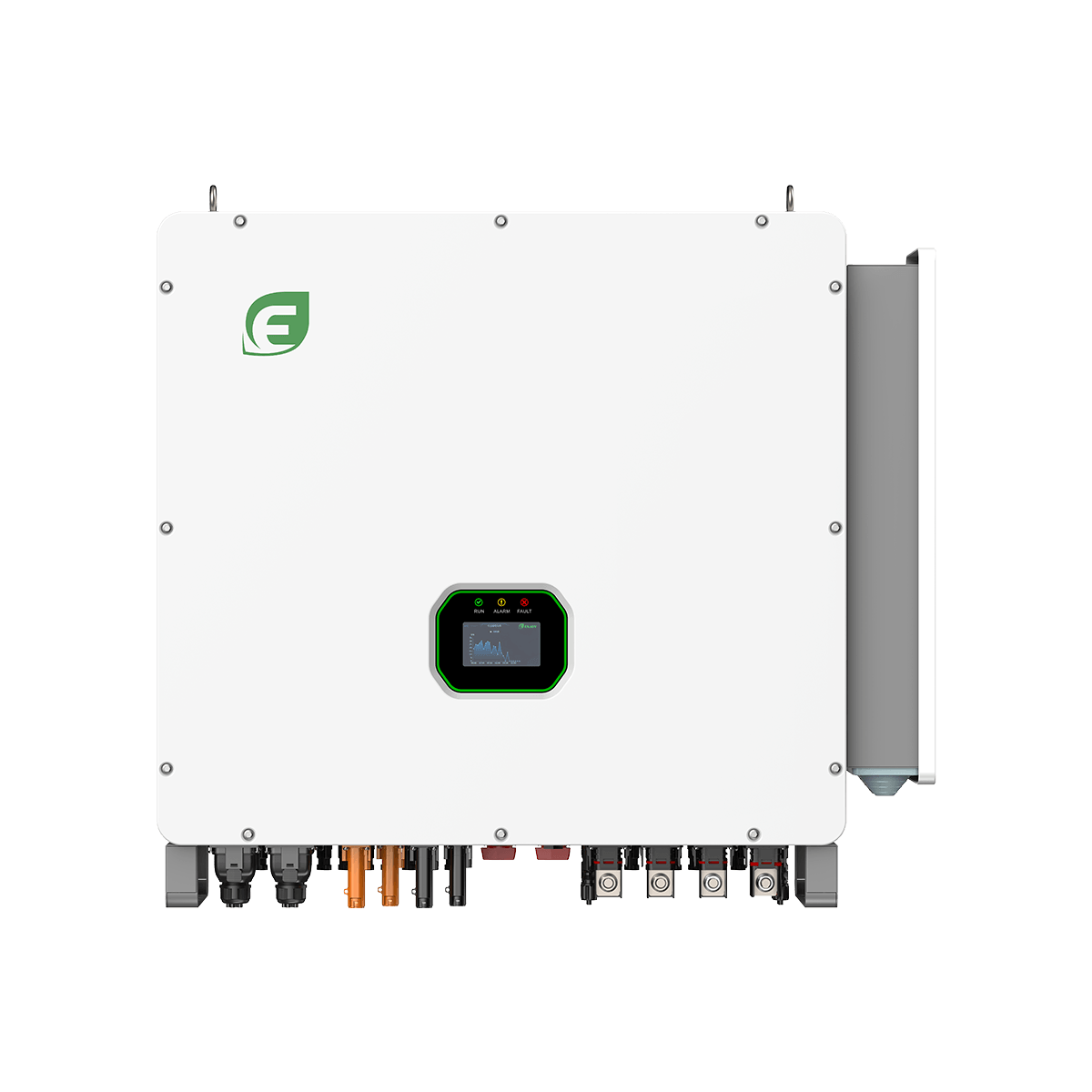
Choosing the right inverter capacity is not simply about selecting the largest available model. The inverter should match the characteristics of the solar array, including installation type, system size, power generation profile, and future expansion plans.
We believe that proper capacity matching helps businesses avoid inefficient system design. Whether a project uses a rooftop PV installation or a ground-mount solar array, understanding the relationship between PV capacity and inverter performance is essential for achieving better energy management.
Understanding Commercial PV Hybrid Inverter Capacity Requirements
A commercial PV hybrid inverter combines solar power conversion and energy storage management functions within one system. It converts DC electricity generated by PV modules into AC power for facility use while also managing battery charging and discharging when storage is integrated.
The inverter capacity determines how much AC power the system can deliver at a given time. Therefore, selecting the correct capacity requires an analysis of both PV generation and electricity demand.
For commercial applications, factors such as building load patterns, solar production hours, and energy storage objectives should be considered together. A system designed for self-consumption may require a different inverter configuration compared with a project focused on backup power or energy cost optimization.
A properly selected commercial PV hybrid inverter can help balance solar generation, battery storage, and facility consumption more effectively.
Matching Inverter Capacity with Rooftop Solar Arrays
Rooftop solar systems are commonly installed on commercial buildings where available space and structural conditions influence PV design. Compared with ground-mounted systems, rooftop arrays often have more limitations related to orientation, shading, and available installation area.
When selecting an inverter for rooftop applications, businesses should evaluate the expected PV output rather than only the total panel capacity. The inverter should be able to handle the energy produced by the array while maintaining efficient operation during different weather conditions.
A 125 kW hybrid inverter can be suitable for commercial projects requiring higher power conversion capability and integrated energy storage management. It provides a solution for larger rooftop systems where businesses need to coordinate solar generation, battery storage, and facility electricity demand.
For smaller commercial installations, a 100 kW hybrid inverter may better match the project requirements by providing appropriate power capacity without unnecessary oversizing.
Matching Inverter Capacity with Ground-Mount Solar Arrays
Ground-mount solar systems usually provide more flexibility in array layout and expansion compared with rooftop installations. Larger available areas allow businesses to design higher-capacity PV systems with optimized panel positioning.
Because ground-mount arrays can generate significant solar output, inverter selection should consider maximum PV input, expected generation patterns, and the required connection capacity.
A commercial PV hybrid inverter used in ground-mount applications should provide stable conversion performance while supporting energy storage integration. This is especially important for businesses that want to store excess solar energy during high-generation periods and use it when electricity demand increases.
When designing a ground-mount system, engineers should also consider future expansion. Selecting an inverter with suitable capacity flexibility can make later system upgrades easier and reduce the need for major equipment replacement.
Comparing 100 kW and 125 kW Hybrid Inverter Applications
The choice between different inverter capacities depends on project requirements rather than simply choosing a higher-rated model.
A 100 kW hybrid inverter may be suitable for commercial facilities with moderate electricity demand and smaller PV arrays. It can provide effective energy conversion while maintaining a balanced system design.
A 125 kW hybrid inverter is designed for applications requiring greater power handling capability. Larger commercial facilities, expanded rooftop systems, or ground-mount projects may benefit from higher conversion capacity.
The correct selection should consider:
PV array size
Expected maximum solar output
Facility electricity consumption
Battery storage capacity
Future expansion plans
Oversizing the inverter may increase initial investment without improving system performance, while selecting insufficient capacity may limit energy utilization. A balanced approach ensures that the inverter operates efficiently under normal conditions.
Key Factors Beyond Inverter Rated Power
Although capacity is a major consideration, commercial PV projects should evaluate other technical factors before selecting a hybrid inverter.
Battery compatibility is important because hybrid systems must coordinate solar generation with energy storage operation. The inverter should support stable charging and discharging processes while maintaining safe battery operation.
System control capabilities are also essential. A hybrid inverter should effectively manage different energy sources and respond to changing electricity demand.
Installation conditions should also be considered. Rooftop and ground-mount projects may have different requirements related to environmental exposure, maintenance access, and system configuration.
We recommend evaluating the complete energy system rather than selecting equipment based only on rated power. This approach helps businesses achieve better performance and long-term reliability.
How Hybrid Inverters Support Commercial Energy Management
Commercial businesses increasingly use solar and storage systems to improve energy efficiency and reduce dependence on traditional electricity supply. A properly matched hybrid inverter allows solar generation, battery storage, and facility loads to work together.
During periods of high solar production, excess electricity can be stored instead of wasted. During periods of higher demand or lower solar output, stored energy can support facility operation.
Enjoypowers provides commercial energy storage solutions designed to support different project requirements, including hybrid inverter applications for solar-plus-storage systems. By matching inverter capacity with actual site conditions, businesses can improve energy utilization and system flexibility.
Selecting the Right Hybrid Inverter Capacity for Commercial Solar Projects
Choosing the right commercial PV hybrid inverter requires careful analysis of the solar array, facility demand, and energy management goals. Rooftop and ground-mount systems each have different design considerations, making capacity matching an important part of project planning.
A 100 kW hybrid inverter may fit moderate commercial applications, while a 125 kW hybrid inverter can support projects requiring higher power conversion capability. The best choice depends on actual PV capacity, load characteristics, and future expansion needs.
By evaluating system requirements before installation, businesses can create more efficient and reliable solar-plus-storage systems. Enjoypowers continues to support commercial energy projects with hybrid inverter solutions designed for flexible energy management and long-term system performance.