
As utility-scale energy storage projects continue to grow in capacity, system designers are paying more attention to electrical architecture choices that affect efficiency, cost, and long-term operation. Among these decisions, selecting between 1500V and 1000V DC architectures has become an important consideration for large battery energy storage systems.
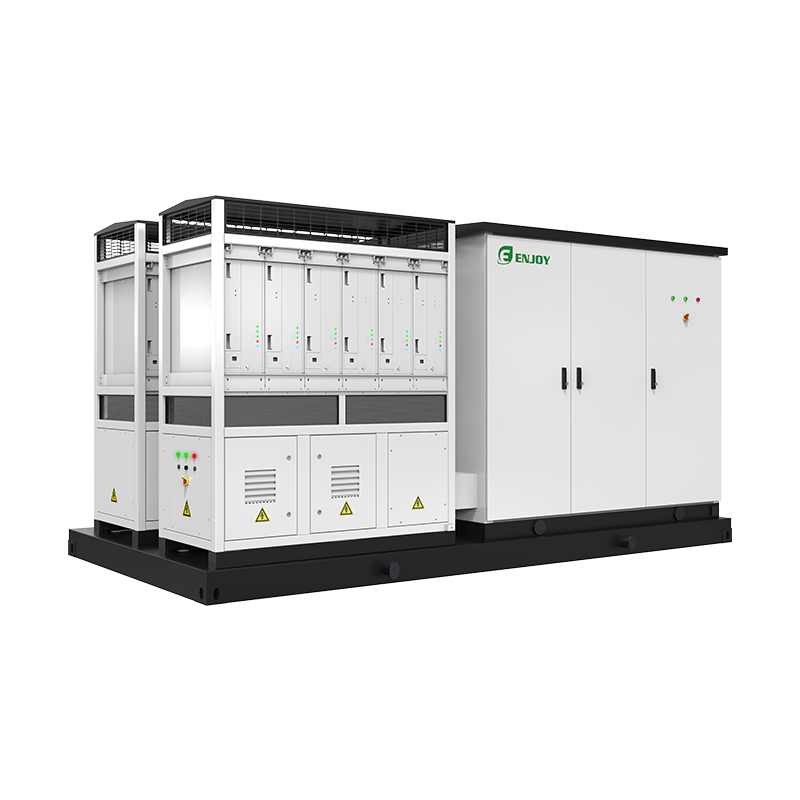
Higher-voltage designs have gained popularity because they can support larger system capacities while reducing current levels across the DC side. This can influence cable selection, system layout, and overall project design.
Many project developers also ask, “What is a utility scale inverter?” A utility-scale inverter is a power conversion device designed for large energy systems that convert DC power from battery storage or renewable sources into AC power suitable for grid connection. When combined with a higher-voltage architecture, it can help improve the performance and scalability of large energy storage installations.
What Is a 1500V PCS and Why Is It Used in Large Projects?
A 1500V PCS (Power Conversion System) is designed to operate with a 1500V DC battery system and convert stored DC energy into AC power for grid applications. It also manages the reverse process by converting AC power into DC energy during battery charging.
Compared with lower-voltage systems, a 1500V architecture allows more battery modules to be connected in series. This increases the DC voltage level while reducing the current required for the same power output.
Lower current can bring several design advantages, including reduced cable losses and improved system layout flexibility. For large-scale projects where hundreds of megawatt-hours of storage capacity may be installed, these improvements can have a meaningful impact on overall system design.
A 1500V system is commonly considered for utility-scale applications because it is designed to support high-capacity energy storage installations with efficient power conversion requirements.
Understanding the Difference Between 1500V and 1000V Architectures
The main difference between 1500V and 1000V architectures is the operating DC voltage level of the battery system and connected power conversion equipment.
A 1000V architecture has been widely used in earlier energy storage projects and remains suitable for many applications. It provides a proven approach with established equipment compatibility and design experience.
However, as storage projects become larger, the advantages of higher-voltage systems become more noticeable. A 1500V architecture allows higher DC voltage operation, which means the system can deliver the same amount of power with lower current.
For example, when power output remains unchanged, increasing voltage reduces the amount of current flowing through the system. Lower current can help decrease conductor requirements and reduce electrical losses.
This makes 1500V systems attractive for large projects where efficiency, space utilization, and installation simplicity are important considerations.
Why 1500V Architecture Is Becoming Popular for Large Energy Storage Projects
Large energy storage projects require careful optimization of equipment, installation costs, and operational efficiency. As project capacity increases, electrical losses and infrastructure requirements become more important.
A 1500V architecture can provide advantages by reducing DC-side current. Lower current may allow the use of smaller cable sizes and reduce certain electrical losses during energy transmission.
In addition, higher-voltage systems can help simplify system design by supporting larger battery blocks and reducing the number of parallel connections required.
For utility-scale applications, these design benefits can improve the overall organization of battery containers, PCS units, and grid connection equipment.
However, voltage selection should always consider project requirements, equipment compatibility, safety standards, and operational conditions. A higher voltage level is not automatically the right choice for every project.
What Is a Utility Scale Inverter and How Does It Work With 1500V PCS?
A common question in large energy projects is: What is a utility scale inverter?
A utility-scale inverter is a high-power inverter designed for large renewable energy and energy storage applications. It converts DC electricity from sources such as solar arrays or battery systems into AC electricity that can be connected to the utility grid.
In battery energy storage systems, the inverter function is usually integrated into the PCS. The system controls both charging and discharging processes while maintaining stable power exchange with the grid.
A utility scale energy storage inverter must handle high power levels, frequent operating cycles, and demanding grid requirements. It needs to provide reliable conversion performance while supporting functions such as grid connection control and energy management.
When paired with a 1500V battery architecture, the inverter can support larger energy storage blocks with optimized DC-side operation. This combination is widely considered for modern utility-scale projects that require high efficiency and scalable system designs.
Key Benefits of 1500V PCS for Utility-Scale Applications
A major advantage of 1500V PCS technology is improved system scalability. Large projects often require thousands of battery modules, and higher-voltage designs can help reduce system complexity.
Another benefit is improved power density. By operating at higher DC voltage, energy storage systems can achieve higher power output with reduced current levels, which can support more compact system configurations.
Installation efficiency is another important factor. Reduced cable requirements and simplified electrical connections can help optimize project construction.
At Enjoypowers, we focus on developing power conversion technologies that support different energy storage applications, including large-scale systems requiring reliable and flexible PCS solutions. The right architecture selection helps project developers balance performance, cost, and long-term operational needs.
When Should a Project Choose 1000V Instead of 1500V?
Although 1500V systems provide several advantages for large projects, 1000V architectures remain suitable in many applications.
Projects with smaller capacity requirements may not need the additional voltage level provided by a 1500V design. In these cases, a 1000V system may offer sufficient performance while using more familiar equipment configurations.
Existing infrastructure can also influence the decision. If a facility already uses 1000V equipment, maintaining compatibility may be an important consideration.
Project developers should evaluate factors such as storage capacity, installation environment, grid requirements, maintenance strategy, and total system cost before selecting the voltage architecture.
The best solution depends on the specific project objectives rather than voltage level alone.
Important Considerations When Selecting a 1500V PCS Solution
Before choosing a 1500V PCS, developers should evaluate several technical factors.
First, battery system compatibility is essential. The PCS must match the voltage range, protection requirements, and operating characteristics of the battery system.
Second, grid requirements should be considered. Utility-scale projects often need advanced control functions to support stable grid operation.
Third, system reliability and maintenance requirements should be evaluated. Large energy storage systems operate for many years, so equipment design and serviceability are important factors.
Finally, project scale should determine the architecture choice. A 1500V system may provide greater benefits as capacity increases, while smaller projects may have different priorities.
Conclusion
The choice between 1500V and 1000V architectures is an important decision in large energy storage system design. A 1500V PCS can provide advantages in scalability, current reduction, and system optimization, making it increasingly attractive for utility-scale applications.
Understanding What is a utility scale inverter? and how it operates within a battery storage system helps project developers make better architecture decisions. A properly selected utility scale energy storage inverter can support reliable energy conversion and long-term system performance.
As energy storage projects continue to expand, voltage architecture will remain a key factor in achieving efficient, flexible, and reliable large-scale energy solutions.