
Harmonic problems in industrial power systems do not all look the same. Two factories may report similar harmonic distortion levels, yet require completely different filtering strategies because their electrical loads behave differently.
A production line running the same equipment continuously creates a very different challenge from a facility where drives, converters, and automated machines frequently change operating states. The key question is not simply whether an active harmonic filter or passive filter can reduce distortion. The real question is which technology matches the way your load profile changes.
We approach this decision by examining the source of harmonic distortion, operating patterns, and future system changes. For industrial users searching for industrial power quality solutions, understanding load behavior is the starting point for choosing the right filtering method.
The Same Harmonic Problem Can Require Different Filtering Approaches
Industrial harmonic distortion is usually associated with nonlinear loads that draw current in irregular waveforms. Equipment such as variable frequency drives, power converters, UPS systems, and other electronic devices can introduce unwanted current components into the electrical network.
However, the harmonic characteristics created by these loads are not always stable. Some facilities operate with a fixed group of machines, while others experience constant changes caused by production schedules, equipment cycling, or automation processes.
A passive filter and an active harmonic filter address these conditions through different operating principles. Passive filters rely on tuned components designed for specific harmonic frequencies. Their effectiveness depends on how closely the actual harmonic profile matches the original design conditions.
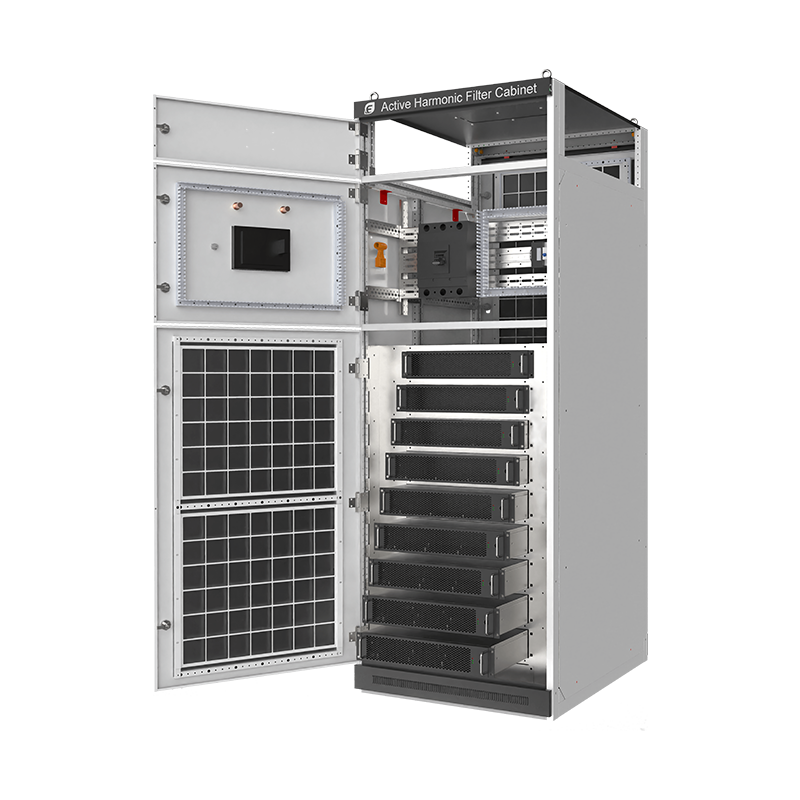
Active harmonic filters take a different approach by monitoring electrical conditions and generating compensation currents to counter harmonic components. This allows them to respond to changing distortion patterns instead of relying on a fixed filtering configuration.
The difference becomes clear when the load profile changes. A technology that performs well under stable conditions may become less suitable when the electrical environment becomes unpredictable.
Passive Filter Selection: When Your Harmonic Sources Stay Predictable
Passive filters are often suitable for industrial systems where harmonic sources are consistent and clearly identified. If a facility has a stable machine configuration and the dominant harmonic frequencies are known, a fixed filtering solution can address the specific distortion issue.
For example, a dedicated production process operating with the same equipment every day may provide the predictable conditions needed for passive filtering. The filter can be designed around the expected harmonic components without requiring continuous adjustment.
However, this fixed design also creates a limitation. A passive filter cannot automatically adapt when the harmonic spectrum changes. If additional equipment is installed or operating conditions shift, the original filter design may no longer match the new electrical characteristics.
This means passive filtering decisions should consider both present conditions and future changes. A solution that fits today’s load profile may require modification if the facility becomes more complex over time.
For applications with stable operating patterns, passive filters can remain an effective choice. For facilities with rapidly changing loads, engineers usually need to evaluate whether a more adaptive approach is required.
Active Harmonic Filter Selection: When Your Loads Keep Changing
Many modern industrial facilities have load profiles that change throughout the production cycle. Machines start and stop, power demand varies, and different equipment combinations operate at different times.
Under these conditions, active harmonic filters provide a different level of flexibility. Instead of targeting only predetermined harmonic frequencies, they analyze current distortion and provide dynamic compensation based on real-time conditions.
This capability makes active filtering especially relevant for factories with multiple nonlinear loads or variable operating scenarios. A single facility may experience different harmonic patterns during different production stages, making fixed compensation more difficult to maintain.
When companies evaluate harmonic distortion solutions, they often need to consider whether their electrical environment is stable enough for fixed filtering or dynamic enough to benefit from adaptive compensation.
Active filtering is not automatically the correct choice for every installation. The decision should still be based on measurement data, system requirements, and operational objectives. The technology becomes valuable when adaptability is a primary requirement rather than simply adding filtering capacity.
Compare Your Load Profile Before Choosing the Filter Technology
The most effective comparison between active and passive filters begins with four load profile questions.
First, determine whether harmonic sources remain constant. A facility with predictable equipment operation may align better with passive filtering, while changing sources indicate a stronger need for dynamic compensation.
Second, examine how often equipment operating conditions change. Frequent production adjustments, variable-speed operation, and automated processes create more complex harmonic environments.
Third, consider whether future expansion is expected. Industrial electrical systems often evolve as companies add production capacity or introduce new equipment. A flexible filtering method may reduce the need for redesign later.
Fourth, review the purpose of the power quality improvement project. Some facilities only need targeted correction for a known issue, while others require broader control of changing electrical conditions.
At Enjoypowers, we focus on these practical factors before recommending a power quality approach. A filter should match the electrical behavior of the facility rather than being selected only based on general performance expectations.
Building the Right Harmonic Mitigation Strategy Around Your Facility
Choosing between an active harmonic filter and a passive filter is ultimately a load-profile decision. Passive solutions can be effective when harmonic sources are stable, predictable, and well defined. Active solutions become more suitable when industrial loads continuously change and require adaptive compensation.
We help customers evaluate their electrical conditions through a system-level perspective. Instead of treating harmonic problems as isolated equipment issues, Enjoypowers considers how loads operate, how production changes affect power quality, and how the system may develop in the future.
An effective filtering strategy begins with understanding the behavior of the electrical system. By matching the filtering technology with the actual load profile, industrial facilities can achieve more reliable power quality management and avoid selecting a solution that does not fit their operating environment.
The best choice is not always the more advanced technology. It is the technology that responds effectively to the way your facility consumes and manages electrical power.