
Variable Frequency Drives (VFDs) improve motor efficiency by controlling speed and torque, making them common in HVAC systems, pumps, compressors, and industrial equipment. However, the same power conversion process that improves motor control can introduce harmonic distortion into electrical networks.
For commercial buildings and large facilities, the problem is not simply that VFDs generate harmonics. The real concern is how accumulated distortion affects transformers, distribution equipment, sensitive loads, and overall electrical stability.
Understanding the source of the problem is the first step toward selecting suitable power quality problems and solutions for a facility’s operating environment.
The Hidden Electrical Effect Behind VFD Operation
A VFD changes incoming AC power into DC power and then converts it back into a controlled AC waveform for motor operation. During the input conversion stage, the drive does not draw current as a smooth sine wave. Instead, it pulls current in pulses, creating harmonic components.
These additional frequency components distort the original electrical waveform. The level of distortion depends on factors such as the number of drives installed, their operating conditions, system capacity, and the characteristics of the electrical network.
Large buildings often use many VFD-controlled systems simultaneously. Examples include air handling units, chilled water pumps, elevators, and manufacturing equipment. Individually, one drive may have limited impact, but multiple non-linear loads operating on the same distribution system can create noticeable harmonic issues.
The result is that facilities gain energy-saving benefits from motor speed control while needing a strategy to manage the electrical side effects.
How Harmonics Move From VFDs Into Facility Power Systems
VFD-generated harmonic currents flow through the electrical distribution network and can create voltage distortion at shared connection points. Once distortion spreads through a facility, equipment that is not directly connected to the VFD may also experience unstable operating conditions.
Common symptoms include unexpected equipment heating, nuisance protection trips, communication interference, and reduced reliability of sensitive electrical systems.
For commercial buildings, these issues may appear in places where operators do not immediately associate the problem with VFD operation. A cooling system, for example, may function correctly from a mechanical perspective while contributing to electrical quality problems throughout the building.
Facilities with dense electrical infrastructure require solutions that consider the entire power network rather than treating each VFD as an isolated device.
We develop power quality solutions for harmonic distortion, reactive power compensation, and phase unbalance.
Choosing the Right Correction Method Based on the Harmonic Source
Correcting VFD-related harmonics starts with understanding where distortion originates and how severe the impact is. A solution that works for a small installation may not be appropriate for a large facility with multiple distribution panels and continuously changing loads.
Basic mitigation methods may include equipment-level improvements, such as selecting drives with lower harmonic impact or adding passive components. However, these methods may not provide sufficient flexibility for facilities where load conditions change frequently.
Large commercial sites often require centralized correction at distribution points. The selection process should consider harmonic measurements, system configuration, operating schedules, and future expansion plans.
A facility manager should first identify:
- Which equipment produces the largest harmonic contribution
- Where distortion levels are highest
- Whether harmonic issues change with operating conditions
- Which electrical loads are most sensitive
This diagnostic approach prevents facilities from installing correction equipment without understanding the actual electrical problem.
Where Active Harmonic Filtering Fits Into Large Facility Upgrades
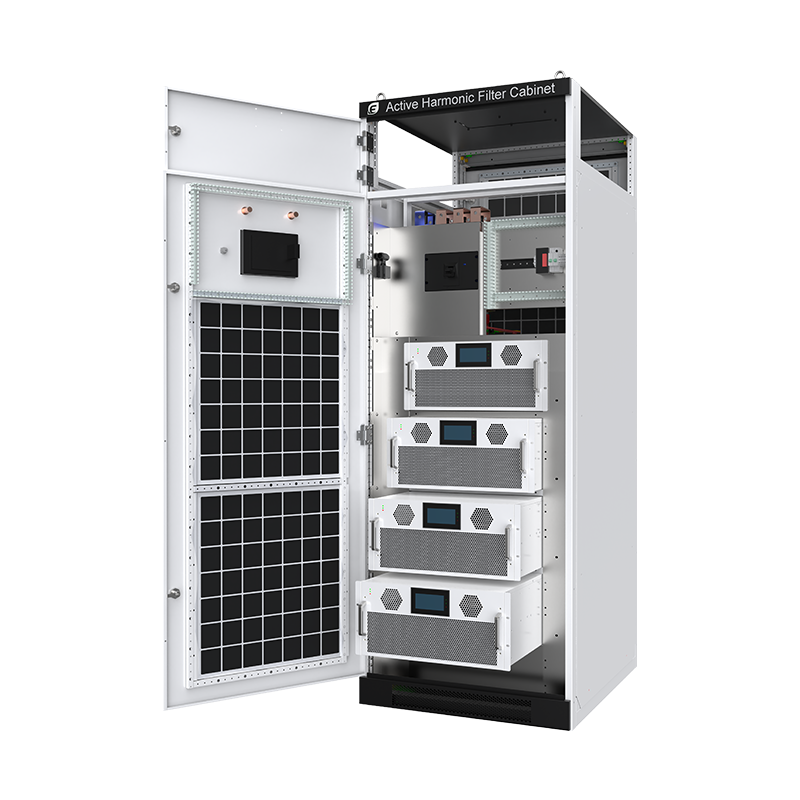
Active Harmonic Filters (AHFs) are designed to monitor harmonic currents and inject compensating currents to reduce distortion in real time. This makes them suitable for facilities where harmonic sources vary throughout daily operations.
Unlike fixed compensation methods, an AHF can respond dynamically as loads change. Enjoypowers’ AHF solutions are designed for commercial and industrial applications, providing harmonic mitigation, reactive power compensation, and three-phase load balancing capabilities.
For large facilities, AHFs can be installed at locations such as distribution panels or points where multiple non-linear loads are concentrated. This approach allows one system to address combined harmonic effects from several VFDs and other electronic loads.
The correct installation location depends on the electrical design and measured power quality conditions. A detailed assessment before deployment helps determine the required capacity and configuration.
A Practical Workflow for Reducing VFD-Related Harmonic Distortion
Solving harmonic problems usually requires a structured process rather than immediately selecting a filter. Facility teams should begin with power quality measurements to identify harmonic levels and operating patterns.
The next step is matching the mitigation technology to the problem. A system with occasional distortion peaks may require a different solution from a facility experiencing continuous harmonic loading.
During upgrades, engineers should evaluate:
- Existing VFD quantity and operating characteristics
- Electrical distribution layout
- Harmonic measurements at key connection points
- Future equipment additions
- Required improvement targets
A properly selected solution can help maintain cleaner electrical waveforms while allowing facilities to continue benefiting from VFD-based energy savings.
For organizations searching for the best power quality solutions for commercial buildings large facilities, the focus should remain on solving the actual electrical cause rather than adding equipment without analysis.
VFDs are valuable tools for improving motor efficiency, but their power conversion process naturally introduces harmonic challenges. Large facilities can manage these issues effectively by identifying distortion sources, evaluating system conditions, and applying suitable correction technologies.
A successful power quality improvement strategy combines measurement, engineering analysis, and properly matched solutions. With the right approach, facilities can maintain reliable electrical operation while continuing to use efficient VFD-driven equipment.