
Heavy-duty industrial applications require more than a simple comparison of equipment models or prices when choosing an industrial harmonic filter supplier. Factors such as harmonic sources, changing load conditions, and production requirements can directly affect electrical system stability and determine whether a filtering solution delivers lasting value.
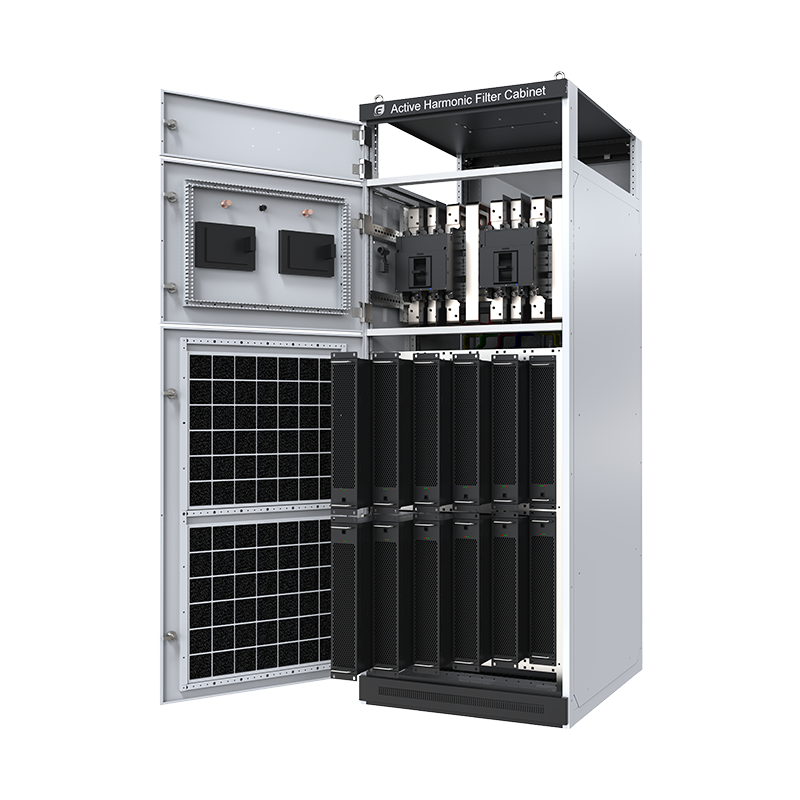
Beyond product availability, supplier capability plays a critical role in project success. Large manufacturing facilities, utilities, and industrial plants need partners that can provide accurate system analysis, appropriate filtering strategies, and dependable technical support throughout the project lifecycle.
Our approach at Enjoypowers begins with understanding the customer’s actual electrical challenges. Rather than applying a standard configuration, we focus on matching harmonic management solutions with the specific operating conditions and requirements of each industrial environment.
The First Test of a Supplier Is How It Investigates Your Electrical System
A strong supplier begins with questions about the electrical system before discussing equipment selection.
Heavy-duty applications often include variable frequency drives, converters, welding equipment, and automated machinery. These loads can generate different harmonic patterns depending on operating cycles and production conditions.
A supplier should understand where harmonics originate, when distortion increases, and how the issue affects connected equipment. Without this analysis, even a technically advanced filter may not deliver the expected improvement.
Industrial customers should evaluate whether a supplier can perform or support electrical measurements, interpret harmonic data, and explain the relationship between measured problems and recommended solutions.
This ability is especially important when selecting power quality products for the utilities industry because infrastructure-related electrical systems often require careful planning and stable long-term operation.
The supplier’s investigation process reveals whether it is acting as a solution provider or simply selling a device.
A Qualified Supplier Should Design Around Industrial Load Behavior
Heavy-duty industrial loads are rarely constant. Production schedules change, machines start and stop, and electrical demand can shift significantly during operation.
A suitable supplier should consider these variations when designing harmonic mitigation systems. The solution should be based on how the facility operates rather than only on a single measurement taken during one operating condition.
For example, a factory with continuously changing loads may require a dynamic filtering approach. A supplier should understand whether active compensation technology is more appropriate than a fixed filtering method.
The design process should also consider future changes. Industrial facilities often expand production capacity or add new electrical equipment. A supplier with engineering experience should be able to consider possible system growth during solution planning.
Enjoypowers focuses on understanding these operational factors before recommending a technical approach. We work to ensure that the selected solution supports actual industrial requirements instead of only meeting initial specifications.
Three-Phase Harmonic Control Is a Critical Supplier Capability
Most heavy-duty electrical networks rely on three-phase power distribution, making three-phase harmonic control an important capability when evaluating suppliers.
A supplier should understand how harmonic currents behave across three phases and how imbalance conditions may influence equipment performance.
A properly selected three phase harmonic filter requires more than choosing a current rating. Engineers need to consider the characteristics of connected loads, harmonic levels, system configuration, and installation conditions.
Suppliers with strong technical capability should be able to explain why a specific design fits the customer’s electrical environment. They should also understand how harmonic filtering interacts with other power quality factors, including reactive power and voltage stability.
For industrial users, this technical communication is valuable because it reduces uncertainty during equipment selection. A supplier that can clearly explain the engineering reasoning behind a solution demonstrates deeper application knowledge.
Manufacturing Capability Alone Does Not Define a Reliable Supplier
Having production capacity does not automatically mean a supplier can support complex industrial projects.
Heavy-duty applications require coordination between equipment design, system integration, installation planning, and commissioning. A supplier should have experience working with engineers, contractors, and facility operators throughout the project process.
Industrial customers should examine whether the supplier can provide technical documents, installation guidance, and application support. These factors often determine whether a project moves smoothly from planning to operation.
Reliability also depends on whether the supplier understands industrial operating environments. Equipment installed in continuous production facilities must be designed and applied with operational requirements in mind.
At Enjoypowers, we combine power quality technology knowledge with practical application experience. Our approach focuses on helping customers solve electrical challenges through suitable system design and technical cooperation.
The Right Supplier Helps Build a More Stable Power Network
Choosing an industrial harmonic filter supplier is ultimately about reducing project risk and improving long-term electrical performance.
The best supplier is not necessarily the one offering the lowest initial price or the largest product catalog. It is the supplier that can understand the electrical system, recommend appropriate technology, and provide support throughout the application process.
Heavy-duty facilities need harmonic solutions that remain effective under changing operating conditions. A supplier with strong engineering capability can help ensure that the selected system continues supporting reliable operation.
We believe successful power quality projects begin with accurate analysis and practical solution design. At Enjoypowers, we support industrial customers by connecting harmonic filtering technology with real operational needs.
A reliable supplier becomes more than an equipment provider. It becomes a technical partner that helps industrial facilities maintain stable, efficient, and dependable power systems.