
Commercial and industrial facilities are entering a different phase of energy storage adoption in 2026. Earlier projects often focused on reducing electricity costs through simple charging and discharging schedules. Today, companies are looking for storage systems that can respond to changing energy prices, support renewable integration, and improve operational flexibility.
The question is no longer only how much energy a battery can store. Facility owners are asking how the system will operate throughout its lifetime, how it will interact with existing electrical assets, and how it can support future energy requirements.
We at Enjoypowers see this shift as a move from standalone battery installation toward integrated energy management. Modern projects require coordination between storage equipment, power conversion systems, energy management platforms, and facility operating strategies.
Why C&I Energy Storage Deployments Are Entering a New Stage in 2026
The growth of renewable energy, increasing electricity cost uncertainty, and pressure for greater energy independence are changing how businesses evaluate storage investments. C&I energy storage systems are increasingly treated as operational infrastructure rather than optional backup equipment.
Many industrial facilities previously considered storage mainly for emergency power or peak demand reduction. In 2026, deployment goals are becoming broader. Businesses want systems that can manage multiple energy scenarios, including renewable power utilization, demand management, and grid interaction.
This change affects project planning from the beginning. Instead of calculating only battery capacity requirements, engineers must analyze facility load profiles, production schedules, renewable generation patterns, and future expansion plans.
A warehouse, factory, or commercial building does not consume electricity in a constant pattern. Energy demand changes throughout the day, and storage systems must match those operational characteristics to create meaningful value.
The result is a more customized approach to energy storage deployment. Standardized solutions remain useful, but successful projects increasingly depend on adapting system design to real facility conditions.
How Project Priorities Are Changing Beyond Battery Capacity
Battery capacity remains important, but it is no longer the only measurement of a successful project. Businesses are paying closer attention to how efficiently a storage system operates and how effectively it supports daily energy decisions.
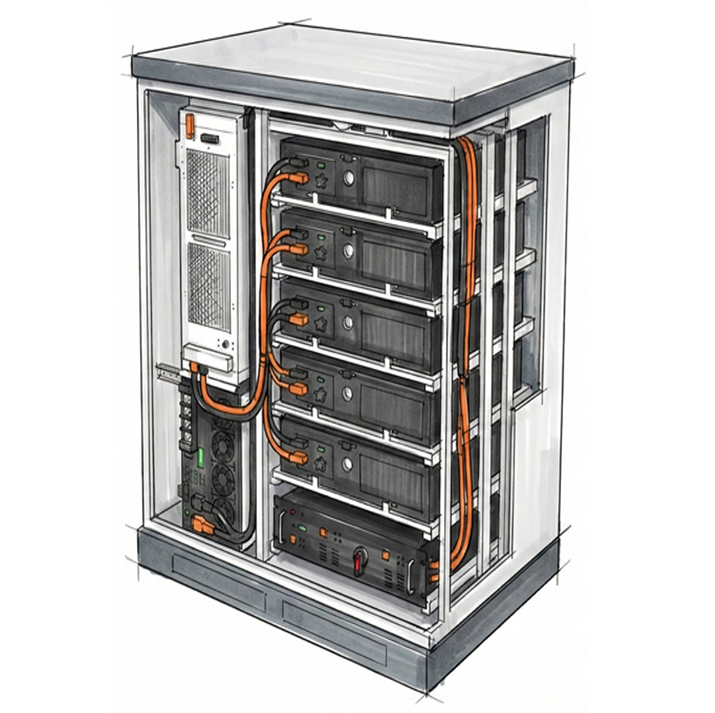
A modern c&i ess solution must consider more than the battery cabinet itself. Power conversion efficiency, control capability, monitoring functions, and communication with other energy assets all influence long-term performance.
Energy management is becoming a central part of deployment decisions. Intelligent control systems can determine when to charge, when to discharge, and how to respond to changing electricity conditions.
This development is especially important for facilities combining solar generation, storage, and complex electrical loads. The system must coordinate different energy sources while maintaining stable operation.
Another change is the increasing focus on lifecycle value. Companies are evaluating maintenance requirements, operational reliability, and long-term adaptability rather than selecting equipment only based on initial installation cost.
A storage project that performs well during the first year but cannot adapt to future energy changes may create limitations later. Facilities are therefore looking for solutions that remain useful as their energy strategies develop.
What Facility Operators Are Changing in Storage System Design
The design process for new storage projects is becoming more application-focused. Engineers are beginning with the facility’s energy challenges instead of starting with a fixed battery configuration.
Load analysis is becoming a critical first step. Understanding when electricity demand peaks, how production changes, and where energy losses occur helps determine the correct storage strategy.
Integration capability is also receiving more attention. Businesses increasingly need storage systems that can communicate with existing energy infrastructure, including solar systems, generators, and building management platforms.
For many operators, the goal is not simply storing electricity. It is creating a coordinated energy environment where different assets work together.
We at Enjoypowers develop solutions around this system-level requirement. Our approach considers how energy storage interacts with power conversion and facility operations instead of treating the battery as an isolated component.
Safety and reliability are also becoming stronger priorities during deployment decisions. As storage systems become more deeply integrated into commercial and industrial environments, operators require predictable performance and stable operation.
How Businesses Can Prepare for the Next Generation of Energy Storage Projects
Future C&I deployments will require organizations to think beyond short-term electricity savings. Energy storage is becoming part of a broader strategy for managing energy risks and improving operational control.
Companies planning new projects should first define their primary objectives. Some facilities may prioritize demand management, while others may focus on renewable energy utilization or improving resilience.
The correct system design depends on these operational goals. A solution created for one application may not deliver the same results in another environment.
We at Enjoypowers believe the next stage of energy storage development will depend on flexible system architecture and intelligent control. Businesses that consider future requirements during initial planning can avoid unnecessary redesigns as energy conditions change.
The future of C&I energy storage systems is not defined only by larger batteries or lower equipment costs. It is shaped by how effectively storage technology becomes part of everyday energy management.
In 2026, sustainable energy storage solutions are moving toward smarter deployment models. Companies that evaluate storage as a long-term operational asset will be better positioned to manage energy costs, integrate renewable resources, and build more adaptable facilities.