
Utility providers across major industrial markets are rapidly shifting toward aggressive Time-of-Use rate structures to mitigate regional grid stress during peak demand hours. Manufacturing facilities and commercial buildings operating under these dynamic tariffs face escalating electricity expenditures during afternoon and early evening operational windows.
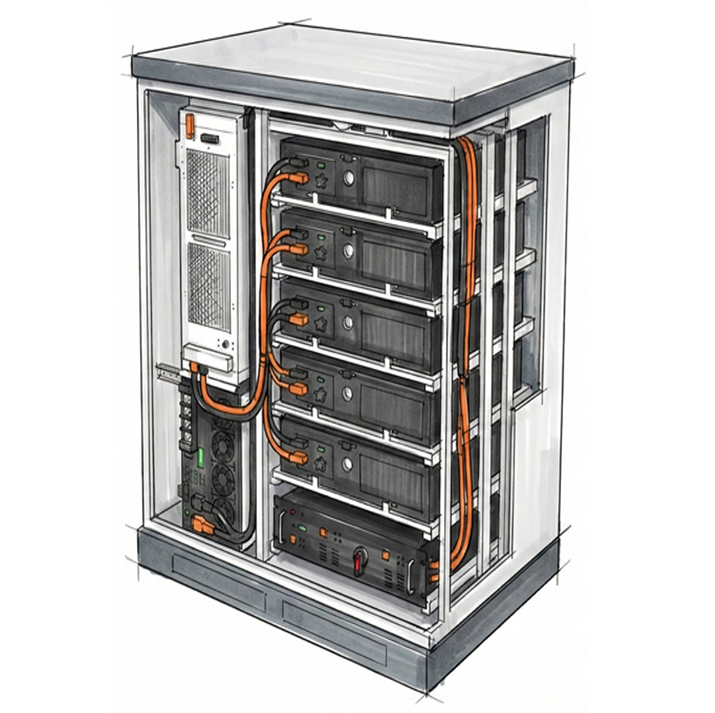
Shifting heavy power consumption away from expensive peak tariff hours provides an immediate, controllable path toward reducing monthly facility overhead. Battery energy storage can provide the flexibility needed to manage high-cost periods while helping facilities maintain normal production operations.
Arbitrage strategies empower commercial enterprises to store low-cost off-peak electricity and discharge that power when utility rates reach their daily maximum. Transforming volatile utility rate schedules into reliable, structured operational savings represents a foundational cornerstone of modern industrial energy management.
Deconstructing Time-of-Use Rate Tariffs and Peak Spread Dynamics
Time-of-Use tariffs segment daily operations into distinct pricing tiers, charging premium rates during peak grid stress while offering lower rates during overnight or solar surplus hours. Successfully monetizing these tariff schedules depends directly on the financial spread between peak and off-peak electricity rates.
Economic feasibility relies heavily on system round-trip efficiency, which measures total energy output recovered against total energy input during a full charge-discharge cycle. Modern lithium battery chemistry combined with high-efficiency power conversion systems maintains round-trip efficiency above eighty-eight percent across standard duty cycles.
Factoring internal conversion and thermal losses into daily scheduling models helps determine whether each charging and discharging cycle can deliver a positive net financial return. Deploying robust commercial energy storage systems enables automated execution of these complex arbitrage routines, capturing predictable daily rate spreads without requiring constant manual operator oversight.
Expansive price spreads in regions featuring high solar or wind grid penetration create exceptionally lucrative environments for daily load shifting. Facility managers utilize automated energy management platforms to absorb excess cheap grid power during mid-day solar overproduction periods, storing energy for deployment during expensive evening ramp hours.
Accurately calculating tariff spreads, conversion losses, and hourly facility load profiles transforms passive utility expenditure into an actively managed financial asset. Clean energy shifting safeguards facility budgets against rising utility rates while enhancing total electrical system flexibility.
Balancing Battery Cycle Life Against Rate Arbitrage Spreads
Extracting maximum financial value from time-of-use energy arbitrage requires continuous evaluation of battery cell degradation in conjunction with daily rate spreads. Charging and discharging lithium iron phosphate cells generates subtle electrochemical wear, creating a measurable levelized cost of storage for every processed cycle.
Executing a daily arbitrage cycle makes economic sense only when the financial spread between peak and off-peak rates exceeds the marginal degradation cost of the battery cells. Deep discharge cycles replace higher volumes of expensive grid power but accelerate cell capacity fade over long multi-year operational horizons.
Advanced control protocols must dynamically restrict the depth of discharge to optimal operational zones, carefully balancing immediate tariff savings against long-term asset life. Intensive continuous duty cycles in industrial energy storage systems necessitate sophisticated liquid cooling systems to maintain uniform thermal conditions across dense battery racks during high-rate discharges.
Integrated liquid cooling architectures effectively mitigate internal micro-hotspots, preserving cell health and stabilizing cycle degradation costs over thousands of consecutive operations. Maintaining appropriate thermal and electrochemical operating conditions can support battery longevity and improve the predictability of long-term project economics.
Energy Management Systems and Fast Power Conversion Response
Automating time-of-use arbitrage across complex facility operations requires seamless communication between central control software, battery management systems, and power conversion hardware. Intelligent energy management controllers continually evaluate upcoming utility tariff schedules, facility load forecasts, and real-time battery state-of-charge metrics.
Predictive control algorithms determine the exact optimal hours for charging during low-cost overnight periods or local solar generation peaks. Fast power conversion and control can help the system respond quickly to changing load and dispatch requirements.
Here at Enjoypowers, we engineer high-efficiency power conversion systems designed to maintain peak efficiency across wide power operating bands, directly maximizing net arbitrage returns. High inversion efficiency minimizes internal energy conversion losses during aggressive peak discharge events, ensuring maximum stored power reaches facility loads.
Integrating responsive commercial energy storage systems with intelligent tariff-tracking software insulates facilities from unpredictable grid price volatility. Precise power conversion control helps ensure that every stored kilowatt-hour directly displaces expensive peak grid electricity, securing maximum financial value from daily tariff spreads.
Integrating Arbitrage with Demand Charge Management for Optimal ROI
Focusing exclusively on volumetric time-of-use arbitrage leaves significant financial value behind if peak demand charges remain unmanaged. Utility invoices usually combine volumetric kilowatt-hour usage fees with monthly demand charges based on defined measurement intervals, which may be 15 minutes or another interval depending on the utility tariff.
Multi-mode energy storage dispatch strategies merge volumetric rate arbitrage with real-time peak shaving to extract dual financial benefits from a single storage asset. Battery systems discharge according to scheduled tariff windows while retaining dynamic power capacity to suppress sudden, unexpected facility load spikes.
Our expert engineering team at Enjoypowers develops flexible power conversion control software that automatically prioritizes peak demand suppression whenever total facility load approaches contractual threshold limits.
Suppressing severe demand spikes while systematically shifting base energy consumption away from peak tariff windows accelerates project payback.
Versatile industrial energy storage systems designed for multi-application dispatch yield payback periods significantly shorter than single-use storage setups. Facilities running heavy manufacturing equipment gain optimal economic resilience by combining dynamic power factor correction with intelligent tariff optimization routines.
Choosing advanced hardware solutions from Enjoypowers equips commercial and industrial facilities with the technology required to turn restrictive utility rate schedules into long-term operational cost savings.