
Electricity bills are not always driven only by how much energy a facility consumes. In many commercial and industrial sites, a major cost factor comes from short periods when power demand reaches its highest level.
These demand peaks may occur when multiple machines start at the same time, production schedules overlap, or large equipment operates during high-demand periods. Even if the high consumption lasts for only a limited time, it can influence electricity charges.
Peak shaving is a strategy designed to reduce these temporary demand spikes. For facility managers, the concept is simple: instead of allowing the grid to supply the entire power demand during peak periods, stored energy is used to support part of the load.
We help industrial users understand peak shaving as an operational energy management method rather than only a storage application. The goal is to make electricity usage more predictable while improving control over energy costs through a suitable industrial battery energy storage system (BESS).
Peak Shaving Starts With Managing Short Periods of High Demand
Many facilities have a normal electricity consumption pattern throughout most of the day. However, certain moments create unusually high demand.
A manufacturing plant may experience a demand increase when several production lines run simultaneously. A commercial building may see higher consumption when cooling systems, elevators, lighting, and other equipment operate together.
Traditional energy consumption focuses on total kilowatt-hours used over time. Peak shaving focuses on periods of high power demand, which may be measured according to defined demand intervals under the applicable electricity tariff.
The purpose of peak shaving is not necessarily to reduce overall production activity. Instead, it changes where the power comes from during high-demand moments.
Rather than drawing all required electricity from the grid, an energy storage system can discharge stored power to reduce the amount of electricity supplied externally. Once demand decreases, the system can recharge during suitable periods.
This approach gives facility managers another way to manage electricity consumption without relying only on operational restrictions.
How Energy Storage Changes the Shape of Your Power Demand
An energy storage system works as a buffer between the facility and the electrical grid. During periods when electricity demand is lower, the system stores energy. During peak demand periods, it releases energy to support the facility load.
The result is a smoother demand profile. The facility still receives the power needed for operation, but the grid does not experience the same level of demand concentration.
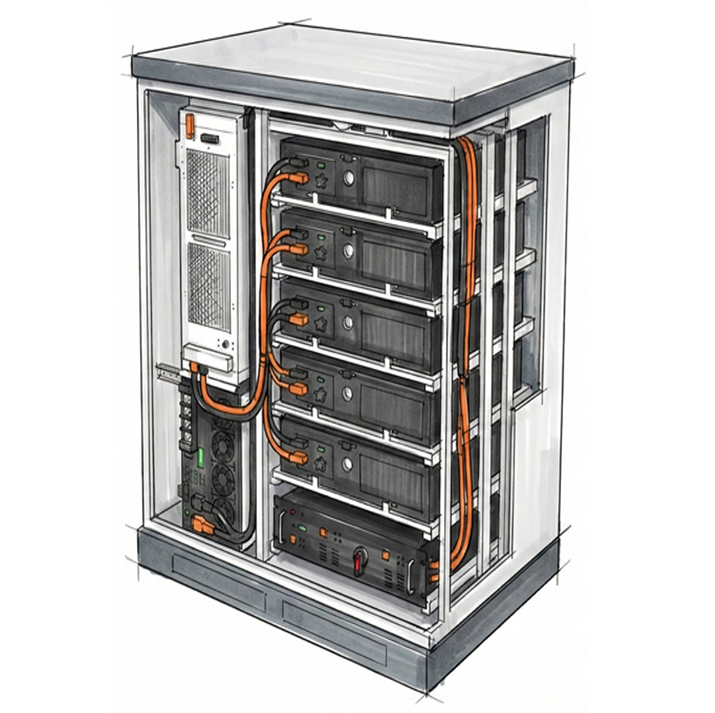
A modern industrial battery energy storage system (BESS) typically combines batteries, power conversion equipment, control systems, and energy management functions. Together, these components coordinate charging and discharging based on operational requirements.
The effectiveness of peak shaving depends on how accurately the system understands the facility’s demand pattern. A storage solution must be configured around actual consumption behavior rather than simply installed as additional capacity.
For many industrial users, a modular energy storage system provides flexibility because capacity can be matched to current requirements while allowing future expansion when energy needs change.
Why Facility Managers Look Beyond Traditional Demand Control Methods
Before adopting energy storage, many facilities attempt to manage demand through operational adjustments. Some may reschedule equipment operation, avoid simultaneous machine startup, or reduce unnecessary consumption during peak periods.
These methods can work in certain situations, but they may affect production flexibility. A facility manager may not always have the ability to delay equipment operation or change manufacturing schedules.
Energy storage provides another option by managing the electrical load without requiring major changes to daily operations.
The value of peak shaving becomes clearer in facilities where demand peaks are difficult to avoid. Continuous production environments, automated factories, and sites with significant electrical equipment often require solutions that operate alongside existing workflows.
However, storage should not be viewed as a universal answer. The facility’s load curve, peak duration, operating schedule, and energy objectives determine whether peak shaving provides meaningful value.
Deciding Whether Peak Shaving Fits Your Facility Operation
Facility managers evaluating peak shaving should first examine when and why demand peaks occur.
The first question is whether peak demand happens regularly. A predictable pattern makes it easier to plan energy storage operation and determine suitable charging and discharging strategies.
The second question is the duration of each peak period. Short demand spikes and extended high-load periods may require different storage configurations.
The third factor is operational flexibility. Facilities with limited ability to adjust production schedules often gain more value from automated energy management.
Finally, future energy requirements should be considered. Expansion plans, additional equipment, and changing electricity usage patterns can influence the required storage approach.
At Enjoypowers, we analyze these operational factors before developing energy storage strategies. We focus on how energy systems interact with real facility conditions rather than treating storage as a standalone device.
Turning Peak Demand Challenges Into a More Flexible Energy Strategy
Peak shaving provides facility managers with a practical method to control electricity demand by shifting when energy is supplied from the grid and when it comes from storage.
The core idea is straightforward: store energy when demand conditions are favorable and use that stored energy when demand reaches costly peaks.
We work with commercial and industrial customers to develop energy storage approaches that align with their operational requirements. Enjoypowers focuses on creating solutions that support better energy control, improved flexibility, and long-term management of changing power demands.
A peak shaving strategy is most effective when it is designed around the facility’s actual electricity behavior. Understanding demand patterns is the first step toward deciding whether energy storage can become a valuable part of your power management plan.
For facility managers, the question is not simply whether energy storage can reduce peaks. The more important question is whether the storage strategy matches the way your facility uses energy every day.