
Industrial electrical networks with significant nonlinear loads may experience harmonic distortion levels that exceed applicable limits. Excessive harmonic current pollution elevates operating temperatures across primary distribution transformers, causes nuisance tripping of main circuit breakers, distorts control signals, and severely degrades insulation in medium-voltage equipment.
Local electrical utility providers strictly enforce total demand distortion limits at the Point of Common Coupling to prevent harmonic noise from propagating into shared distribution grids.
Exceeding applicable harmonic limits may lead to utility concerns, corrective-action requirements, contractual consequences, or other measures depending on the applicable grid code and connection agreement.
Achieving standard compliance requires a targeted engineering remediation process designed to neutralize harmonic currents directly at the source. Correctly diagnosing harmonic spectra, replacing obsolete passive correction hardware, deploying high-speed active mitigation platforms, and completing certified field compliance testing contributes to long-term electrical asset survivability and uncompromised facility uptime.
Baseline Harmonic Profiling and Distinguishing TDD from Voltage THD
Remediating a non-compliant facility begins with comprehensive electrical waveform logging using high-precision Class A power quality meters. Multi-channel logging instruments connected across primary switchgear buses must continuously capture three-phase voltage and current waveforms over a minimum seven-day operational cycle to isolate dynamic load shifts.
Relying on short-term spot measurements introduces severe diagnostic errors because transient motor starts and intermittent processing cycles alter the load profile. Continuous data logging isolates specific harmonic orders, separating lower-order fifth and seventh harmonics generated by six-pulse variable frequency drives from high-frequency switching noise produced by switched-mode power supplies.
Determining standard compliance requires evaluating Total Demand Distortion alongside Total Harmonic Voltage Distortion. Total Demand Distortion evaluates harmonic current relative to the maximum demand load current defined for the applicable assessment, preventing artificially inflated distortion readings during off-peak operating hours.
Quantifying triplen harmonic accumulation in neutral conductors provides essential data for four-wire distribution systems. Third, ninth, and fifteenth harmonic orders aggregate directly in neutral lines, creating destructive thermal overload risks that require dedicated neutral-phase compensation rather than simple three-phase balanced filtering.
Why Legacy Passive Correction Fails in Modern Non-Linear Environments
Conventional plant installations traditionally relied on fixed passive LC filter banks and un-tuned power factor correction equipment to manage reactive power. However, fixed passive filters are engineered for static load profiles and fixed grid impedance values, making them inherently unsuitable for modern industrial facilities driven by dynamic, variable-speed motor drives.
Fluctuating industrial loads constantly alter system impedance, rendering fixed passive filter circuits ineffective and susceptible to harmonic resonance. Parallel resonance between passive filter capacitors and upstream transformer inductance creates severe current amplification, which routinely destroys capacitor banks and generates damaging line-voltage overshoots.
Traditional passive capacitors also act as low-impedance sinks for external harmonic currents originating from adjacent industrial facilities on the same utility feed. This unintended absorption causes rapid internal thermal degradation, swollen capacitor enclosures, and premature fuse failure, ultimately shifting the entire facility deeper into non-compliance.
Upgrading from passive components to active power electronics resolves impedance-matching conflicts entirely. Modern active platforms monitor the load current continuously and adjust their operational profile in real time, mitigating resonance risks while delivering steady harmonic mitigation under rapidly shifting operating conditions.
Implementing Active Filtering Architecture for Dynamic Harmonic Cancellation
Achieving reliable compliance across rapidly changing load profiles requires dynamic active mitigation hardware installed at primary distribution nodes. An active power filter (APF) operates as a controlled current source, continuously sampling line current, isolating harmonic components, and injecting compensating currents with a response time of up to 5 ms.
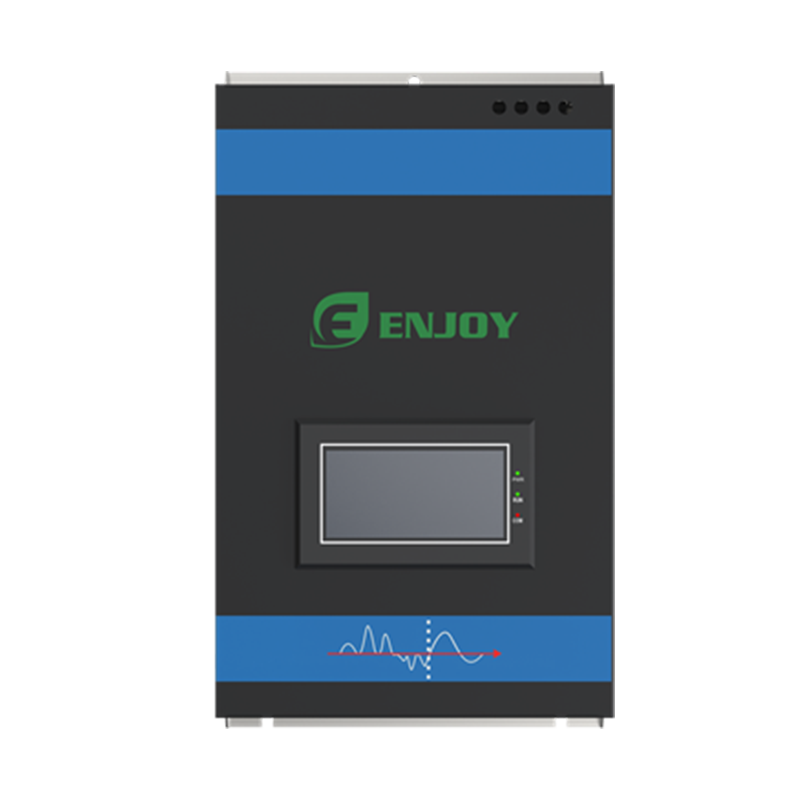
At Enjoypowers, we engineer active power filter modules using three-level power conversion topologies operating at high switching frequencies. Our advanced digital signal processing algorithms analyze incoming current waveforms and inject instantaneous corrective currents up to the fiftieth harmonic order, restoring the utility current waveform to a clean sine wave.
Installing modular active filtering units directly at non-linear load centers prevents harmonic current propagation into main switchboards and standby generator sets. Decentralized harmonic cancellation reduces copper losses in feeder cables, lowers transformer operating temperatures, and recovers critical electrical capacity throughout the facility.
We integrate dual-function control loops into Enjoypowers power quality modules to deliver simultaneous active harmonic cancellation and fast reactive power injection. Combining harmonic suppression with instantaneous power factor correction equipment functionality allows plant operators to achieve near-unity power factor while helping improve power factor and reduce the risk of harmonic-related utility penalties.
Post-Remediation Commissioning and Field Verification of Grid Compliance
Verifying that a facility has successfully transitioned from non-compliant status to full standard compliance mandates rigorous field testing under maximum production load. Post-installation audits utilize calibrated, certified power quality analyzers at the Point of Common Coupling to log current and voltage waveforms continuously across all operational shifts.
Deploying modular active mitigation hardware provides scalable compensation capacity that grows alongside facility expansion. Parallel modular configurations ensure high availability, allowing individual power modules to be serviced or inspected without taking the entire power quality management system offline or dropping below utility compliance limits.
Final compliance sign-off requires proving that Total Demand Distortion strictly satisfies IEEE 519 threshold tables based on the facility’s specific short-circuit ratio. Maintaining voltage distortion within the applicable limits helps protect sensitive equipment logic controllers, robotics, and automation systems from waveform-induced logic errors.
Continuous digital telemetry provides ongoing operational visibility, alerting facility engineers immediately if future load additions push current distortion back toward regulatory limits. Establishing continuous, automated monitoring converts harmonic management from a reactive troubleshooting exercise into a predictable, standard-compliant operating routine.
Our engineering team at Enjoypowers builds robust power quality hardware designed to meet strict global grid interconnection standards. Implementing high-speed active filtering and dynamic power quality remediation protects critical industrial infrastructure, maximizes facility energy conversion efficiency, and supports compliance with applicable utility grid requirements.