
A UPS system is designed to protect critical loads from power interruptions, but it does not automatically eliminate every power quality issue within an electrical network. In many industrial facilities, the UPS itself can become a source of harmonic distortion that affects upstream electrical equipment.
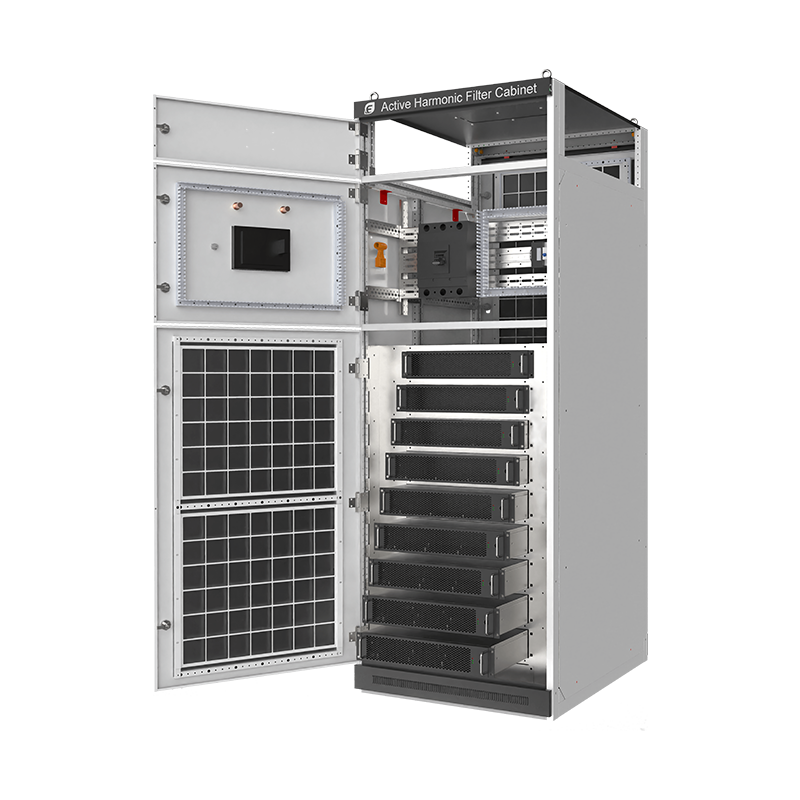
As facilities rely on more power electronic devices, managing current quality becomes increasingly important. Harmonics generated by UPS systems can influence transformers, generators, switchgear, and distribution systems if they are not properly controlled.
A UPS harmonic filter addresses this issue by reducing harmonic currents and helping maintain a cleaner electrical environment. We develop power quality solutions at Enjoypowers to support industrial users that require stable and reliable power infrastructure.
Why UPS Protection Does Not Always Mean Complete Power Protection
Many facilities install UPS systems because they need continuous power for sensitive equipment. The UPS provides backup energy and helps maintain operation during supply interruptions.
However, the protection provided by a UPS mainly focuses on the downstream loads connected to it. The electrical conditions created by the UPS input stage can still affect the wider power distribution system.
Modern UPS units often use power electronics for energy conversion. These components improve control and efficiency, but they can also introduce nonlinear current characteristics.
When nonlinear loads draw current in a distorted waveform, harmonic currents can flow through the electrical network. Over time, these currents may increase stress on upstream components.
This creates a difference between protecting critical equipment from outages and maintaining overall facility power quality.
How UPS Harmonics Travel Back Into the Facility Power Network
Harmonics occur when electrical current or voltage deviates from the ideal sinusoidal waveform. UPS systems may generate harmonic currents because their rectifier and converter stages process electrical energy through switching devices.
These harmonic currents do not simply remain inside the UPS. They can move through the supply connection and influence upstream equipment.
Transformers may experience additional heating due to harmonic currents. Generators can face increased loading effects, while switchgear and distribution systems may experience greater electrical stress.
The impact depends on the size of the UPS installation, the characteristics of other loads connected to the same network, and the overall electrical design.
Large industrial facilities are especially sensitive because multiple systems operate simultaneously. A single power quality issue can affect the performance of an entire electrical environment.
For this reason, engineers often evaluate harmonic levels as part of a broader power quality assessment rather than treating the UPS as an isolated device.
Why Harmonic Filters Are Added Around UPS Systems
A UPS harmonic filter is used to reduce unwanted harmonic currents and improve the quality of electrical power flowing through the system.
Instead of allowing harmonic distortion to circulate through upstream infrastructure, filtering equipment helps manage these current components before they affect other parts of the network.
For industrial facilities, this can support more stable operation of electrical equipment and improve the overall performance of the power distribution system.
Active filtering technology provides a flexible approach because it can detect and compensate for changing harmonic conditions. Unlike fixed correction methods, active solutions can respond to dynamic load variations.
Enjoypowers provides active power quality solutions designed for applications where electrical stability and equipment protection are important. Our experience with active filters for power quality improvement allows us to support customers facing complex harmonic challenges.
The purpose of a UPS harmonic filter is not to replace the UPS function. Instead, it complements the UPS by addressing the power quality issues that may occur around the system.
What Engineers Consider When Selecting a UPS Harmonic Filter
The selection of a harmonic filter depends on the actual electrical conditions of the facility.
One important factor is the harmonic profile created by the UPS system. Engineers typically evaluate the type of UPS, operating conditions, and measured distortion levels before determining a suitable filtering approach.
The relationship between the UPS and other connected equipment also matters. A facility with generators, sensitive automation systems, or large motor loads may require a different solution compared with a smaller installation.
Installation location is another consideration. Filtering equipment may be positioned at different points within the electrical network depending on the objective, whether the goal is protecting upstream equipment or improving overall power quality.
A suitable solution requires understanding the complete power system rather than selecting equipment based only on UPS capacity.
Improving Power Infrastructure Reliability Beyond UPS Backup Capability
UPS systems remain essential for protecting critical operations, but modern electrical design requires attention to issues beyond backup power.
Harmonic distortion from UPS equipment can influence upstream infrastructure and reduce the stability of the overall power network. Managing these effects helps facilities maintain better electrical performance.
A UPS harmonic filter provides a targeted approach to controlling harmonic problems and protecting equipment that supports continuous operation.
We believe effective power management requires cooperation between backup power systems and power quality technologies. At Enjoypowers, we focus on helping industrial customers improve electrical reliability through solutions such as active filtering and other industrial power quality equipment.
For facilities depending on UPS systems, harmonic control is no longer only a corrective measure after problems appear. It is becoming part of a complete approach to designing reliable and efficient power infrastructure.