
The switching frequency of a Power Conversion System (PCS) is one of the design factors that directly affects how efficiently an energy storage system converts electrical power. It also influences the quality of the output waveform and the difficulty of controlling harmonic distortion.
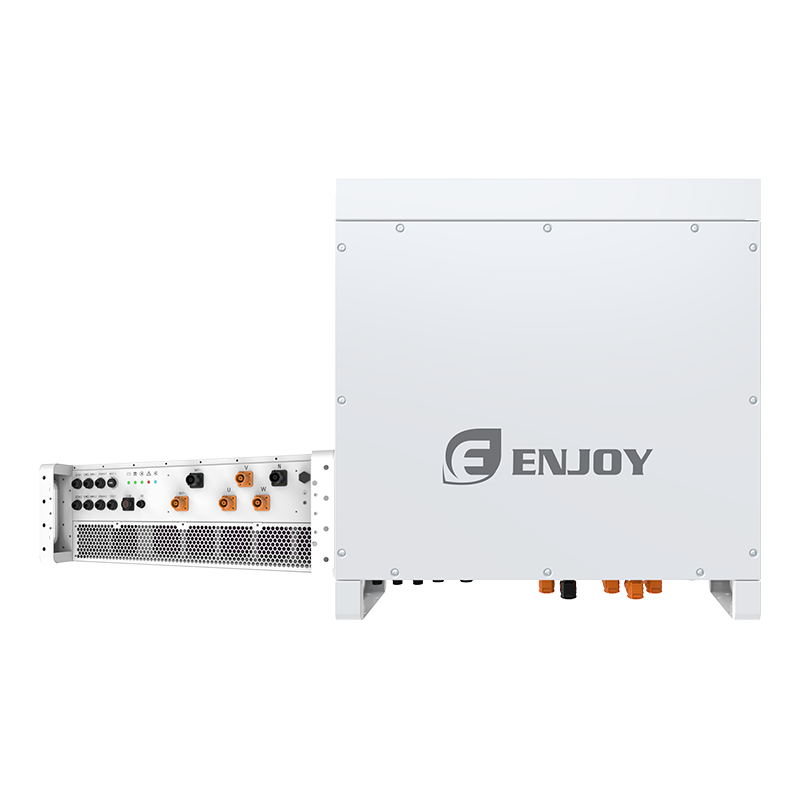
When selecting energy storage equipment, engineers should view PCS switching frequency as more than a standalone parameter. Its impact extends across conversion efficiency, heat dissipation design, filtering requirements, and overall system operation.
Raising the switching frequency can provide finer waveform regulation, yet it also increases the number of switching actions performed by power semiconductors, which may lead to higher losses. Reducing the frequency can lower switching losses, but it may place greater demands on harmonic control and output filtering.
The practical value of a switching frequency setting depends on how well it matches the application environment. A properly configured PCS achieves a balance between electrical performance, efficiency, and long-term reliability.
Switching Frequency Determines How a PCS Balances Speed and Losses
A PCS converts electrical energy between different forms, such as converting battery DC power into AC power for loads or the grid. During this process, power semiconductor devices switch on and off thousands of times per second to control current and voltage.
Switching frequency describes how often these semiconductor devices perform this operation within a given time period. It influences how accurately the PCS can shape the output waveform.
Higher switching frequency provides more control points during each electrical cycle. This allows the converter to create smoother output waveforms and can reduce certain types of harmonic components.
However, every switching action consumes energy. More frequent switching increases semiconductor losses, which can reduce overall conversion efficiency and generate additional heat inside the PCS.
The design challenge is therefore finding a switching frequency that achieves sufficient waveform quality without creating unnecessary energy losses.
Higher Switching Frequency Can Improve Waveform Control but Increase Conversion Losses
Increasing switching frequency allows a PCS to respond more quickly to electrical changes. This capability is valuable in applications where stable output quality and precise power control are important.
A higher frequency can reduce the size requirements of some passive components, such as filters and inductors, because the converter can manage waveform correction more effectively.
However, the improvement comes with a cost. Semiconductor devices experience more switching transitions, increasing switching losses during operation. These additional losses must be managed through thermal design, cooling systems, and component selection.
For battery storage projects, excessive losses reduce the amount of stored energy that can be effectively delivered. This makes efficiency optimization a critical part of system design.
At Enjoypowers, we consider switching characteristics together with application requirements when developing energy conversion solutions. The selected design approach needs to support both electrical performance and long-term operating reliability.
Lower Switching Frequency Reduces Losses but Requires More Attention to Harmonic Performance
A lower switching frequency reduces the number of switching events, which can decrease semiconductor losses and simplify thermal management.
However, fewer switching transitions may make waveform control more challenging. The converter has fewer opportunities to adjust the output signal, which can increase harmonic components if the system design does not include appropriate control strategies and filtering.
This relationship is particularly important in systems where power quality requirements are strict. Harmonic output can affect connected equipment, electrical infrastructure, and overall system performance.
A well-designed BESS PCS must therefore combine suitable switching operation with control algorithms and filtering methods that maintain acceptable waveform quality.
The goal is not simply to maximize or minimize switching frequency. The goal is to achieve the right balance between efficiency and electrical performance.
The Best PCS Design Depends on the Operating Environment
Different energy storage applications place different demands on PCS operation.
An off-grid PCS used in an isolated power system may require strong voltage control and stable output because there is no utility grid available to absorb electrical variations.
A grid-connected storage system may prioritize other factors, such as efficiency during frequent charge and discharge cycles or coordination with grid requirements.
Battery capacity, load characteristics, operating hours, and environmental conditions all influence the appropriate PCS design.
Our engineers at Enjoypowers analyze these operating conditions before determining the most suitable technical approach. Switching frequency is evaluated as part of the complete conversion system rather than as an independent specification.
This approach helps ensure that the PCS matches the real electrical environment where it will operate.
Evaluating PCS Performance Requires Looking Beyond One Parameter
Switching frequency provides valuable insight into PCS behavior, but it should not be considered alone.
A complete evaluation should include conversion efficiency, harmonic performance, thermal design, control capability, and system reliability. A PCS with a higher switching frequency is not automatically better, and a lower switching frequency is not automatically more efficient.
BESS PCS selection requires understanding how different design choices interact. The optimal system is the one that delivers reliable energy conversion under the expected operating conditions.
We at Enjoypowers focus on designing energy storage conversion solutions that balance efficiency, waveform control, and practical application requirements.
Switching frequency is ultimately a design tool. Its value depends on how effectively it is integrated with semiconductor technology, control methods, and system architecture. By understanding this relationship, businesses can make better decisions when selecting PCS equipment for modern energy storage projects.