
A hybrid inverter is designed to solve a more complex energy management problem than a traditional inverter. Instead of only converting solar DC power into usable AC electricity, it coordinates power exchange between photovoltaic generation, batteries, electrical loads, and the grid.
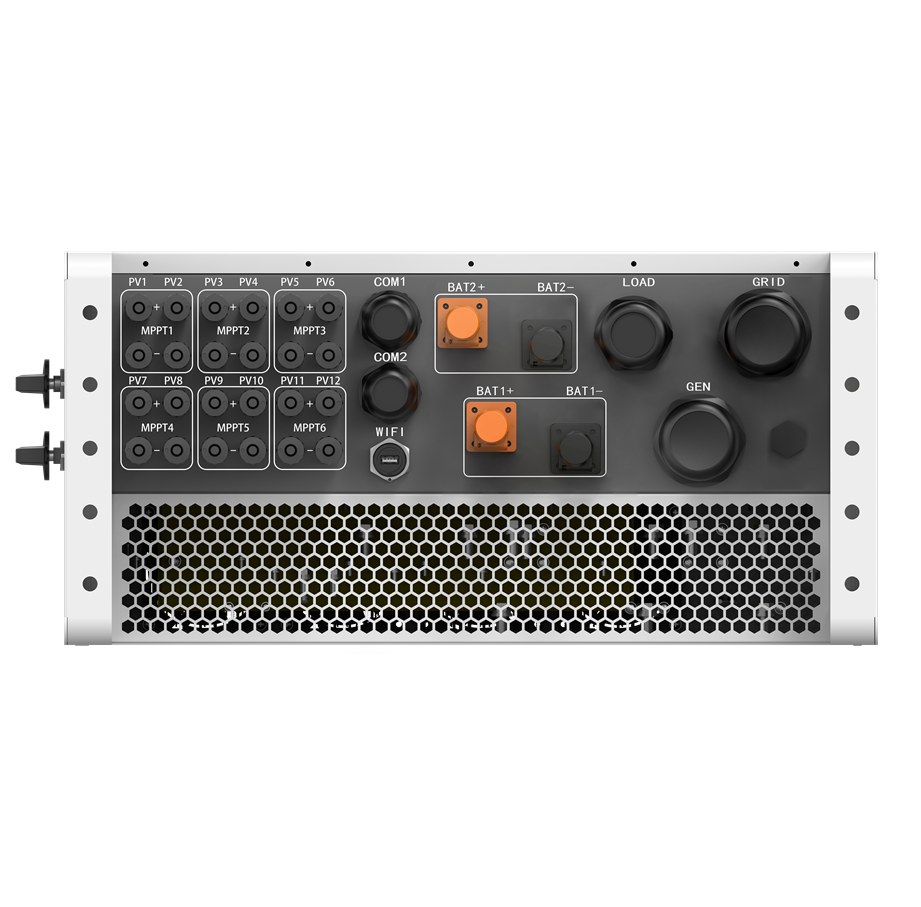
Modern energy storage systems rely on the inverter as a coordination hub, making component-level understanding valuable for project developers and system integrators during design and implementation.
The questions are not only “how does a hybrid inverter work?” and “is a hybrid inverter better than an inverter?” but also how each component contributes to reliable energy conversion, storage control, and flexible operation.
Following the Energy Path Inside a Hybrid Inverter
A hybrid inverter begins its operation by receiving energy from different sources. Solar panels provide variable DC power, while batteries store or release DC energy depending on system demand.
The inverter must decide whether solar energy should directly supply loads, charge the battery, or export electricity to the grid. If stored energy is needed, the system controls battery discharge and converts the energy into AC power for connected equipment.
Unlike a conventional inverter that mainly handles solar-to-AC conversion, a hybrid system manages multiple energy paths simultaneously. This requires coordinated control between power conversion circuits and energy management software.
Modern commercial systems often combine photovoltaic input, battery management, and grid interaction within one integrated platform. Enjoypowers develops hybrid inverter solutions that combine PV input, battery control, and grid-connected or off-grid operation for commercial and industrial energy storage scenarios.
The Core Components That Make Hybrid Operation Possible
The first major component is the Maximum Power Point Tracking (MPPT) unit. Solar output changes throughout the day because of sunlight intensity, temperature, and panel conditions. MPPT technology adjusts operating points to capture available solar energy efficiently.
After solar energy enters the system, DC/DC converters regulate voltage between different DC sources. Battery voltage and photovoltaic voltage are not always identical, so controlled conversion is required before energy can move between components.
The bidirectional power conversion stage is another essential element. Unlike a standard inverter that mainly converts DC to AC, a hybrid inverter must support both charging and discharging functions. Energy can move from the battery to the grid or loads, and it can also move from solar or grid sources back into the battery.
Control switches and protection circuits manage the connection between energy sources. They help the system respond to changing conditions, including grid availability, load demand, and battery status.
The final component is the control platform. It coordinates all hardware sections and determines operating priorities based on programmed strategies.
How the Control System Decides Where Power Goes
The intelligence of a hybrid inverter comes from its energy management logic. The system continuously evaluates available solar power, battery state of charge, electricity demand, and grid conditions.
During periods of strong solar generation, excess photovoltaic energy can be stored in the battery instead of being wasted. During high electricity demand periods, stored energy can be released to reduce grid dependence.
Commercial projects may use different operating strategies depending on their objectives. Some facilities prioritize self-consumption, while others focus on peak demand reduction, backup power, or renewable energy utilization.
The control system also becomes important during grid interruptions. Certain hybrid inverter designs can support off-grid operation by managing the transition between grid-connected and backup modes.
Enjoypowers’ hybrid inverter products integrate functions such as PV conversion, battery management, and energy control into a unified architecture designed for commercial applications.
For buyers comparing hybrid inverter manufacturers in china, the control strategy should receive as much attention as hardware specifications. A well-designed control system plays an important role in how effectively the inverter handles changing operating conditions.
Why Hybrid Inverters Change the Design of Energy Storage Systems
Traditional solar systems often require separate equipment for solar conversion, battery charging, and energy management. A hybrid inverter combines several functions into one coordinated platform, reducing the complexity of system design.
This integration is especially valuable in commercial and industrial projects where installation space, communication between devices, and operational flexibility are important factors.
A hybrid architecture can simplify connections between PV arrays, battery systems, and electrical loads. Instead of multiple independent devices making separate decisions, the hybrid inverter coordinates energy flow through a single control system.
For larger installations, the design approach also influences future expansion. System planners must consider battery capacity, load characteristics, grid requirements, and expected operating modes before selecting equipment.
A hybrid inverter is therefore not simply an upgraded inverter. It represents a different method of managing distributed energy resources.
Answering the Buyer Question: Is Hybrid Better Than a Standard Inverter?
Whether a hybrid inverter is better depends on the project objective. A standard inverter may be suitable for systems where solar energy is immediately consumed or exported without battery storage requirements.
A hybrid inverter becomes more valuable when a project needs energy storage, backup capability, or more flexible control over electricity usage.
The comparison between a traditional inverter and a hybrid system should focus on functionality rather than assuming one solution fits every application.
For facilities planning solar-plus-storage systems, a hybrid inverter can reduce the need for separate conversion equipment and provide more coordinated energy management.
However, system designers still need to evaluate battery requirements, operating goals, and electrical conditions before making a final decision.
Understanding the internal components of a hybrid inverter makes it easier to evaluate whether the technology matches a project’s needs. The MPPT unit captures solar energy, converters regulate DC power, bidirectional circuits manage battery exchange, and control systems coordinate the entire process.
For commercial and industrial energy projects, the right choice depends on how much control, flexibility, and integration the system requires. A hybrid inverter is most effective when its components work together as part of a complete energy management strategy.