
Proper sizing of a bidirectional DC-DC converter plays an essential role in solar-plus-storage system design. A mismatch between converter capacity and actual operating requirements may restrict charging efficiency, reduce renewable energy utilization, and increase unnecessary system costs.
The challenge is that converter sizing is not determined by battery capacity alone. Engineers must consider how energy moves between photovoltaic sources, batteries, DC buses, and connected loads throughout different operating conditions.
A suitable design starts with understanding the required power flow rather than choosing a converter based only on nominal system capacity.
Start Sizing From the Energy Flow Instead of the Converter Rating
A bidirectional DC-DC converter controls energy transfer between two DC voltage levels. In a solar-plus-storage system, it commonly manages power exchange between the battery and the shared DC bus while supporting charging and discharging operations.
The first sizing question is not “How large is the battery?” but “How much power must move between the battery and the rest of the system at any given moment?”
Battery capacity is measured in kilowatt-hours, while converter power is measured in kilowatts. A large battery may require only moderate converter power if energy is exchanged slowly, while a smaller battery may need a higher-rated converter for rapid charge and discharge cycles.
The operating objective determines the required power level. Peak shaving, backup power, renewable energy smoothing, and microgrid operation may create different converter requirements.
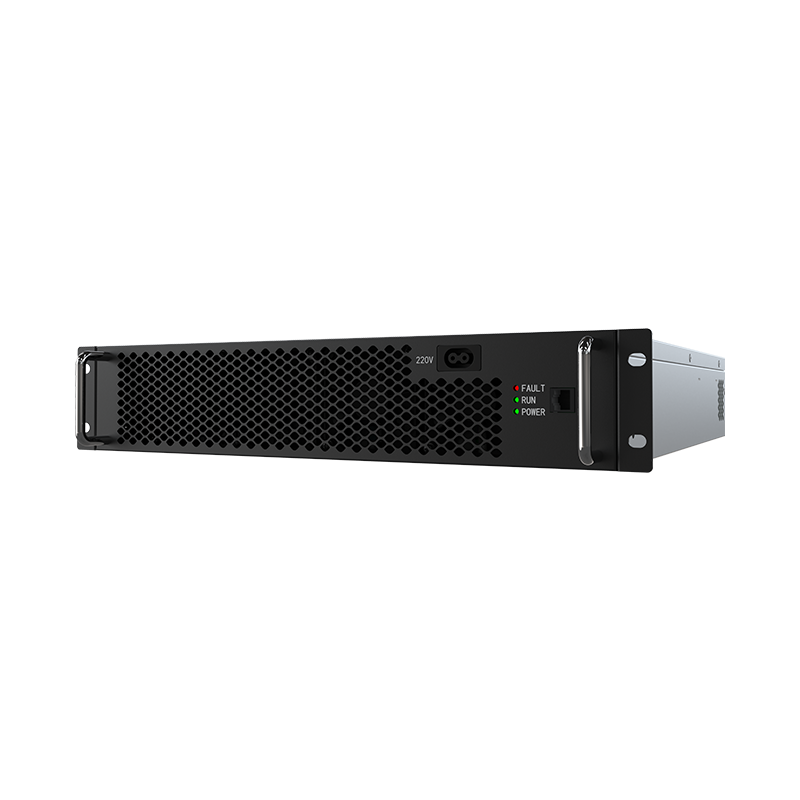
Enjoypowers’ DC-DC converter modules are designed for DC-coupled PV and storage architectures, supporting battery connection to a common DC bus and multiple operating modes through control configuration.
Calculate the Converter Capacity Through Three Electrical Relationships
A practical sizing process begins with three relationships: PV generation, battery power demand, and DC bus operation.
The first factor is the maximum power expected from the solar side when the converter is also used for PV input management. For a battery-side bidirectional converter, the battery charge and discharge requirements may be the primary sizing consideration.
The second factor is battery charge and discharge power. The converter must handle the highest planned charging or discharging current without exceeding thermal or electrical limits.
The third factor is DC bus voltage compatibility. Voltage differences between the battery and DC bus determine the conversion range required from the equipment.
Many engineers ask, “What are the three types of DC/DC converters?” In practical power electronics discussions, common categories include buck converters, boost converters, and buck-boost converters. Bidirectional energy storage converters often use buck-boost-type conversion stages so that power can be transferred in both directions across the required voltage range.
The selected topology must therefore match both the voltage relationship and the direction of energy flow required by the project.
Match Converter Functions With the Solar-Plus-Storage Design
A solar-plus-storage system may use the converter in different ways depending on the architecture.
In a DC-coupled design, photovoltaic energy can be managed through a DC bus shared with battery storage. This reduces unnecessary conversion steps because energy does not always need to pass through AC conversion before reaching storage.
The converter may perform multiple roles, including battery charging, battery discharge control, and voltage regulation. Some advanced designs combine PV maximum power tracking with bidirectional battery conversion in one platform.
Enjoypowers provides DC-DC modules that combine MPPT functionality with bidirectional conversion capabilities for PV, battery, and EV-related DC applications. The company’s modules support operating modes including boost MPPT, buck MPPT, constant voltage, constant current, and constant power control.
When selecting a converter, engineers should determine whether they need a dedicated battery converter, PV-side converter, or a multifunctional unit.
Avoid Oversizing and Undersizing During System Planning
Oversizing a converter may appear to provide additional flexibility, but it can increase project costs without delivering practical value. A converter that operates far below its rated range for most of the time may reduce economic efficiency.
Undersizing creates the opposite problem. If the converter cannot handle peak energy flow requirements, the system may restrict charging speed, limit renewable utilization, or fail to meet operational targets.
A balanced design considers typical operating conditions as well as short-duration peaks. Engineers should review load profiles, solar production patterns, battery strategy, and expected future expansion.
Temperature, cooling method, and installation environment should also be considered because converter output capability can be affected by operating conditions.
Selecting the Right DC-DC Converter Configuration for Long-Term Operation
The best converter choice depends on how the solar-plus-storage system will operate over its lifecycle.
Engineers should evaluate several questions before finalizing the design:
- What is the maximum continuous power transfer requirement?
- What voltage range must the converter support?
- Will the battery regularly charge and discharge at high rates?
- Is future system expansion expected?
- Does the converter support required control modes?
For large-scale systems, modular designs can provide additional flexibility. Multiple converter units can be combined to increase capacity while maintaining easier maintenance and replacement options.
Enjoypowers develops modular energy conversion solutions for commercial and industrial storage systems, including DC-DC and PCS products designed for scalable energy architectures.
A converter should not be selected only by matching numbers on a specification sheet. The correct sizing decision comes from understanding the relationship between renewable generation, battery operation, and system control requirements.
The answer to “What is the best DC-to-DC converter?” depends on the application. The most suitable converter is the one that matches the project’s voltage range, power requirements, operating modes, and expansion plans.
For solar-plus-storage systems, proper bidirectional DC-DC converter sizing creates the foundation for efficient energy management. By starting from actual power flow requirements and evaluating the complete system design, engineers can select equipment that supports reliable operation throughout the project lifecycle.