
A datasheet often highlights the highest efficiency value of a converter, but that single number rarely shows how the equipment will perform during daily operation. For energy storage projects, converters frequently operate under changing power levels, making the full efficiency curve more valuable than a peak efficiency figure.
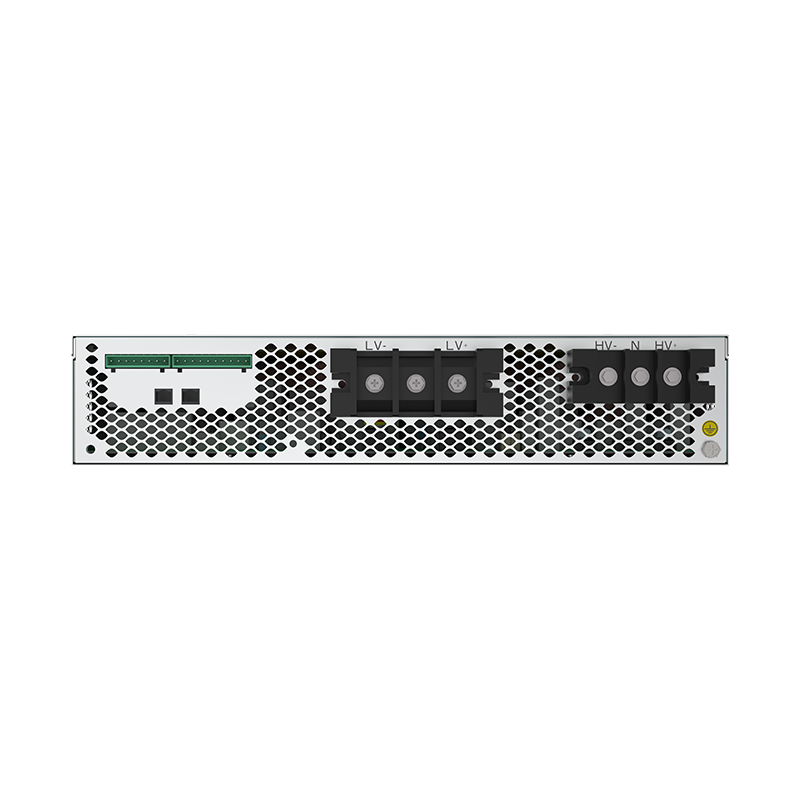
Engineers evaluating a bidirectional DC-DC converter should examine how efficiency changes across different load conditions, voltage ranges, and operating modes. A well-designed converter should maintain stable conversion performance throughout the range where the system operates most frequently.
Reading the curve correctly helps project teams avoid selecting equipment based only on laboratory peak values that may not represent actual field conditions.
Why Efficiency Curves Reveal More Than a Single Efficiency Number
Maximum efficiency is usually measured under specific test conditions, but energy storage systems rarely operate at one fixed power level. Battery charging and discharging patterns change according to renewable generation, electricity demand, and energy management strategies.
A converter may achieve excellent efficiency near its rated power but perform differently during partial-load operation. Since many systems spend significant time below maximum capacity, the lower and middle sections of the curve can be equally important.
The efficiency curve shows how much input power is converted into useful output power under different operating points. A flatter curve generally indicates more consistent operation across varying loads.
For battery storage applications, this consistency can influence overall system energy losses because the converter may process power thousands of times throughout its service life.
Enjoypowers develops DC power conversion solutions designed for solar and energy storage applications, including DC-DC modules that support controlled energy transfer between different DC voltage levels.
Reading the Curve: Focus on Load Range and Operating Points
The first step when reviewing an efficiency curve is identifying the load range where the converter operates most often. The highest point on the graph is useful, but it should not be the only reference.
A storage system designed for peak shaving may frequently charge and discharge at different power levels depending on facility demand. A renewable energy system may experience variable input throughout the day due to changing solar conditions.
The key questions during evaluation include:
- At what load percentage does efficiency reach its peak?
- How quickly does efficiency decline at lower loads?
- Does the converter maintain stable performance during charging and discharging?
A converter with strong partial-load efficiency may provide better real-world energy performance than one with a slightly higher peak value but weaker performance during common operating conditions.
Voltage conditions should also be reviewed. Efficiency can vary depending on the difference between input and output voltage, especially in systems where battery voltage changes during charging cycles.
Understanding How Converter Design Affects Curve Behavior
Efficiency curves are the result of multiple design choices inside the converter. Power semiconductor selection, switching strategy, thermal management, and control algorithms all influence conversion losses.
A DC-DC converter for energy storage must manage power flow in both directions while maintaining stable conversion efficiency. Charging and discharging operations may create different efficiency characteristics because current flow direction changes.
Bidirectional designs require additional control coordination compared with one-way converters. The efficiency curve should therefore be evaluated for both charging and discharging modes if the application requires two-way energy movement.
Converter topology also affects curve shape. Different circuit designs may prioritize high efficiency at full load, wide operating ranges, or flexible voltage conversion.
Instead of focusing only on the highest efficiency percentage, engineers should examine whether the curve matches the expected operating profile of the complete energy storage system.
Using Efficiency Curves to Evaluate Energy Storage Integration
Efficiency data becomes more meaningful when connected to the actual system architecture. A converter installed between batteries and a DC bus may experience different operating conditions compared with one used in another energy conversion position.
System designers should consider how the converter interacts with batteries, photovoltaic inputs, and power management controls.
For example, a storage system may require frequent small charging adjustments during renewable energy fluctuations. In such cases, partial-load efficiency and response characteristics become important selection factors.
Enjoypowers’ DC-DC conversion solutions support applications including PV energy management, battery integration, and DC-coupled energy storage architectures.
Efficiency curves should therefore be reviewed together with operating modes, control functions, and system objectives rather than treated as an isolated technical chart.
A Practical Checklist for Reviewing DC-DC Converter Datasheets
Before selecting a converter, engineers can use the following checklist:
- Review efficiency across the expected operating range, not only maximum efficiency.
- Compare charging and discharging efficiency if bidirectional operation is required.
- Check whether the curve matches the project’s typical power levels.
- Examine performance under different voltage conditions.
- Confirm whether control modes support the intended energy storage strategy.
The best converter is not always the one with the highest published efficiency value. The better choice is the converter that maintains strong efficiency where the system actually operates.
Through datasheet analysis, engineers can gain a clearer understanding of how energy storage equipment performs under actual operating conditions rather than relying only on basic specifications. A detailed review of efficiency curves supports more informed converter selection and helps build reliable energy system designs.
A complete evaluation of a bidirectional DC-DC converter requires looking beyond one number and understanding how the entire efficiency profile supports real operating conditions.