
Modern electrical systems are becoming increasingly dependent on power electronic equipment, including UPS systems, variable frequency drives, and industrial converters. While these technologies improve efficiency and automation, they can also introduce harmonic distortion into power networks.
Harmonics can affect equipment performance, increase energy losses, and reduce the reliability of electrical systems. As a result, many facilities are evaluating different filtering technologies to maintain stable power conditions.
One common question from industrial users is how an Active Power Filter (APF) differs from traditional passive filters. Understanding their working principles and application differences helps businesses select a suitable approach for harmonic management.
How Passive Filters Work in Power Systems
Passive filters are traditional devices used to reduce harmonic distortion through combinations of passive components such as capacitors, inductors, and resistors. These components create specific filtering circuits designed to absorb or block targeted harmonic frequencies.
The main advantage of passive filters is their simple structure and reliable operation. For electrical systems with stable loads and predictable harmonic characteristics, passive filtering can effectively reduce certain harmonic problems.
However, passive filters have limited adaptability. Their filtering performance is usually designed for specific frequencies and operating conditions. When electrical loads change significantly, the filter may not provide the same level of performance.
For example, industrial facilities with frequently changing production equipment may experience different harmonic levels throughout the day. In such situations, fixed filtering methods may require additional adjustments or equipment upgrades.
What Does an Active Power Filter Do Differently?
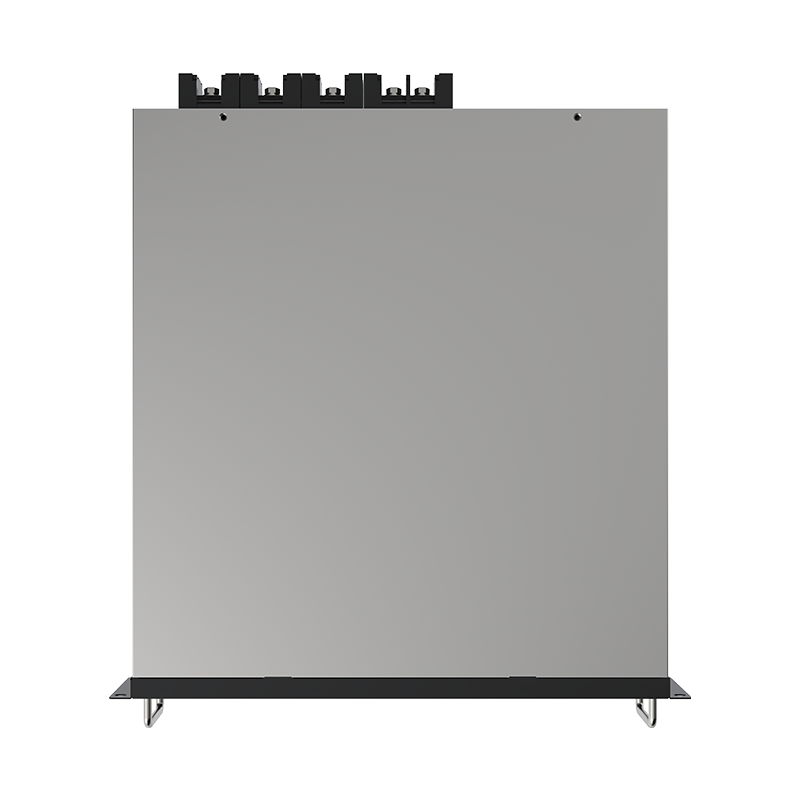
An Active Power Filter (APF) uses power electronics and digital control technology to detect harmonic currents and generate compensating currents in real time. Instead of relying on fixed filtering characteristics, it dynamically responds to actual electrical conditions.
This adaptive capability is the most important difference between active and passive filtering technologies. An APF can identify harmonic components produced by nonlinear loads and inject opposite currents to reduce distortion.
In applications such as manufacturing plants, data centers, and commercial facilities, electrical loads can change frequently due to equipment operation patterns. An APF can continuously adjust its compensation performance as these conditions change.
Compared with a traditional UPS harmonic filter, an APF provides broader harmonic compensation because it is not limited to a single predefined frequency range. This makes it suitable for complex electrical environments with multiple harmonic sources.
Why Are Active Filtering Technologies Becoming More Common?
The increasing use of power electronic equipment is one of the main reasons harmonic challenges are becoming more complicated. Modern facilities rely heavily on devices such as UPS systems, motor drives, and renewable energy converters.
These devices improve energy efficiency but often create nonlinear current waveforms. When many such loads operate together, harmonic distortion can accumulate and affect the entire electrical distribution system.
Excessive harmonics may increase heating in transformers, cables, and switchgear. They can also reduce equipment efficiency and create additional maintenance concerns.
At Enjoypowers, we have seen that many industrial customers are moving toward more flexible power quality solutions because their electrical loads are becoming less predictable. Dynamic compensation technologies are increasingly important in systems where operating conditions change frequently.
APF and UPS Harmonic Filter: Key Differences
A UPS harmonic filter is commonly applied in systems where UPS equipment is the primary source of harmonic distortion. It is designed to improve the current waveform and reduce harmonic effects caused by UPS operation.
For facilities with a stable UPS load profile, this approach can be practical and effective. However, many modern sites have multiple sources of harmonic generation, including servers, drives, charging systems, and industrial machinery.
An APF provides a more flexible approach because it monitors the electrical system continuously and adjusts compensation according to real-time conditions.
When choosing between an APF and a UPS harmonic filter, users should evaluate the source of harmonics, load variation, required compensation range, and future expansion requirements.
Combining Harmonic Filtering with Reactive Power Compensation
Harmonic distortion is often not the only power quality issue in industrial systems. Many facilities also experience reactive power problems, voltage fluctuations, or low power factor.
Reactive power compensation technologies, including SVG SVC compensation, are designed to regulate reactive current and improve voltage stability. These systems focus on different electrical challenges compared with APF technology.
An APF mainly targets harmonic currents, while SVG SVC compensation focuses on reactive power control. In some applications, combining these technologies can provide more comprehensive power quality improvement.
For example, a large industrial facility with motors, converters, and automated equipment may need both harmonic reduction and reactive power management to maintain stable operation.
How to Select the Right Filtering Solution
Before selecting a harmonic control solution, companies should perform a detailed analysis of their electrical system. Important factors include harmonic levels, load characteristics, equipment types, and future changes in power demand.
System monitoring is an important step because harmonic conditions may vary depending on production schedules and equipment operation.
The required compensation capacity should also be carefully evaluated. A properly designed system can improve power quality without unnecessary investment.
Based on our experience at Enjoypowers, accurate power quality analysis is essential before choosing any filtering technology. Understanding the actual source of electrical problems allows customers to select a more suitable solution.
Conclusion
Active Power Filters and passive filters both play important roles in harmonic management, but they serve different application needs. Passive filters are suitable for stable systems with predictable harmonic conditions, while APF technology provides dynamic compensation for changing electrical environments.
As industrial power systems become more complex, flexible harmonic control is becoming increasingly important. Technologies such as APF, UPS harmonic filter solutions, and SVG SVC compensation can help facilities maintain better power quality when properly selected.
At Enjoypowers, we believe effective power quality management starts with understanding the specific electrical challenges of each application. A carefully designed approach allows businesses to improve system reliability, protect equipment, and support future energy demands.