
Modern mission-critical computing facilities demand uninterrupted electrical delivery, yet hyperscale environments constantly generate aggressive non-linear electrical noise. Facility managers must navigate complex engineering benchmarks to help maintain power continuity and reduce the risk of catastrophic server reboots.
Operating dense server racks and double-conversion uninterruptible power supply units pushes distribution transformers toward their operational thermal limits. Compliance with applicable international standards helps define the baseline for equipment performance, power quality, and grid interconnection requirements.
Maintaining a resilient power quality data center environment requires adhering to strict voltage unbalance, power factor, and total current distortion parameters. Understanding these engineering thresholds helps facilities manage power quality risks under high compute loads.
Uncontrolled electrical waveform distortion drastically increases operating costs by degrading primary transformer insulation and elevating feeder cable heat. Proactive power quality management transforms passive electrical infrastructure into a highly reliable asset capable of supporting ultra-dense computing workloads.
Harmonic Distortion Limits: Navigating IEEE 519-2022 Thresholds
Addressing fundamental waveform distortion begins at the Point of Common Coupling between utility feeds and internal distribution buses. IEEE 519-2022 establishes strict recommended practices for limiting current and voltage harmonics injected back into the utility grid or upstream switchgear.
Managing complex distribution networks requires tracking Total Demand Distortion rather than relying solely on simple Total Harmonic Distortion. Calculating Total Demand Distortion evaluates current harmonics against maximum load demand, preventing skewed measurements during low-utilization periods.
Under IEEE 519-2022, allowable harmonic current distortion at the Point of Common Coupling depends on the ratio of maximum short-circuit current to maximum demand load current (Isc/IL). The applicable TDD limit varies according to this ratio, with stronger systems generally allowing higher current distortion limits.
Engineers evaluating Data center harmonics should assess voltage and current distortion at the applicable Point of Common Coupling. Under IEEE 519-2022, voltage distortion limits vary according to the PCC voltage level, while current distortion limits are evaluated using the applicable Isc/IL category and TDD.
Preserving compliance across variable server loading requires continuous monitoring of odd harmonic orders up to the fiftieth harmonic. Exceeding these limits elevates neutral current magnitudes, causing severe resistance heating losses across main feeder cables.
Evaluating harmonic current spectra reveals that triplen harmonics—specifically the third, ninth, and fifteenth orders—accumulate directly in neutral conductors. Mitigating these triplen orders prevents destructive neutral currents from exceeding phase current ratings.
Voltage Tolerance Envelopes: Decoding the ITIC Curve and EN 50160
Safeguarding clean voltage profiles protects sensitive processing units from instantaneous hardware resets. The Information Technology Industry Council curve specifies steady-state voltage tolerance limits of plus or minus ten percent from nominal supply levels for continuous processing.
Voltage sags lasting between half a cycle and half a second are bounded by the Information Technology Industry Council envelope down to seventy percent of nominal voltage. Transient events breaching these duration envelopes trigger power supply dropouts, causing unannounced server cluster shutdowns.
Severe voltage swells exceeding one hundred and twenty percent of nominal voltage threaten sensitive semiconductor components across power distribution units. Complementary European standards like EN 50160 define utility supply characteristics, requiring ninety-five percent of ten-minute mean values to remain within plus or minus ten percent over weekly monitoring cycles.
Grid-tied distribution systems should also monitor phase voltage unbalance and neutral-to-ground voltage where relevant, particularly in facilities with sensitive IT and three-phase loads.
Monitoring high-frequency impulsive transients alongside low-frequency decaying ringwaves protects sensitive server power supplies against insulation breakdown. Adhering to these combined voltage envelopes can help reduce stress on primary rectifier stages.
Mitigating Switched-Mode Power Supply Distortion with Active Filtering
Non-linear server power supplies and variable-frequency drives inside cooling infrastructure inject high-frequency fifth, seventh, eleventh, and thirteenth harmonic currents. Counteracting these high-order currents requires active harmonic filtering platforms capable of generating instantaneous inverse counter-phase currents.
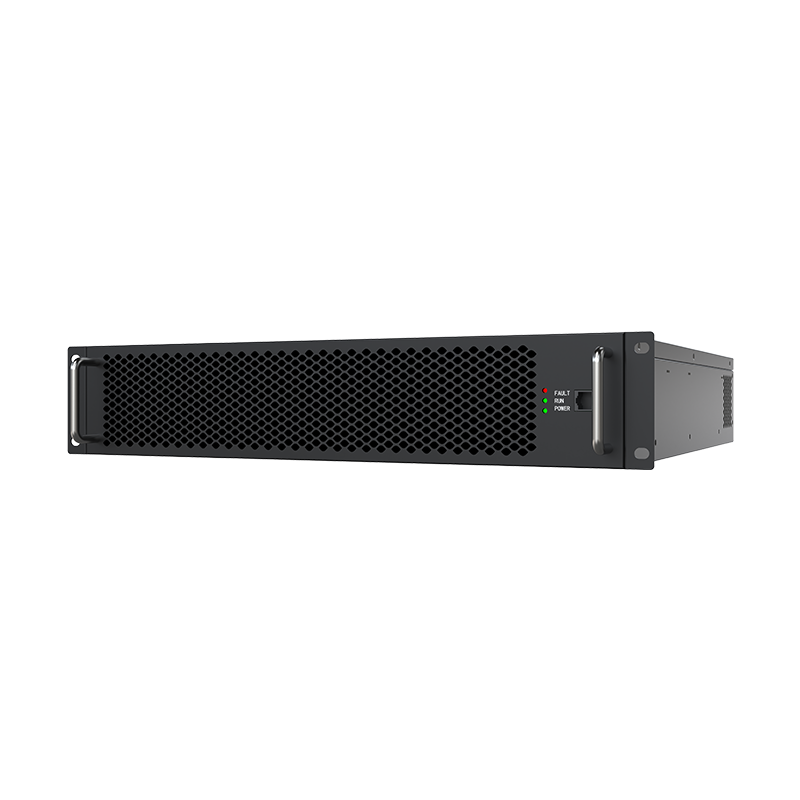
At Enjoypowers, our active harmonic filters detect harmonic components and generate compensating currents to reduce harmonic distortion. The solution provides millisecond-level dynamic response for changing load conditions.
Dynamic harmonic compensation can help reduce harmonic current levels and associated thermal stress in transformers and neutral conductors. Where resonance or capacitor-related issues are identified, appropriate filtering and system design should be evaluated based on the facility’s electrical conditions.
We engineer our power quality modules to support reactive power compensation alongside harmonic mitigation. Under suitable system conditions, dynamic compensation can help improve displacement power factor and reduce exposure to reactive power-related charges where applicable.
Deploying modular active filtering architectures at primary distribution panels provides targeted mitigation directly at non-linear load nodes. Decentralized harmonic suppression can help reduce harmonic propagation toward upstream equipment.
Verification Protocols: IEC 61000-4-30 Class A Monitoring at the Point of Common Coupling
Standardized audit procedures validate compliance against IEEE 519 and Information Technology Industry Council metrics across all operating shifts. Verification mandates deploying IEC 61000-4-30 Class A certified power quality analyzers to ensure uncompromised measurement accuracy and cross-instrument data repeatability.
Continuous three-second very short time and ten-minute short time statistical aggregation windows capture dynamic load variations. Auditing an enterprise power quality data center infrastructure relies on continuous Class A measurement logs to prove ninety-fifth percentile compliance over minimum seven-day evaluation intervals.
Our technical team at Enjoypowers configures real-time metering interfaces that integrate seamlessly with facility Building Management Systems. Automated telemetry feeds track voltage unbalance, demand distortion trends, and high-speed transient waveforms, providing facilities teams immediate visibility into latent grid anomalies.
Achieving total facility uptime requires aligning physical switchgear architectures with rigid international power quality standards. Implementing active dynamic filtering alongside Class A continuous verification safeguards expensive assets, maximizes energy conversion efficiency, and supports compliance with applicable utility grid requirements.
Systematic verification protocols convert abstract power quality requirements into actionable operational benchmarks. Establishing continuous monitoring ensures that facility operators maintain total electrical resilience as compute density scales.
Continuous monitoring supports predictive maintenance schedules by pinpointing emerging harmonic trends before insulation failures occur. Establishing this proactive verification cycle contributes to long-term facility reliability and sustained energy performance.