
Energy storage efficiency is often discussed as a battery specification, but the actual energy loss depends heavily on how electricity moves through the entire system.
When renewable generation, batteries, and loads are connected together, the number of conversion stages directly affects how much energy reaches its final destination. This is why the choice between DC-coupled and AC-coupled battery storage has become an important design decision for commercial and industrial projects.
We evaluate storage architectures by looking at the complete energy pathway rather than focusing on individual components. A system with fewer conversion steps may reduce losses, while another architecture may provide greater flexibility depending on project requirements.
For engineers and facility owners comparing a dc coupled battery solution with other storage configurations, understanding energy flow is the first step toward selecting the right design.
Efficiency Depends on How Many Times Energy Changes Form
Every conversion between DC and AC introduces some energy loss. The final efficiency of a storage system is influenced not only by battery performance but also by power conversion equipment, control strategy, and system architecture.
A DC-coupled system connects energy sources and batteries through a shared DC bus. Solar generation, battery storage, and other DC-side equipment can exchange energy without always converting through AC. What are bidirectional DC-DC converters for energy storage systems? They manage battery charging and discharging by adjusting voltage levels while maintaining controlled power flow.
An AC-coupled system follows a different path. Renewable energy is converted from DC to AC through an inverter before reaching the AC grid or load side. The battery then uses another conversion stage to store or release energy through a separate battery inverter system.
The efficiency difference comes from these energy routes. Each additional conversion stage creates another point where power losses can occur.
However, efficiency is not the only factor that determines the best architecture. The right choice depends on whether the project prioritizes renewable integration, system expansion, operational flexibility, or simplified retrofitting.
DC-Coupled Storage Keeps More Energy Inside the DC Path
DC coupling is designed around reducing unnecessary energy conversions. In a typical renewable-plus-storage project, solar panels already produce DC power, and batteries also store DC energy.
A DC-coupled design allows these energy sources to interact through a common DC bus. Instead of converting solar power into AC and then converting it back into DC for storage, the system can manage the energy directly on the DC side.
This architecture is particularly relevant for new installations where photovoltaic generation and storage are planned together from the beginning. The shared DC structure can reduce conversion stages and improve overall energy utilization.
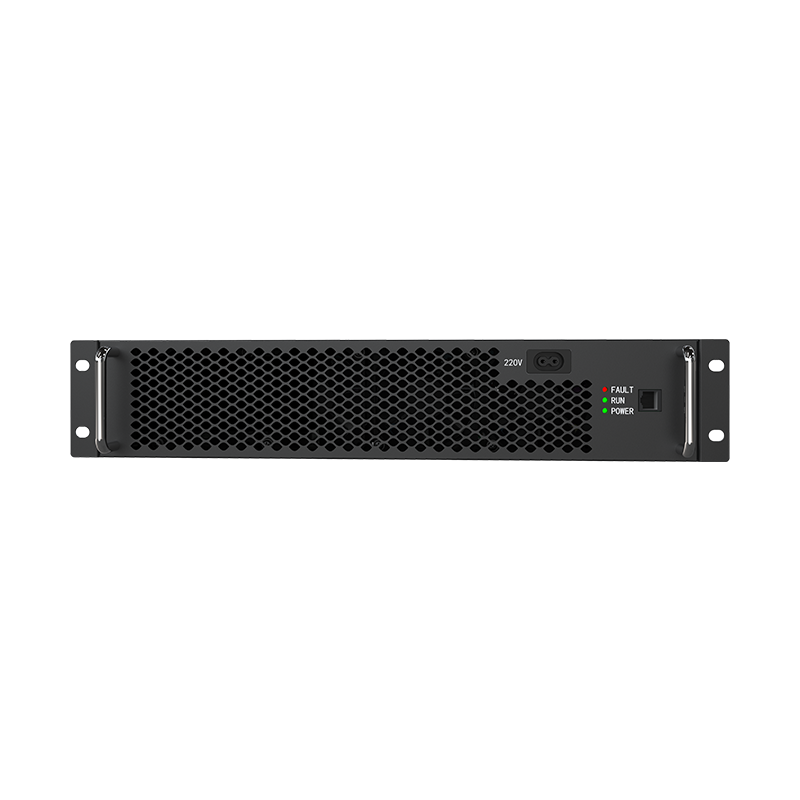
A key component in this design is the bidirectional DC-DC converter. It controls the charging and discharging process between the battery and DC bus, allowing power to flow in both directions according to system demand.
Enjoypowers develops DC power conversion solutions that support integrated energy storage architectures. Our approach focuses on improving energy flow management while maintaining flexibility for different commercial and industrial applications.
The efficiency advantage of DC coupling becomes more noticeable in systems where renewable energy frequently charges the battery directly. Fewer conversion steps can mean less energy lost before storage or consumption.
AC-Coupled Storage Adds Flexibility Through Separate Power Systems
AC coupling uses a different design philosophy. Instead of connecting all energy sources through one DC pathway, it connects independent systems on the AC side.
This separation can make AC-coupled storage attractive for existing facilities. A site that already has solar inverters installed may add battery storage without redesigning the entire renewable generation system.
The trade-off is that energy may pass through additional conversion stages. Solar power may first move through a PV inverter, while battery charging and discharging require another power conversion process.
For projects where installation flexibility matters more than maximizing every percentage point of efficiency, AC coupling can still be a practical choice.
A modular energy storage system based on AC coupling can also simplify expansion because storage equipment can operate as an independent unit connected to the facility’s AC network.
The comparison is therefore not simply about which architecture has fewer losses. It is about whether the system design matches the project environment.
Choosing Between Architectures Starts With the Energy Flow You Need
The first question is whether the storage system is being built together with renewable generation or added to an existing electrical installation.
New solar-plus-storage projects often have more opportunities to benefit from DC coupling because the energy pathway can be designed from the beginning.
Existing facilities may prefer AC coupling because the storage system can be integrated without major changes to current power infrastructure.
The second question involves future expansion. A growing facility may need additional generation sources, storage capacity, or charging equipment. The architecture should support expected changes rather than only current demand.
The third question is where efficiency improvements create the most value. A small efficiency difference may have limited impact in some projects but become significant in large-scale systems operating continuously for many years.
Evaluating the complete energy flow provides a clearer answer than comparing individual devices separately.
Designing Storage Systems Around Real Conversion Efficiency
DC-coupled and AC-coupled storage systems both have roles in modern energy management. DC coupling focuses on reducing conversion paths and improving energy flow efficiency, while AC coupling provides flexibility for many existing electrical environments.
At Enjoypowers, we evaluate storage configurations according to each project’s operating environment, including renewable energy integration requirements, facility conditions, and future scalability needs. Our power conversion solutions are designed to coordinate energy flow between batteries, generation sources, and electrical loads through dependable control methods.
Efficiency ratings alone cannot determine whether a storage architecture is the right fit. A more meaningful evaluation focuses on the complete energy pathway, identifying where power conversion occurs and how those stages influence overall system losses.
Long-term storage value comes from achieving the right balance between energy efficiency, operational flexibility, and future adaptability. A properly planned architecture enables facilities to maximize usable energy while creating a more responsive power management structure.
Through continuous development of commercial and industrial storage technologies, Enjoypowers supports customers in implementing energy systems where conversion performance and practical operating requirements work together.