
Reliable electricity is essential for facilities where power interruptions can lead to equipment downtime, production losses, or service disruption. Data centers, industrial plants, energy storage systems, and other critical applications require power transfer equipment that can respond quickly when the primary power source becomes unstable.
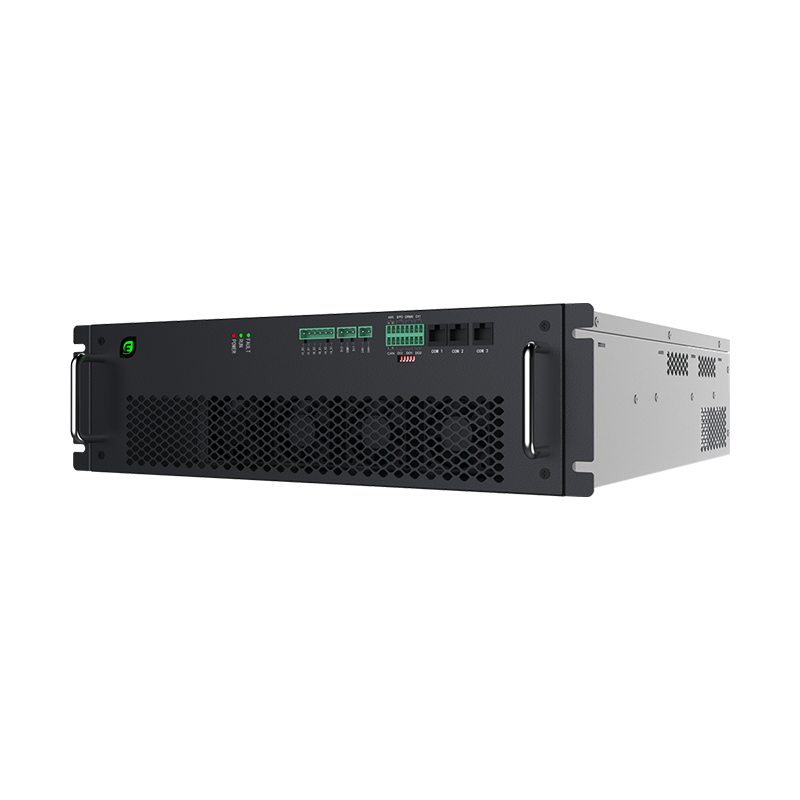
A transfer switch plays an important role by moving electrical loads between different power sources. Traditional mechanical transfer switches have been widely used for many years, but modern power systems increasingly require faster response and more intelligent control.
A digital static transfer switch uses semiconductor-based switching technology instead of mechanical moving contacts. This design provides faster transfer performance and better adaptability for applications where power continuity is a priority.
How Does a Static Switch Work?
The question “How does a static switch work?” is closely related to the difference between electronic switching and mechanical switching. A static switch uses power semiconductor devices, such as thyristors or IGBTs, to control the connection between a load and multiple power sources.
Unlike a mechanical transfer switch, which physically moves contacts during operation, a static switch changes the electrical path through electronic control. When the system detects problems such as voltage abnormalities, frequency changes, or source failures, it can quickly transfer the load to another available power source.
Because there are no mechanical contacts that need to physically move, the switching process can be completed much faster. This makes static transfer technology suitable for sensitive loads that cannot tolerate long interruptions.
Static switches are commonly used in systems where continuous power availability is important, including data centers, industrial automation facilities, and advanced energy infrastructure.
How Mechanical Transfer Switches Compare with Static Technology
Mechanical transfer switches have been a common choice because of their simple operating principle and established application history. They use physical contacts to connect the electrical load to one power source and disconnect it from another.
For many conventional applications, mechanical transfer switches remain a practical solution. They are suitable when transfer speed requirements are moderate and power interruptions of a longer duration can be accepted.
However, mechanical switching has some limitations. Since the switching process depends on physical movement, the transfer time is generally longer. Repeated operation may also cause mechanical wear over time, especially in systems where frequent switching is required.
As electrical systems become more sensitive and complex, these limitations have encouraged the adoption of electronic switching technologies that provide faster response and improved control.
Advantages of Digital Static Transfer Switches
A digital static transfer switch provides several advantages compared with traditional mechanical solutions, especially in critical power applications.
The most significant advantage is switching speed. Electronic control allows the system to transfer power rapidly when the main source becomes unavailable or unstable. Faster transfer helps reduce the impact on connected equipment and improves operational continuity.
Another advantage is improved reliability. Since static switches have fewer moving parts, they avoid many mechanical wear issues associated with traditional transfer equipment. This can support more stable long-term operation in demanding environments.
Digital control also enables better monitoring capabilities. Modern static transfer systems can analyze electrical conditions and make switching decisions based on real-time information. This allows operators to manage power sources more effectively and improve system performance.
For applications requiring high availability, such as data centers and industrial energy systems, these characteristics make static transfer technology an increasingly important option.
When to Use Static Transfer Switch Technology
When to use static transfer switch depends mainly on the requirements of the electrical system. These switches are most valuable in applications where even short power interruptions may create significant consequences.
Data centers are a typical example. Servers, storage systems, and communication equipment require stable electricity to maintain continuous operation. A faster transfer method can help reduce risks caused by power source disturbances.
Industrial facilities with automated production processes can also benefit from static transfer systems. Manufacturing equipment, control systems, and precision devices often require consistent power conditions to avoid unexpected shutdowns.
Energy storage systems are another important application area. As battery storage becomes more integrated with commercial and industrial power systems, fast switching between grid power, stored energy, and backup sources becomes increasingly necessary.
In these environments, static transfer technology helps create a more flexible and resilient electrical architecture. Enjoypowers applies similar power electronics concepts in energy infrastructure applications where reliable power management is required.
Digital Control and Integration with Modern Energy Systems
Modern electrical systems are moving toward greater automation and intelligence. As renewable energy, battery storage, and distributed power sources become more common, power management requires more advanced control methods.
Digital static transfer systems support this trend by providing intelligent monitoring and fast response. They can evaluate the condition of different power sources and help maintain stable operation during changing conditions.
For example, in a commercial energy storage system, the power supply may need to switch between grid electricity, battery output, and backup sources depending on demand and availability. Fast and accurate transfer control improves the coordination between these energy resources.
This capability is especially valuable for facilities that need both energy flexibility and operational reliability.
Selecting Between Static and Mechanical Transfer Solutions
Choosing between static and mechanical transfer switches requires evaluating the specific needs of the application.
Mechanical switches may be suitable when:
Power interruptions have limited impact.
Switching frequency is low.
Cost considerations are the primary concern.
Loads are not highly sensitive.
Static transfer switches may be more appropriate when:
Equipment requires uninterrupted power.
Fast transfer is important.
Multiple power sources must be managed.
The system includes sensitive electronic loads.
The decision should be based on factors such as load characteristics, reliability requirements, operating environment, and future system expansion plans.
A proper evaluation helps avoid selecting equipment that is either insufficient for the application or unnecessarily complex.
The Future Role of Static Transfer Technology
The increasing use of digital infrastructure and renewable energy is changing the way electrical systems are designed. Modern facilities need power equipment that can respond quickly, operate efficiently, and support multiple energy sources.
Static transfer technology fits these requirements by combining fast switching with intelligent monitoring. As power networks become more distributed and dynamic, electronic transfer solutions are expected to play a larger role in improving system reliability.
Enjoypowers continues to focus on power electronics applications that support modern energy systems, including solutions where efficient power conversion and reliable energy control are important.
Conclusion: Choosing the Right Transfer Solution
Static transfer switches and mechanical transfer switches each have their own advantages. Mechanical solutions remain suitable for many traditional applications, while static technology provides stronger performance for critical systems requiring fast and reliable power transfer.
Understanding how a static switch works and when to use static transfer switch technology helps businesses select the right approach for their power requirements.
For data centers, industrial facilities, and energy storage applications, digital static transfer technology offers a more flexible way to improve power reliability and support modern electrical infrastructure.