
Commercial and industrial energy users are facing increasing pressure to reduce electricity costs, improve energy reliability, and maximize renewable energy utilization. Solar power alone can lower electricity expenses, but its output changes with weather conditions and daylight availability. By combining solar generation, battery storage, and grid interaction, a hybrid solar inverter creates a more flexible energy management solution for modern commercial plants.
At Enjoypowers, we develop advanced power conversion technologies designed for real-world commercial and industrial applications. Our hybrid inverter solutions help businesses manage energy flow more intelligently through multiple operating modes, high efficiency performance, and coordinated control of PV, batteries, grids, and backup power sources. These capabilities support customers seeking more reliable and cost-effective energy systems.
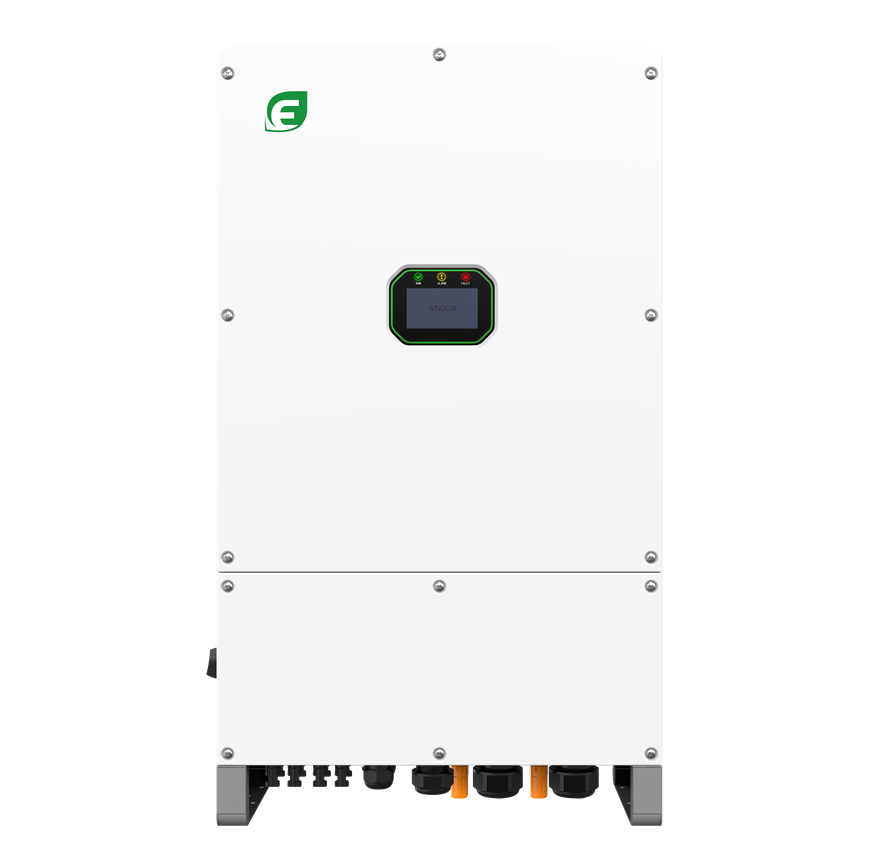
Understanding How a Hybrid Solar Inverter Integrates Multiple Power Sources
A hybrid solar inverter acts as the central controller of a solar-plus-storage system. Unlike traditional solar inverters that mainly convert PV power into usable electricity, hybrid systems coordinate electricity from several sources, including solar panels, batteries, the utility grid, and sometimes generators.
During periods of strong solar production, the inverter can prioritize renewable energy for local consumption while charging connected batteries with excess generation. When solar output decreases, stored energy can support the load before electricity is purchased from the grid.
This integrated approach allows commercial users to optimize energy usage based on operational requirements. Instead of relying on a single energy source, businesses can create a flexible power strategy that balances cost savings and energy security.
Comparing Hybrid Inverter On-Grid and Off-Grid Operation
A major advantage of hybrid technology is the ability to support different operating conditions. A hybrid inverter on-grid configuration allows commercial facilities to remain connected to the utility network while using solar and battery resources to reduce electricity consumption.
In grid-connected applications, businesses can use stored energy during high-price periods and recharge batteries when electricity costs are lower. This strategy can help businesses optimize electricity costs depending on local tariffs, operating conditions, and system configuration.
A hybrid inverter off-grid configuration provides another level of independence. When the utility grid is unavailable, the system can continue supplying power through battery storage and renewable generation. This capability is valuable for facilities requiring continuous operation, remote sites, and locations with unstable grid conditions.
By supporting both grid-connected and independent operation, hybrid systems provide businesses with greater flexibility compared with conventional energy solutions.
Improving Commercial Energy Efficiency with Advanced Inverter Technology
Efficiency is a key factor when selecting a hybrid solar inverter because energy losses directly affect project economics. Higher conversion efficiency means more solar energy can be used effectively and less energy is wasted during power conversion.
Our hybrid inverter technology achieves up to 98% peak efficiency through a three-level topology design with optimized switching frequencies. This advanced architecture provides higher efficiency performance compared with many 60kW-class solutions while maintaining stable operation across a 30%-100% load range.
For commercial solar plants, this efficiency advantage can create meaningful long-term value. Larger power components also benefit from economies of scale, allowing higher-capacity models to deliver strong performance while supporting demanding industrial energy applications.
Supporting Multiple Energy Management Strategies for Commercial Plants
Commercial facilities rarely have only one energy objective. Some businesses prioritize reducing electricity bills, while others focus on backup power or renewable energy utilization. A flexible hybrid system should support different strategies according to actual operational needs.
Enjoypowers’ solutions support five operating modes designed for commercial energy applications:
Self-consumption mode uses solar energy directly to reduce grid dependence.
Peak shaving mode reduces demand charges by controlling battery discharge during high-demand periods.
Time-of-use arbitrage mode stores electricity when prices are lower and uses it when prices increase.
Grid-tied, off-grid, and hybrid modes provide flexible operating options.
Genset support enables coordination with backup generators when required.
An intelligent Energy Management System (EMS) automatically coordinates PV, battery, grid, and genset priorities. For commercial PV plants, a typical configuration combines time-of-use arbitrage with peak demand reduction to maximize financial benefits.
Enhancing System Flexibility Through Intelligent Energy Control
Energy management is becoming more complex as businesses add renewable generation, battery storage, and backup systems. Without coordinated control, these components may operate inefficiently and reduce the expected value of the investment.
A hybrid solar inverter simplifies this challenge by acting as the communication and control center of the energy system. It continuously manages power flow between different sources and adjusts operation based on load demand, electricity prices, and available generation.
For system integrators, this integrated control capability reduces project complexity and improves system reliability. It also allows commercial customers to adapt their energy strategies as electricity markets and business requirements change.
Building Smarter Commercial Energy Systems with Enjoypowers
The future of commercial energy management requires solutions that can do more than convert solar power. Businesses need systems that combine efficiency, flexibility, and reliability while supporting changing energy conditions.
At Enjoypowers, we provide hybrid inverter solutions designed to help commercial and industrial customers achieve better control over their energy resources. Through high-efficiency conversion technology, multiple operating modes, and intelligent EMS coordination, our systems support more effective solar-plus-storage applications.
Whether customers need a hybrid inverter on-grid solution for energy cost optimization or a hybrid inverter off-grid system for greater independence, we help businesses build resilient energy infrastructure prepared for future demands.