
As electricity demand continues to grow and energy costs become more complex, many commercial buildings are turning to energy storage systems to improve energy management, increase resilience, and optimize power usage. However, one of the most important questions before installation is: how large should the energy storage system be?
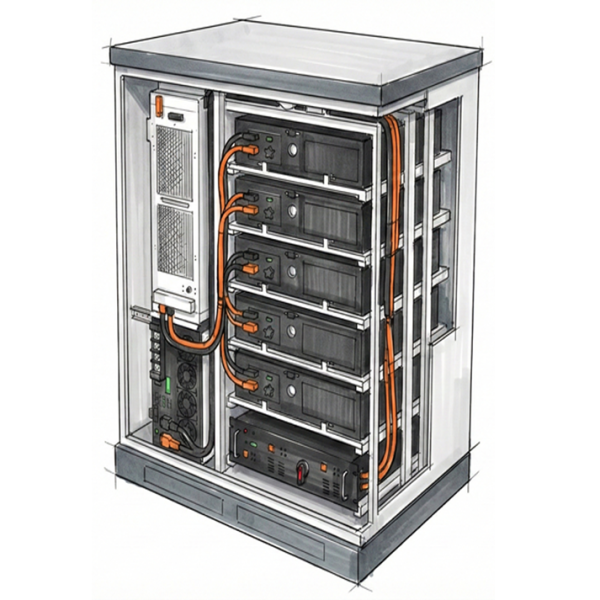
Choosing the correct size is not simply about installing the largest battery available. The ideal configuration depends on building load characteristics, energy goals, backup requirements, and future operational plans. At Enjoypowers, we help businesses evaluate these factors and develop storage solutions that match their actual needs.
A properly sized system can support peak demand management, improve energy flexibility, and provide reliable power during interruptions. An oversized or undersized system, however, may reduce economic value and fail to achieve the expected performance.
Understanding Commercial Energy Storage System Sizing Requirements
A commercial energy storage system is designed to store electricity and provide power when it delivers the greatest operational benefit. Unlike residential systems, commercial applications usually involve larger electrical loads, more complex energy patterns, and multiple performance objectives.
Before selecting a system size, building owners should first define the main purpose of energy storage. Some facilities focus on reducing electricity costs through peak demand management, while others prioritize backup power for critical equipment.
The required battery capacity is usually determined by how much energy the building needs to store, while the power rating determines how much electricity can be delivered at a specific moment. Both factors must be considered together to achieve the desired performance.
For example, a building that needs short-duration support for critical equipment may require higher power output but less energy capacity. A facility aiming to shift electricity consumption over several hours may need a larger battery capacity.
Evaluating Building Energy Consumption Patterns
The first factor in determining storage size is understanding the building’s electricity usage profile. Every commercial facility has different operating schedules, equipment loads, and energy demands.
Businesses should review historical electricity data, including daily load curves, peak demand periods, and seasonal changes. This information helps identify when energy storage will provide the greatest benefit.
Facilities with significant demand peaks may require a system designed for peak shaving. By charging during lower-demand periods and discharging during high-demand periods, the system can help reduce pressure on the electrical supply and improve energy management.
At Enjoypowers, we analyze customer load characteristics before recommending system configurations. A detailed assessment helps ensure that the selected storage capacity supports real operational requirements rather than relying on general estimates.
Determining Backup Power Requirements
Another important factor is whether the building requires emergency power support. Many commercial facilities depend on continuous electricity for critical operations, including data systems, security equipment, refrigeration, manufacturing processes, and communication infrastructure.
When designing backup capability, businesses need to identify which loads must remain operational during an outage. Supporting the entire building may require a significantly larger system than supporting only essential equipment.
The duration of required backup power also affects battery sizing. A facility that needs several hours of backup operation will require more stored energy compared with a system designed only for short interruptions.
Commercial backup power solutions should therefore be customized according to the importance of different loads. A careful evaluation of critical equipment helps balance reliability needs with investment considerations.
Considering Renewable Energy Integration and Future Expansion
Many commercial buildings combine energy storage with solar photovoltaic systems or other distributed energy resources. In these applications, the storage system size should match renewable generation patterns and the building’s consumption behavior.
Energy storage can capture excess renewable energy during periods of high generation and release it when demand increases. This helps improve renewable energy utilization and provides greater control over electricity usage.
Hybrid energy storage solutions offer additional flexibility by integrating multiple energy sources, including solar, batteries, and the grid. These systems can support different operating modes and adapt to changing energy conditions.
When planning a system, companies should also consider future expansion. Additional production equipment, electric vehicle charging, or increased energy demand may change the building’s requirements over time. A scalable design can provide more flexibility for future growth.
Selecting the Appropriate Power and Battery Capacity
Choosing the correct balance between power rating and battery capacity is essential for commercial applications. A system with insufficient power may not handle sudden demand increases, while excessive capacity may increase costs without delivering additional value.
The power rating should match the maximum output required by the application. For example, facilities managing short peak periods may prioritize higher discharge power, while facilities performing longer energy shifting may require greater battery capacity.
The battery management system (BMS), energy management system (EMS), and Power Conversion System (PCS) also influence overall performance. These components coordinate charging, discharging, monitoring, and grid interaction.
Enjoypowers provides commercial and industrial storage solutions that integrate advanced power conversion technologies to support efficient and reliable energy management. Our systems are designed for different application requirements, from demand control to backup support.
Why Professional System Assessment Matters
Selecting the right storage size requires more than reviewing monthly electricity bills. A professional evaluation considers load characteristics, operating objectives, electrical infrastructure, and future energy plans.
Incorrect sizing may create several challenges. A system that is too small may fail to provide enough support during important periods, while an oversized system may increase upfront investment and reduce financial efficiency.
A customized approach helps businesses identify the best combination of battery capacity, power output, and control strategy. This ensures that the storage system delivers practical value throughout its operating life.
Modern energy storage projects are becoming more flexible and scalable, allowing commercial buildings to adapt their systems as energy requirements change.
Conclusion
Determining the right size for a commercial energy storage system requires a detailed understanding of building energy consumption, backup requirements, renewable integration goals, and future expansion plans.
The best solution is not always the largest battery system. Instead, the ideal configuration balances power capacity, energy storage, operational needs, and long-term value.
Enjoypowers believes that successful energy storage projects begin with accurate system analysis and customized design. By selecting the right size and technology combination, commercial buildings can improve energy efficiency, strengthen power reliability, and create a more flexible energy future.