
Poor power factor is a common challenge in commercial buildings and industrial facilities. When electrical systems operate with a low power factor, equipment may need to handle higher current levels to deliver the same amount of useful power. Many facility operators respond by installing larger transformers, cables, or switchgear to create additional capacity.
However, oversizing equipment is not always the most effective approach. A better strategy is to identify the actual causes of inefficient power usage and apply targeted correction technologies that match the electrical system requirements.
At Enjoypowers, we focus on helping businesses understand power quality challenges through practical engineering approaches. Improving power factor requires more than adding capacity; it requires analyzing load characteristics, reactive power demand, and potential harmonic issues.
By selecting suitable compensation methods and properly sizing correction equipment, facility owners can improve system efficiency without unnecessary investments in oversized electrical infrastructure.
Understanding Power Factor and Why Oversizing Is Not the Best Solution
Power factor represents how effectively electrical power is converted into useful work. In an AC power system, some equipment consumes reactive power, which supports magnetic fields in motors, transformers, and other inductive devices but does not directly perform useful work.
A low power factor means the electrical network must supply more current to support the same active power demand. This increased current can create additional stress on transformers, cables, and distribution equipment.
Many facilities attempt to solve this problem by selecting larger equipment during system design. While this approach may provide additional margin, it can increase installation costs, occupy more space, and fail to address the actual source of inefficiency.
The correct solution is usually based on measuring system conditions first. By understanding the load profile, reactive power requirements, and power quality conditions, engineers can select appropriate correction equipment instead of relying on excessive equipment capacity.
Power Factor Correction: Choosing the Right Compensation Method
Power factor correction aims to reduce unnecessary reactive power flow and improve electrical system utilization. Traditional solutions often involve capacitor banks, but modern facilities may require more flexible technologies due to changing load conditions.
Capacitor-based correction can work effectively for stable loads, but it may become less suitable when facilities contain rapidly changing equipment such as variable frequency drives, data center systems, or advanced manufacturing machinery.
Dynamic compensation equipment can respond quickly to changing electrical conditions. Static Var Generator (SVG) technology, for example, can provide real-time reactive power compensation and help maintain a more stable power factor under fluctuating loads.
For facility managers, the goal is not simply to install the largest correction device available. Instead, the focus should be on matching compensation capacity with actual reactive power demand.
Proper sizing helps avoid unnecessary investment while ensuring that the electrical system receives the required support.
Harmonic Distortion Solutions: Addressing Hidden Causes of Poor Performance
Power factor problems are not always caused only by reactive loads. Modern electrical systems increasingly include nonlinear equipment such as power converters, variable speed drives, and electronic devices that can introduce harmonic currents.
These harmonic currents can affect electrical efficiency, increase equipment heating, and influence overall power quality. In such cases, traditional correction methods may not fully solve the problem.
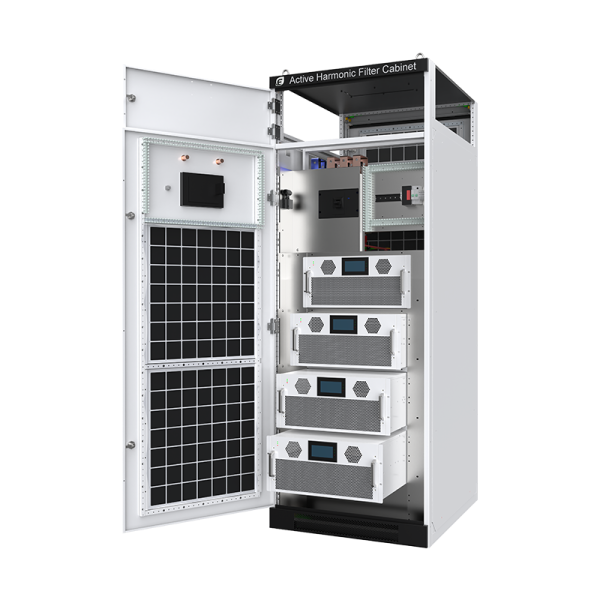
Harmonic distortion solutions help manage these additional challenges by reducing unwanted harmonic components and improving current waveform quality. Active harmonic filters can detect harmonic currents and generate compensation currents to reduce distortion within the electrical system.
At Enjoypowers, we recognize that power factor improvement and harmonic management often need to be considered together. A system with both reactive power issues and harmonic problems may require a combined approach rather than a single correction method.
Understanding the difference between reactive power and harmonic distortion allows engineers to select the right technology instead of applying oversized equipment as a general solution.
Why Accurate Equipment Sizing Matters for Commercial Buildings
Commercial buildings and large facilities often have diverse electrical loads, including HVAC systems, lighting equipment, elevators, servers, and motor-driven systems. Because these loads operate differently, power quality requirements can vary significantly.
Installing oversized equipment may appear to provide additional security, but it can create several disadvantages:
Higher initial equipment costs
Increased installation space requirements
Reduced efficiency during normal operation
Unnecessary investment in unused capacity
A properly designed power quality system begins with electrical measurements and load analysis. Engineers should evaluate parameters such as power factor, harmonic levels, load variation, and future expansion plans before selecting equipment.
The best power quality solutions for commercial buildings large facilities are based on actual operating conditions rather than assumptions.
By accurately identifying system needs, businesses can improve performance while maintaining a more efficient infrastructure design.
How to Select the Correct Power Quality Solution
Selecting correction equipment requires a systematic evaluation process. The first step is identifying the main problem affecting the electrical system.
If the primary issue is reactive power consumption, a dynamic reactive compensation solution may be appropriate. If harmonic currents are creating additional problems, harmonic filtering technology should be considered.
Several factors should be reviewed during selection:
Existing power factor level
Load type and operating pattern
Presence of nonlinear equipment
Transformer and distribution system capacity
Required improvement targets
A detailed assessment prevents incorrect equipment selection. For example, installing a compensation device without understanding harmonic conditions may not achieve the expected results.
Enjoypowers approaches power quality projects by considering the complete electrical environment. This allows engineers to evaluate whether reactive compensation, harmonic mitigation, or a combination of technologies is the most suitable option.
The objective is not simply to add more equipment but to create a balanced system that operates efficiently.
Combining Power Quality Improvements With Future Energy Needs
Electrical systems are continuously evolving. The increasing use of renewable energy, energy storage, and digital equipment creates new requirements for power management.
Modern facilities need flexible solutions that can adapt to changing operating conditions. Technologies such as SVG and active harmonic filtering provide dynamic responses compared with traditional fixed compensation methods.
For businesses planning future upgrades, improving existing power quality can also support long-term energy strategies. Better electrical efficiency can help facilities maximize available infrastructure capacity without immediately replacing major equipment.
Instead of designing systems around worst-case assumptions, engineers can use monitoring data and intelligent compensation technologies to create more optimized electrical networks.