
Large-scale battery storage projects require more than a PCS with sufficient power capacity. The converter acts as the link between the battery system, facility loads, and the grid, so its design directly influences how energy is managed throughout the installation.
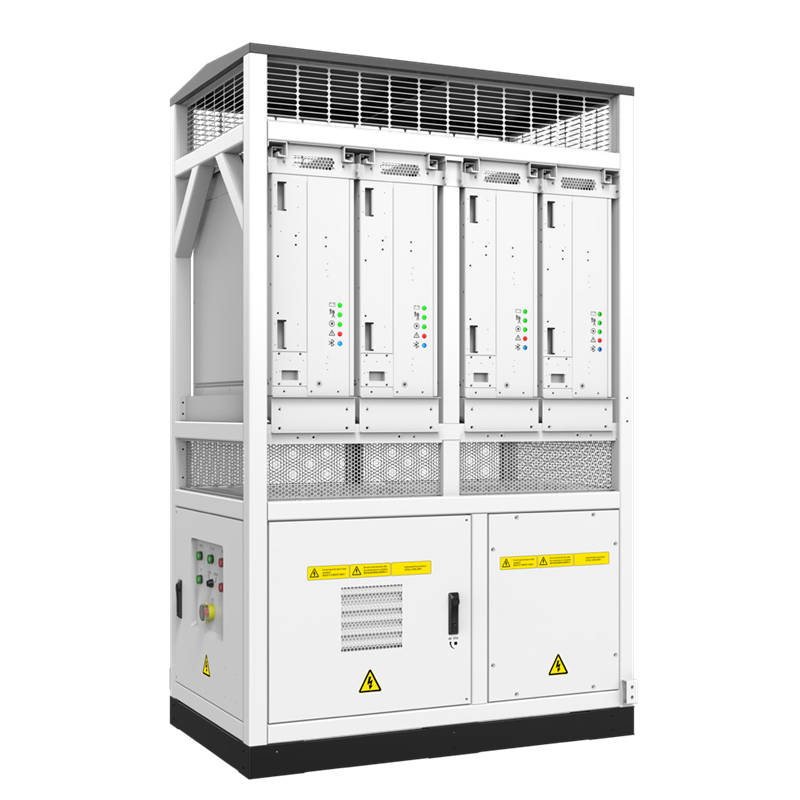
Compatibility between the battery architecture and PCS configuration plays a major role in long-term system operation. Voltage range, control capability, and integration requirements must be evaluated together to prevent limitations during commissioning and future expansion.
Our evaluation process considers the entire storage architecture instead of treating the PCS as an independent component. The selected solution should align with battery characteristics, project objectives, and the expected operating environment.
Project developers comparing a high voltage battery inverter can make more informed decisions by understanding these system-level factors before finalizing their storage design.
PCS Selection Begins at the Battery System Architecture
A storage project starts with an energy requirement, but the final architecture depends on how different components work together.
The PCS connects the battery side and the AC grid side. It controls bidirectional energy conversion, allowing batteries to charge when energy is available and discharge when the system requires support.
Large-scale projects often use high-voltage battery configurations because higher DC voltage can support greater power transfer with reduced current levels. The PCS must be designed to operate correctly with the selected battery voltage range.
A 1500Vdc PCS architecture is commonly considered for utility-scale storage designs because it aligns with high-voltage battery systems and supports larger energy configurations. Enjoypowers develops PCS solutions designed for utility and industrial storage applications where high-voltage integration is required.
The first selection question should therefore be: does the PCS match the electrical architecture of the battery system? A converter that cannot properly align with the battery voltage or configuration may limit the entire project.
Voltage Matching Determines the Foundation of PCS Performance
Battery voltage compatibility is one of the first technical factors engineers review during PCS selection.
Higher DC voltage systems can influence equipment layout, current handling requirements, and overall system design. However, increasing voltage alone does not guarantee better results. The PCS must maintain reliable conversion performance across the expected operating range.
A suitable inverter should support the battery voltage characteristics throughout charging and discharging cycles. Battery voltage changes during operation, so the PCS needs appropriate control capability to manage these variations.
The relationship between battery modules, DC protection equipment, and the PCS also affects system integration. Poor coordination between these elements can create unnecessary complexity during installation and commissioning.
For this reason, selecting a high voltage battery inverter requires more than checking a maximum voltage value. Engineers should evaluate whether the PCS design matches the battery architecture, operating conditions, and future expansion strategy.
Control Capability Separates Basic Conversion From Grid-Ready Operation
Large-scale storage systems increasingly perform more functions than simple energy shifting. They may participate in grid support, renewable integration, frequency management, or microgrid operation.
These functions depend heavily on PCS control capability.
A modern PCS needs to manage active and reactive power flow while maintaining stable interaction with the grid. Advanced control strategies can support more flexible operation in complex electrical environments. Utility-scale PCS platforms commonly incorporate coordinated controls designed for grid integration and dynamic response.
The communication relationship between PCS, battery management systems, and energy management systems is also important. Storage projects require coordinated decisions about charging, discharging, and system protection.
A converter with strong hardware but limited control capability may not fully support the operational goals of a modern storage project.
At Enjoypowers, we focus on power conversion solutions that combine energy management requirements with reliable control functions. The PCS should serve as an intelligent interface between the battery system and the wider electrical network.
Scalability Decisions Shape Long-Term Storage Economics
Large battery storage projects are rarely designed only for today’s requirements. Developers often consider future capacity increases, changing grid conditions, or additional energy applications.
A modular PCS structure can provide flexibility during project expansion. Instead of replacing an entire power conversion system, additional modules or units may be integrated according to future needs.
The physical design of the PCS also influences installation planning. Factors such as equipment arrangement, maintenance access, and system integration method can affect project execution.
A scalable architecture is particularly valuable for projects that may increase storage capacity over time. The initial PCS selection should consider not only current power requirements but also how the system may develop.
A well-planned modular energy approach allows storage projects to adapt without major redesign. However, scalability should always be evaluated together with electrical compatibility and operational requirements.
Why PCS Selection Defines the Performance of Utility-Scale Storage Systems
The right PCS selection depends on how the entire storage system is expected to operate. Battery voltage, control functions, scalability, and grid interaction all influence whether a PCS can deliver long-term value.
At Enjoypowers, PCS evaluation is based on the relationship between battery architecture, grid conditions, and project operating goals. Our solutions are developed to coordinate power conversion, energy flow management, and system control requirements within large-scale storage applications.
A successful PCS selection requires a system-level perspective rather than a simple comparison of product parameters. The ideal solution should align with battery characteristics, meet operational demands, and leave sufficient flexibility for future changes.
Long-term reliability in large-scale storage projects depends heavily on the initial conversion architecture. Careful PCS planning enables more stable energy management, efficient power exchange, and stronger adaptability throughout the system lifecycle. Enjoypowers works with customers to create storage solutions that connect advanced conversion technology with practical project requirements.