
Industrial facilities often discover harmonic problems after expanding production capacity, installing new power electronics, or experiencing unexpected electrical disturbances.
The challenge is not simply reducing harmonic distortion; it is understanding whether the facility actually meets IEEE 519 requirements and what actions are needed when measured values exceed recommended limits.
IEEE 519 compliance focuses on how a facility affects the electrical system at the point of common coupling (PCC). For industrial users, this means harmonic management must be approached from the perspective of the entire power system rather than a single machine or panel.
We at Enjoypowers help industrial customers evaluate power quality issues by connecting measurement results with practical correction strategies. A successful compliance plan starts with understanding where limits apply, why violations occur, and how corrective solutions should be selected.
Where IEEE 519 Limits Apply in an Industrial Power System
A common mistake among industrial operators is assuming IEEE 519 evaluates every individual device inside a facility. In reality, harmonic limits are generally assessed at the PCC, where the facility connects to the utility or another upstream electrical system.
This measurement point reflects the overall impact of the facility on the power network. A single drive or converter may produce harmonic currents, but the final effect depends on the combined operation of all connected loads, system impedance, and available short-circuit capacity.
The relationship between facility load current and system strength also influences acceptable harmonic levels. A large industrial plant connected to a strong electrical network may experience different harmonic behavior compared with a smaller facility supplied by a weaker connection.
Because of this, compliance testing requires representative operating conditions. Measurements taken during low production periods may not reveal harmonic levels created when multiple production lines, motors, and converters operate simultaneously.
Understanding the PCC concept allows facility managers to avoid treating every harmonic source as a separate compliance failure. The objective is controlling the total impact of the electrical system.
What Causes Facilities to Exceed Harmonic Limits
Industrial harmonic problems usually develop from changes in electrical demand. New production equipment, automation upgrades, and energy-saving technologies can introduce additional nonlinear loads into an existing system.
Variable frequency drives are a typical example. They improve motor efficiency and process control, but their power conversion stages can generate harmonic currents. Multiple drives operating together may create measurable distortion at the facility connection point.
Power electronic equipment is not the only factor. Transformer characteristics, system impedance, operating schedules, and the interaction between different loads can influence harmonic performance.
Capacitor-based power factor correction can also create complications in systems with significant harmonic content. Without proper analysis, resonance conditions may increase certain harmonic frequencies instead of improving overall electrical performance.
Facilities searching for solutions to How to solve power factor correction problems? often need to look beyond adding capacitors. The actual issue may involve a combination of reactive power demand, harmonic distortion, and changing industrial loads.
A harmonic violation may also appear through operational symptoms. Excessive heating in electrical equipment, nuisance protection events, communication interference, or unstable sensitive devices can indicate that harmonic levels require further investigation.
How Engineers Identify the Right Harmonic Correction Method
Correcting IEEE 519 compliance issues begins with understanding the electrical system before selecting equipment. Engineers typically review the power network structure, connected loads, operating patterns, and measurement data.
The first task is identifying the dominant sources of harmonic distortion. Not every nonlinear load contributes equally, and the most effective correction point depends on where harmonic currents enter the system.
Measurement results help determine whether the facility requires harmonic filtering, reactive power compensation, or a combined power quality solution.
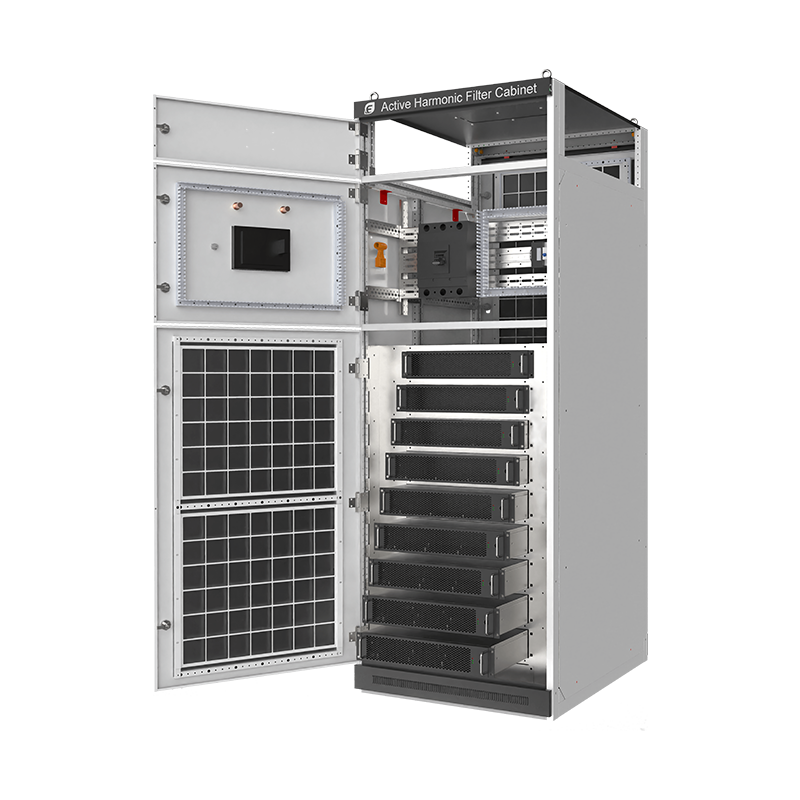
Active harmonic filters are often considered for facilities with changing load conditions because they can dynamically compensate for different harmonic patterns. They continuously monitor electrical conditions and provide corrective current to reduce unwanted harmonic components.
However, harmonic correction should not be separated from broader electrical objectives. A facility experiencing both distortion and low power factor needs a solution that addresses both conditions without creating new system issues.
When customers ask How to correct a poor power factor?, the answer depends on the source of the problem. Inductive motor loads, fluctuating production cycles, and harmonic-producing converters may require different correction methods.
The engineering process therefore focuses on matching the technology to the actual electrical environment instead of applying a standard solution to every facility.
How Integrated Power Quality Management Supports Compliance Goals
Maintaining IEEE 519 compliance is not a one-time installation task. Industrial electrical systems continue to change as production requirements increase and new technologies are added.
We at Enjoypowers approach power quality management by evaluating harmonic control together with reactive power performance and system stability. This helps facilities avoid solving one electrical issue while creating another.
A properly designed power quality system can support more stable industrial operations by reducing electrical disturbances and improving the performance environment for sensitive equipment.
Future expansion should also be considered during solution planning. Additional drives, renewable energy systems, battery storage equipment, or electrification projects may affect harmonic behavior and power system requirements.
We at Enjoypowers work with industrial users to develop solutions based on actual operating conditions rather than assumptions. This approach allows facilities to improve compliance performance while maintaining flexibility for future electrical changes.
IEEE 519 compliance is ultimately about managing the relationship between industrial equipment and the wider electrical network. Facilities that understand their harmonic sources, evaluate conditions at the correct measurement point, and select suitable correction methods can achieve more reliable power system performance.
For industrial operators, harmonic limits are not only a regulatory concern. They are a practical indicator of electrical system health. A structured power quality strategy helps reduce disturbances, support continuous production, and create a more resilient industrial energy infrastructure.