
Commercial rooftops rarely offer uniform, unshaded surfaces ideal for single-orientation solar arrays. Structural obstructions like HVAC units, skylights, parapets, and varying roof pitches split PV arrays into multiple smaller strings facing east, west, and south. Connecting mismatched strings to the same MPPT tracker can reduce the energy harvested from the affected array sections.
Under standard series-connected string configurations, overall performance drops to match the lowest-producing panel. A small shadow cast across two panels on a west-facing roof segment forces the inverter to drag down the operating voltage of healthy south-facing arrays. Overcoming this systemic efficiency loss demands granular DC channel control before power conversion occurs.
Deconstructing Rooftop Mismatch Losses in Multi-Pitch Solar Arrays
Array mismatch stems from fundamental semiconductor physics governing photovoltaic cells. Current output varies proportionally with solar irradiance, while operating voltage changes based on module temperature. Linking strings with different tilt angles or azimuth directions forces dissimilar current-voltage (I-V) curves to converge into a single shared tracker.
Such electrical forced convergence can hinder the inverter from locating the global maximum power point. Instead, the tracker operates at an artificial compromise voltage, leaving substantial generation potential unharvested.
Over twenty-five years of commercial operation, these uncollected kilowatt-hours represent tens of thousands of dollars in lost renewable energy generation and lower return on investment.
Shading compounds these losses exponentially throughout peak daylight hours. Moving shadows from adjacent structures shift across array segments at different times.
Without independent voltage management, localized shading triggers multiple local power peaks on the combined I-V curve, causing conventional single-tracker algorithms to get trapped at sub-optimal operating levels.
The Mechanics of Independent MPPT Channel Voltage Isolation
Multiple Maximum Power Point Tracking channels resolve string mismatch by electrically separating distinct array sections. Each dedicated MPPT circuit contains independent DC-DC boost conversion topology with fine-grained current sensing and high-speed digital processing. Individual channels scan and adjust input voltages independently without affecting adjacent string circuits.
Isolating string voltages allows arrays installed on different roof planes to operate at their respective peak power voltages simultaneously. An east-facing string can reach full voltage during early morning light, while a south-facing string builds toward its midday peak, without either array degrading the performance of the other or causing reverse current flow.
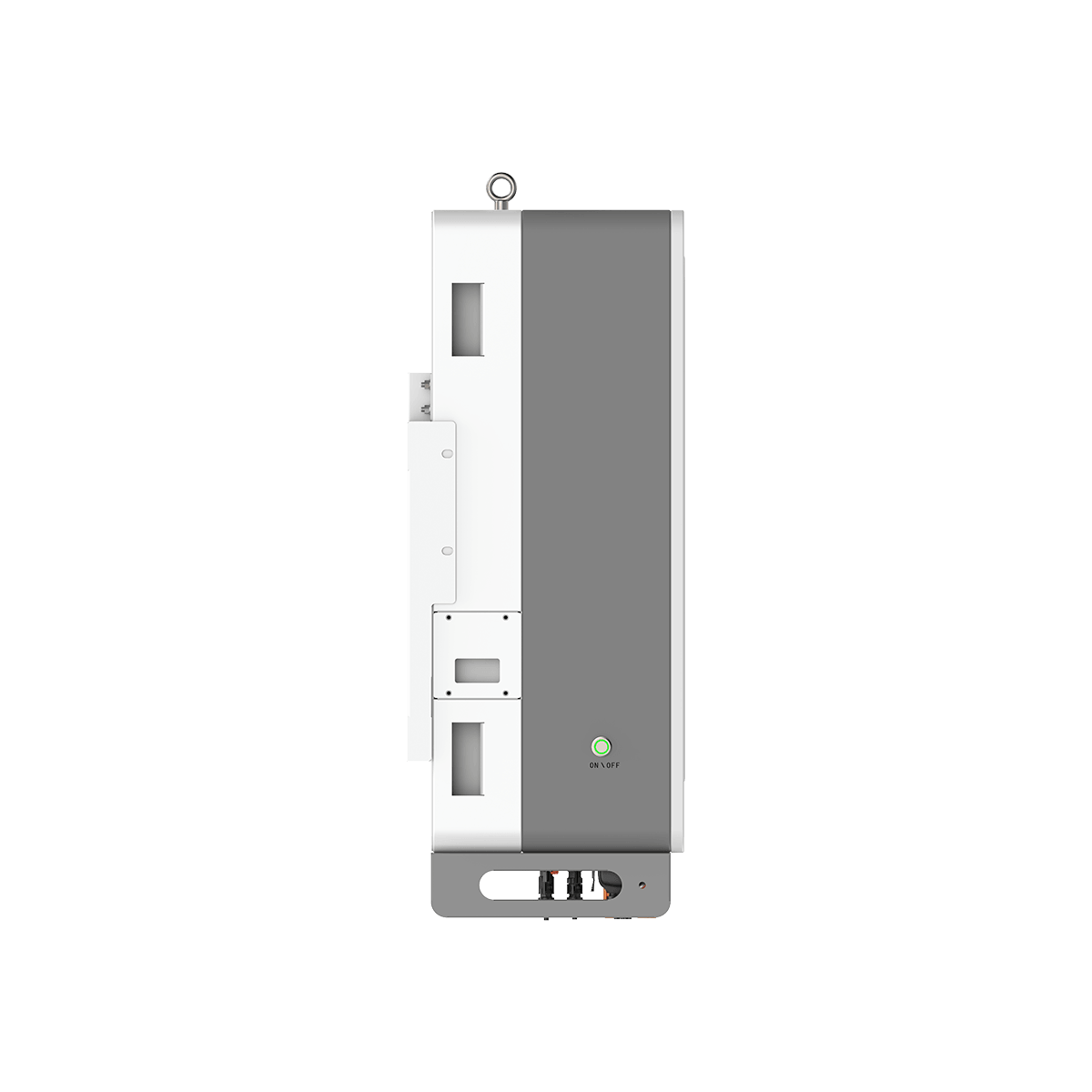
Modern commercial hardware consolidates this multi-tracker architecture into robust outdoor enclosures. At Enjoypowers, we equip our commercial power units with up to 6 independent MPPT trackers inside an IP66-rated chassis.
This design allows system designers to map complex multi-pitch rooftops onto dedicated tracking channels without installing high-maintenance module-level power electronics behind every solar panel.
Harmonizing Multi-String Solar Yield with On-Grid and Off-Grid Dispatch
Maximizing solar energy capture directly benefits total energy storage performance across commercial buildings. DC-coupled commercial systems route raw PV power directly to battery banks through internal high-efficiency converters, bypassing redundant AC conversion stages. Capturing every available watt from shaded or angled strings ensures faster battery replenishment between heavy production shifts.
During normal utility operation, balanced generation feeds flexible load-shifting and peak-shaving routines. Deploying a commercial hybrid inverter on-grid enables facilities to prioritize solar self-consumption while seamlessly exporting surplus generation to the local utility grid. Clean DC power flows efficiently between PV strings, battery storage, and active building loads.
Utility outages require an immediate transition to localized energy dispatch to maintain operational continuity. Operating a hybrid inverter off-grid allows the system to supply uninterrupted three-phase power to critical building circuits within milliseconds of a blackout.
Multi-channel trackers continue optimizing available sunlight during extended grid outages, keeping backup batteries charged throughout daylight hours.
Having energy storage with independent string tracking can help maintain critical loads during extended grid outages, with backup duration depending on battery capacity, load demand, and available solar generation. Integrating a hybrid inverter off-grid capability helps reduce reliance on costly diesel generators during unexpected power interruptions.
Meanwhile, returning utility power triggers a smooth transition back to standard hybrid inverter on-grid operation without disrupting sensitive facility automation.
Architectural Integration and Multi-Tracker System Sizing Workflow
Engineering high-yield rooftop installations demands a systematic approach to string mapping and tracker allocation. Installers should audit physical roof segments during early site surveys, grouping modules into dedicated strings based on tilt angle, direction, and expected shade profile. Matching identical modules within each string optimizes the input window of individual tracking channels.
Selecting the correct inverter power rating depends on total array capacity and peak building loads. Our engineering team at Enjoypowers develops modular three-phase systems spanning 40 kW to 125 kW, providing the wide DC voltage ranges necessary to accommodate diverse string lengths and varying battery chemistries from LFP to sodium-ion.
High DC-to-AC ratios offer another significant advantage in multi-MPPT layouts. Overbuilding the DC PV array relative to nominal inverter AC output allows the system to capture useful solar power earlier in the morning and later in the afternoon. Multi-channel trackers distribute this overbuilt capacity across different roof orientations, smoothing the total power delivery curve throughout operating hours.
Enclosing all power conversion, transfer switching, and string management components within a single weatherproof module eliminates the need for separate indoor equipment rooms.
Facilities reduce civil installation labor, simplify AC/DC wiring runs, reduce balance-of-system hardware costs, and accelerate total project commissioning timelines across complex commercial retrofits.
Multi-channel MPPT technology transforms constrained, irregular commercial rooftops into highly efficient energy assets. Decoupling string voltages gives system integrators the flexibility to harvest maximum solar energy across diverse roof orientations while protecting facilities against utility outages.
Through advanced power conversion platforms, Enjoypowers delivers the hardware reliability, intelligence, and dynamic energy dispatch required for modern industrial energy storage applications.