
Industrial facilities face utility bills dominated by two distinct charges: energy consumption (kWh) and power demand (kW). While consumption measures total electricity drawn over time, demand charges are often based on the highest average power demand recorded during a defined billing interval, such as 15 minutes, depending on the applicable utility tariff. Sudden motor starts or chiller cycles create brief power spikes that set exorbitant demand rates for entire billing cycles.
Grid operators impose these steep demand fees because public distribution infrastructure must maintain transformer and line capacity to support peak surges. Commercial facilities often pay between twenty to fifty percent of their total monthly utility expenses solely on demand charges.
Uncontrolled load spikes force utilities to maintain expensive peaking power plants, passing those infrastructure costs directly onto commercial facilities through aggressive tariff structures.
Managing these periodic spikes requires intelligent onsite technology capable of responding instantly when site demand threatens pre-established utility thresholds. Installing modern energy storage system solutions enables industrial plants to cap peak demand without curtailing production or altering core operational schedules. Automated load capping isolates internal plant operations from public grid capacity limits, creating an effective buffer against high demand charges.
Real-Time Algorithmic Control and Battery Discharge Mechanics
Peak shaving operates through continuous digital monitoring at the facility switchgear. High-speed current transformers measure instantaneous active power draw, feeding real-time telemetry into an onsite energy management system.
If plant demand approaches the target threshold, the control system commands the power conversion system to discharge battery energy directly onto the facility busbar within milliseconds.
Smart control algorithms do not simply dump battery power whenever loads rise. Advanced software calculates moving 15-minute average power consumption, predicting whether current load trends will exceed billing thresholds before the interval closes.
Precision discharging ensures that battery energy is expended only when necessary to prevent a billable peak, conserving stored state-of-charge for subsequent demand surges throughout the workday.
Response speed determines whether a peak shaving system successfully protects facility balance sheets. Modern power conversion units transition from standby to full power output in under ten milliseconds, capturing rapid load transients before utility billing meters register the surge.
Our engineers at Enjoypowers design high-performance PCS architectures that maintain millisecond-level responsiveness under volatile industrial operating conditions.
Calculating Financial Reductions and Load Factor Optimization
Quantifying financial savings requires examining local utility rate structures alongside site load profiles. If a manufacturing plant experiences repeatable monthly peaks of 1,200 kW against a baseline load of 800 kW, a 400 kW demand surge dictates the monthly bill. Eliminating that 400 kW spike under a $25 per kW demand tariff generates $10,000 in direct monthly savings, yielding $120,000 in annual utility reduction.
Optimizing facility load factor represents an additional operational benefit of battery-assisted peak clipping. Load factor measures the ratio of average energy consumption against peak demand over a specific billing timeframe.
Raising load factor toward unity maximizes energy utilization while minimizing capacity charges, giving facility owners greater control over electricity costs.
Deploying tailored commercial energy storage solutions allows facilities to expand production machinery without requesting expensive grid connection upgrades. Utility grid connection expansions can take over two years and require substantial transformer investments.
Battery storage supplies local surge current, permitting plant expansion on existing low-voltage interconnections while simultaneously slashing recurring monthly demand charges.
Hardware Integration and Thermal Efficiency in C&I Storage
High round-trip efficiency ensures that charging losses do not erode peak shaving cost savings. Storing off-peak grid power or excess solar energy involves AC-to-DC and DC-to-AC conversion cycles that incur thermal losses.
Utilizing advanced lithium iron phosphate chemistry combined with high-efficiency liquid-cooled enclosures reduces internal resistance and preserves maximum energy for peak discharge events.
Selecting robust, scalable energy storage system solutions provides long-term operational durability under heavy daily cycling. Industrial applications subject battery cells to rapid power delivery, which generates substantial internal heat.
Liquid cooling systems maintain uniform cell temperatures across the entire enclosure, preventing thermal degradation and extending total operational lifespan to over 6,000 charge-discharge cycles.
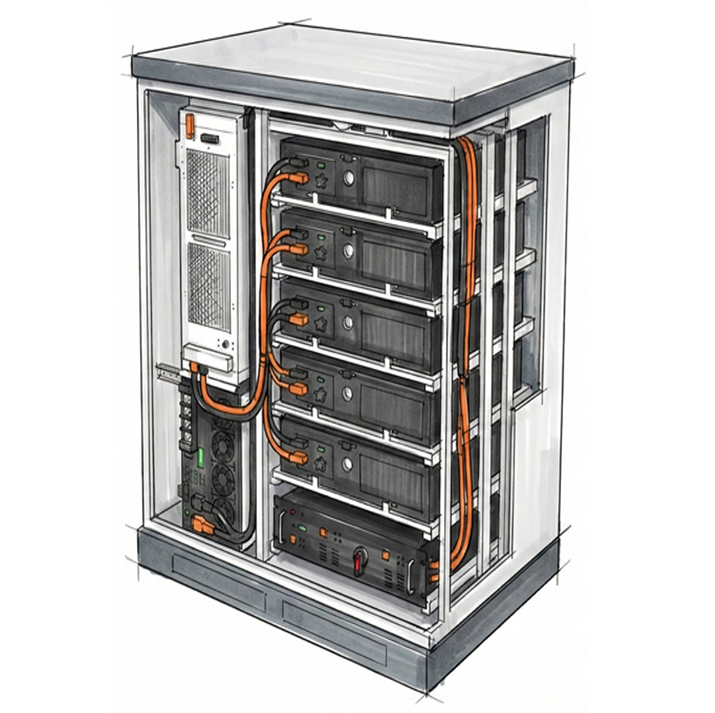
System integration requires seamless synchronization between the battery management system, PCS inverters, and plant switchgear. Compact outdoor enclosures equipped with integrated fire suppression and liquid thermal management allow hassle-free installation near facility substations.
We at Enjoypowers deliver modular battery storage platforms engineered specifically to streamline installation, minimize footprint, and maximize operational uptime for industrial facilities.
Maximizing Payback Timelines and Multi-Use Revenue Stacking
Achieving rapid payback on energy storage investments involves stacking multiple financial use cases onto a single battery asset. Primary demand charge reduction can be combined with time-of-use energy arbitrage by charging batteries during low-cost nighttime hours and discharging during peak price windows.
Multi-use operational profiles significantly increase overall financial returns, shortening capital payback periods to between three and five years.
Integrating solar photovoltaic generation with battery storage creates additional savings by capturing self-generated energy that would otherwise face utility curtailment.
During peak solar production, excess clean energy charges the battery system instead of exporting to the grid at low feed-in tariffs. Stored solar energy is later discharged during evening demand spikes, maximizing renewable self-consumption and driving down operational expenses.
Evaluating commercial energy storage solutions requires balancing initial capital expenditure against long-term maintenance and degradation curves. Automated management software continuously optimizes state-of-charge limits to prevent deep discharge stress while helping maintain sufficient state of charge for planned peak-shaving events.
Facilities achieve reliable power quality, backup power protection during unexpected grid outages, and permanent reduction in demand charges.
Partnering with Enjoypowers gives industrial enterprises access to field-proven power conversion platforms that support applicable grid requirements and project financial objectives.
Eliminating volatile utility demand charges protects bottom-line margins while building resilient onsite energy infrastructure. Intelligent peak shaving converts unpredictable energy overhead into a manageable operational asset.