
Commercial and industrial facilities are facing increasing pressure to improve energy efficiency, reduce electricity costs, and maintain reliable power operation. As renewable energy and battery storage become more common, hybrid inverters are playing an important role in connecting energy sources, storage systems, and electrical loads.
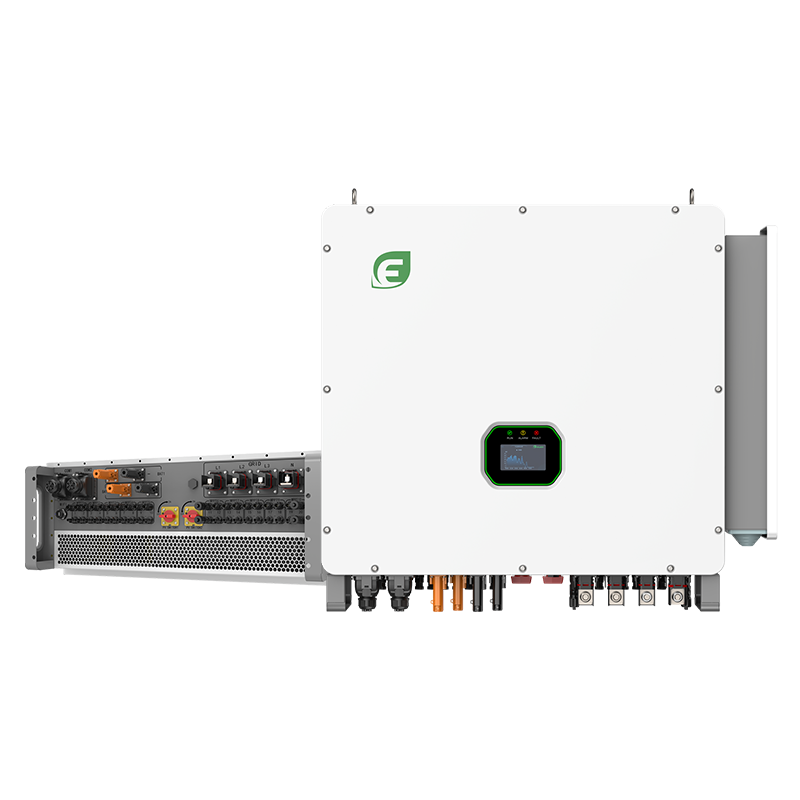
However, selecting the right inverter size is not simply a matter of choosing the highest available power rating. An oversized system may increase investment costs and reduce efficiency, while an undersized system may struggle to support actual operating requirements.
For commercial and industrial projects, proper sizing requires a detailed understanding of load characteristics, energy consumption patterns, battery requirements, and future expansion plans. At Enjoypowers, we have found that many design challenges can be avoided when system sizing begins with a clear analysis of the application rather than equipment selection alone.
This article explains the key factors that engineers and integrators should consider when sizing a three-phase system for different commercial and industrial load conditions.
Understanding Three-Phase Hybrid Inverter Applications
A three-phase hybrid inverter combines multiple energy management functions within one system. It can manage power conversion between solar generation, battery storage, the electrical grid, and connected loads.
Compared with single-phase systems, three-phase configurations are commonly used in commercial and industrial environments because they can support higher power levels and more balanced distribution across electrical phases.
A hybrid inverter must handle both continuous and variable loads. Industrial facilities often include motors, production equipment, HVAC systems, automation systems, and other devices with changing power demands. These loads can create challenges when determining the appropriate inverter capacity.
Before sizing, engineers should analyze the facility’s maximum demand, average consumption, peak load periods, and critical loads that require backup support. This information helps determine whether the inverter should prioritize energy savings, backup capability, renewable integration, or a combination of these functions.
How to Calculate the Right Hybrid Inverter Capacity
The first step in sizing is understanding the relationship between load power and inverter output capacity. The inverter should provide enough power to support expected operating conditions while maintaining appropriate efficiency.
Engineers usually begin by evaluating the facility’s load profile. This includes identifying the highest power demand, typical daily consumption, and the types of equipment connected to the system.
Motor-driven equipment requires additional consideration because motors may create high startup currents. If these loads are significant, the inverter must have sufficient capacity and response capability to handle temporary increases in demand.
Battery capacity should also be considered together with inverter sizing. A larger battery does not automatically require a larger inverter, but the charging and discharging power requirements must match the inverter’s capabilities.
A properly sized system balances power output, energy storage capacity, and actual application needs. This approach avoids unnecessary equipment costs while ensuring stable operation.
Can a Hybrid Inverter Work Off the Grid?
One common question from commercial and industrial users is: Can a hybrid inverter work off the grid?
The answer depends on the inverter design and system configuration. Many modern hybrid systems are designed to support off-grid operation by using battery storage and local energy generation sources.
In an off-grid application, the inverter manages energy flow between batteries, renewable sources, and connected loads without relying on the utility grid. When renewable generation is insufficient, stored energy can supply electricity to maintain operation.
However, off-grid operation requires careful planning. Engineers need to consider available battery capacity, expected load duration, peak power demand, and backup priorities.
For facilities that require continuous operation, critical load management is especially important. Not every connected device may need backup power, so separating essential and non-essential loads can improve system performance.
Enjoypowers considers application requirements and operating conditions when evaluating energy conversion systems. Understanding whether a project requires grid-connected operation, backup capability, or full off-grid functionality is an important part of system design.
Key Factors Affecting Commercial and Industrial Sizing Decisions
Commercial and industrial loads are usually more complex than residential applications because they involve larger equipment, different operating schedules, and higher power requirements.
One important factor is load diversity. Not all equipment operates at maximum capacity at the same time. A facility may have a high total connected load but a lower actual operating demand.
Another consideration is future expansion. Businesses may add production lines, charging infrastructure, or additional energy-consuming equipment. A properly designed system should allow reasonable flexibility without significantly increasing initial costs.
Environmental conditions also affect inverter selection. Temperature, installation location, ventilation requirements, and maintenance access can influence long-term performance.
Power quality requirements should not be overlooked. Industrial facilities with sensitive equipment may require stable voltage and frequency control to maintain reliable operation.
A suitable hybrid inverter design should consider both current requirements and future operational changes.
Hybrid Inverter Integration With Energy Storage Systems
A hybrid inverter is often integrated with battery storage to create a more flexible energy management system. The inverter controls how energy moves between the battery, renewable sources, and electrical loads.
During periods of low demand or high renewable generation, excess energy can be stored for later use. During peak demand periods, stored energy can help reduce dependence on grid electricity.
The effectiveness of this approach depends on matching inverter power capacity with the intended application. A system designed for peak shaving may require different characteristics from one designed for backup power or renewable self-consumption.
When evaluating a hybrid inverter, engineers should consider efficiency, communication capability, operating modes, and compatibility with battery systems.
The goal is to create a coordinated system where each component supports the overall energy strategy rather than operating independently.
Avoiding Common Hybrid Inverter Sizing Mistakes
Incorrect sizing is one of the most common challenges in commercial and industrial energy projects. Choosing equipment based only on connected load can lead to inefficient system design.
Oversizing may increase upfront investment while leaving much of the inverter capacity unused during normal operation. Undersizing may limit system performance and create operational problems during peak demand periods.
Another mistake is ignoring future requirements. Energy consumption patterns may change as businesses expand or adopt new technologies.
Engineers should also evaluate whether the system needs grid support, backup operation, or off-grid capability before finalizing equipment selection.
A complete analysis of electrical demand, energy goals, and operating conditions provides a stronger foundation for selecting the correct inverter capacity.
Accurate Sizing Creates More Efficient Energy Systems
Selecting the right three-phase hybrid inverter for commercial and industrial applications requires careful evaluation of power demand, energy storage needs, and operational objectives.
The most suitable system is not necessarily the largest one. Instead, it should match the facility’s real requirements while providing enough flexibility for future changes.
By analyzing load characteristics, backup expectations, and integration requirements, businesses can develop more efficient and reliable energy systems.
Enjoypowers believes that successful energy projects start with accurate system understanding and practical engineering decisions. Proper sizing helps ensure that hybrid energy systems deliver stable performance while supporting evolving commercial and industrial energy needs.
As more facilities adopt renewable energy and storage technologies, understanding how to size and integrate hybrid inverters will remain an important skill for engineers and system integrators.