
The rapid growth of renewable energy and industrial electrification is changing how companies manage power. For system integrators, selecting the right Power Conversion System (PCS) is critical because it determines how efficiently energy flows between batteries, loads, renewable sources, and the grid. A key concept behind modern PCS technology is bidirectional power conversion, which enables energy storage systems to both absorb and deliver electricity.
At Enjoypowers, we specialize in grid-forming power conversion systems for demanding industrial environments. Deployed in over 70 countries, our power conversion platforms power critical energy storage installations, assisting factories, commercial hubs, and infrastructure sites in optimizing energy stability.
What Does Bidirectional Mean in a PCS?
A bidirectional PCS refers to a power conversion system that can control electricity flow in two directions. Unlike traditional converters that only convert power from one side to another, a bidirectional PCS can convert DC power from batteries into AC power for loads or the grid, and it can also convert AC power back into DC power to charge batteries.
This two-way operation is essential for modern energy storage projects. During periods of low electricity demand or high renewable generation, the PCS directs energy into the battery. When electricity demand increases or grid conditions become unstable, the PCS releases stored energy to support operations.
For a battery energy storage system, this capability creates opportunities for peak shaving, renewable energy integration, backup power, and microgrid applications. System integrators can build solutions that respond dynamically to changing energy conditions instead of relying on fixed power flows.
Why Bidirectional PCS Matters for C&I Energy Storage Projects
Commercial and industrial facilities often face challenges such as rising electricity costs, unstable grid supply, and increasing demand for renewable energy. C&I energy storage requires equipment that can manage multiple operating modes while maintaining reliable performance.
A bidirectional PCS allows energy storage systems to participate in different scenarios. For example, factories can charge batteries when electricity prices are lower and discharge during peak-price periods. This reduces electricity costs while improving energy independence.
For solar-plus-storage projects, bidirectional PCS technology also supports flexible energy management. Solar power can be stored during the day and used later when production demand remains high. This approach helps companies improve renewable energy utilization and reduce dependence on grid electricity.
Key Considerations When Selecting a Bidirectional PCS
For system integrators, PCS selection involves more than power conversion efficiency. Compatibility, scalability, control functions, and grid interaction capabilities all influence project success.
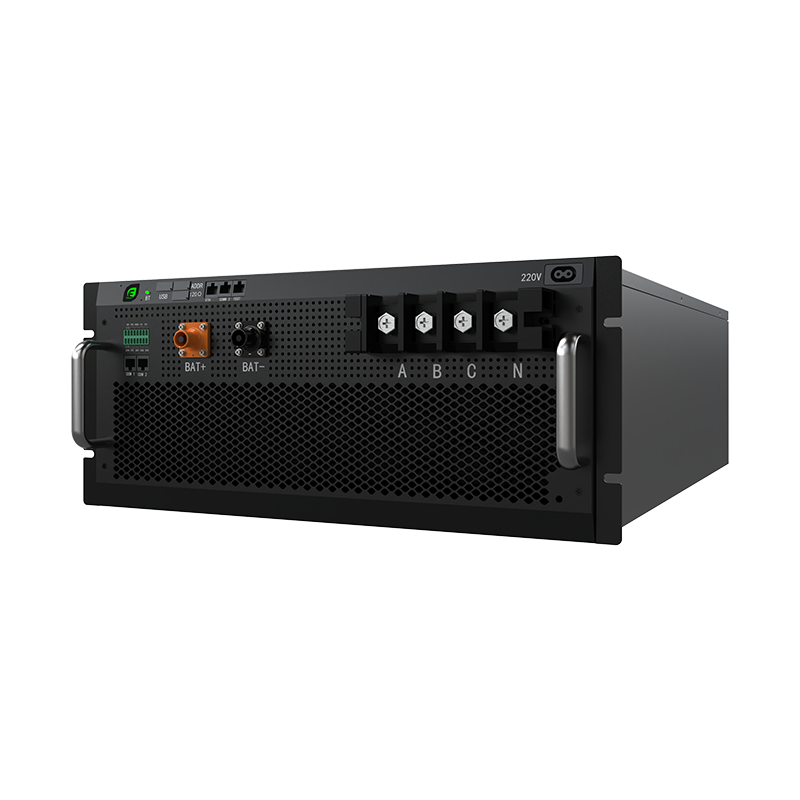
Voltage compatibility is one important factor. Enjoypowers’ 105/125kW BESS PCS module is designed for commercial and industrial applications, featuring a 400Vac AC voltage and DC full-load voltage ranges of 615–950Vdc for 3P3W systems and 680–950Vdc for 3P4W systems. These specifications allow easier integration into many industrial power environments.
Another important factor is system flexibility. Modern projects often require DC coupling with photovoltaic systems, seamless grid and off-grid transitions, and future expansion capabilities. C&I ESS PCS solutions can integrate PCS, MPPT, and STS functions for specific commercial and industrial energy storage applications.
Designing Flexible C&I Energy Storage with Integrated PCS Solutions
As energy projects become more complex, integrated PCS architectures can simplify system design. Our C&I ESS PCS + MPPT + STS solution is developed for 400Vac commercial and industrial storage applications, supporting DC-coupled configurations and automatic grid/off-grid transfer.
This solution is suitable for applications including factory peak shaving, commercial building energy management, PV+BESS+EV charging hubs, and microgrids requiring reliable backup power. The integrated design reduces system complexity and provides integrators with a more efficient approach to project deployment.
The STS module is especially valuable for critical loads. Enjoypowers’ STS solutions are designed to enable rapid grid-to-off-grid transitions, helping maintain power continuity for applications such as hospitals and data centers. When combined with bidirectional PCS technology, the system can quickly respond to grid interruptions while continuing to supply essential loads.
How Enjoypowers Supports System Integrators
At Enjoypowers, we understand that system integrators need more than individual components. They need reliable technology partners who can support complete energy storage project development.
Our product portfolio covers PCS solutions from 30kW to 100MW, supporting grid-connected systems, microgrids, and hybrid energy storage applications. We design our solutions around practical industrial requirements, including scalability, grid compatibility, and stable operation in demanding environments.
Our C&I energy storage solutions also support modular expansion. For example, our systems can operate with multiple parallel units, allowing integrators to match system capacity with different project requirements. This flexibility helps reduce design limitations and provides customers with long-term energy management options.
Building the Future of Energy Storage with Bidirectional PCS
Bidirectional PCS technology has become a foundation for modern energy storage because it enables intelligent two-way energy management. For system integrators, understanding this technology is essential when designing reliable battery energy storage system projects.
At Enjoypowers, we continue developing grid-forming and power conversion technologies that help businesses achieve more efficient, stable, and flexible energy systems. By combining advanced PCS technology with MPPT and STS functions, we provide solutions that support the growing demand for C&I energy storage across global markets.