
Industrial facilities are facing increasing pressure to improve energy efficiency, control operating costs, and maintain reliable power availability. As electricity demand becomes more dynamic, companies are looking for flexible solutions that can optimize energy usage without affecting production.
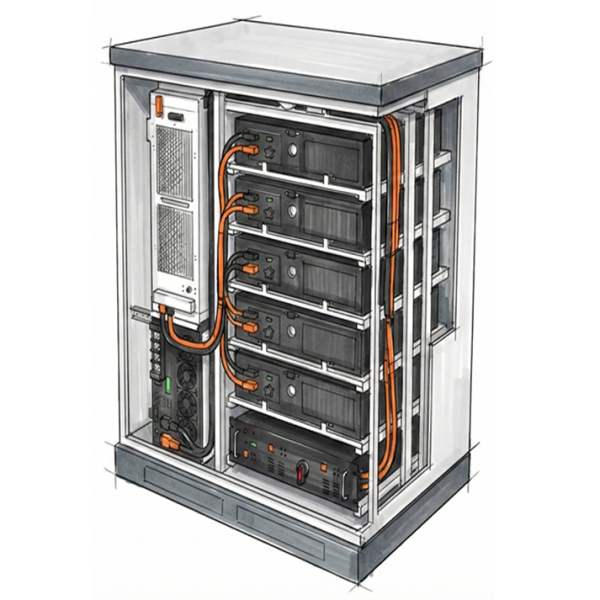
At Enjoypowers, we focus on helping commercial and industrial users understand how advanced energy storage technologies can support their power management goals. An Industrial Battery Energy Storage System (BESS) combines multiple components that work together to store, convert, manage, and distribute electricity efficiently.
Understanding these core components allows facility owners and energy managers to select suitable systems for their applications. From battery modules to power conversion equipment, every part of a BESS plays an important role in achieving stable and efficient energy operation.
Core Components of an Industrial Battery Energy Storage System
Battery Modules: The Energy Storage Foundation
The battery module is the central component of any BESS because it determines how much energy can be stored and how that energy can be delivered when needed. Industrial systems typically use lithium-based battery technologies because they provide a balance between energy density, efficiency, and operational flexibility.
Multiple battery cells are connected together to create modules, and several modules form larger battery racks. These structures allow energy storage systems to be customized according to facility requirements, including capacity, discharge duration, and installation conditions.
A reliable battery management system (BMS) is also essential. It monitors voltage, temperature, charging status, and battery health to help maintain safe and stable operation. The BMS protects battery performance by controlling charging and discharging processes.
Battery Management System and Energy Control
Intelligent Monitoring for Reliable Operation
The battery management system acts as the control center for battery safety and performance. It continuously collects operating data and helps prevent conditions that may reduce battery lifespan or affect system reliability.
In industrial environments, energy demand can change quickly due to production schedules, equipment operation, and seasonal requirements. Intelligent monitoring enables operators to understand energy usage patterns and optimize storage strategies.
The energy management system (EMS) works together with the BMS to coordinate energy flows. It analyzes electricity consumption, renewable energy availability, and grid conditions to determine when energy should be stored or released.
Peak Shaving Battery Storage for Industrial Cost Optimization
How Peak Shaving Battery Storage Supports Energy Management
Electricity costs for industrial users are often influenced by periods of high demand. During these periods, facilities may experience higher electricity charges because of increased power consumption from large equipment and production activities.
Peak shaving battery storage provides a method for reducing the impact of short-term demand peaks. By charging batteries during lower-demand periods and supplying stored energy during high-demand periods, facilities can better manage their electricity usage.
This approach helps businesses improve energy planning and reduce unnecessary strain on their electrical infrastructure. For facilities with variable production schedules, peak shaving battery storage can provide additional flexibility by adjusting energy usage based on operational needs.
Power Conversion System: Connecting Batteries and Electrical Networks
The Power Conversion System (PCS) is another critical part of an industrial BESS. It manages the conversion between direct current (DC) stored in batteries and alternating current (AC) used by industrial equipment and the electrical grid.
During charging, the PCS converts AC power into DC power for battery storage. During discharge, it converts DC energy back into AC power for facility consumption or grid support.
The performance of the PCS directly affects system efficiency, response speed, and overall energy management capability. A well-designed PCS allows the storage system to respond quickly to changing electrical conditions.
Energy Management and Demand Control Strategies
Demand Charge Reduction Through Smart Energy Scheduling
Many industrial facilities need to manage electricity expenses while maintaining continuous operations. Demand charge reduction strategies help companies optimize how and when they consume electricity.
A BESS can support demand charge reduction by controlling energy flow during high-demand intervals. Instead of relying only on grid electricity during peak periods, stored energy can supplement facility loads when required.
At Enjoypowers, we design solutions that consider actual operating conditions, including load profiles, electrical infrastructure, and customer objectives. This approach ensures that energy storage systems are matched with practical business requirements.
Safety Systems and Thermal Management
Industrial energy storage systems require comprehensive safety designs to support long-term operation. Battery containers and cabinets often include temperature monitoring, fire protection systems, and ventilation or cooling technologies.
Thermal management is especially important because battery performance can be affected by temperature changes. Maintaining appropriate operating conditions helps improve reliability and supports consistent system performance.
Safety monitoring also includes communication between different system components. Continuous data exchange allows operators to identify abnormal conditions and take preventive actions when necessary.
Integration with Renewable Energy and Future Power Needs
Industrial BESS solutions can also support renewable energy integration. Facilities with solar generation can store excess electricity and use it when renewable production is lower or energy demand increases.
This capability allows companies to improve renewable energy utilization and increase energy flexibility. Storage systems can also provide backup support for critical loads when properly designed for specific applications.
As energy systems continue to evolve, combining renewable generation, storage, and intelligent controls will become increasingly important for industrial users seeking greater energy independence.
Conclusion
An Industrial Battery Energy Storage System is more than a collection of batteries. It is an integrated platform that includes battery modules, BMS, EMS, PCS, safety systems, and intelligent controls working together.
By understanding these core components, businesses can make better decisions when planning energy storage projects. Technologies such as peak shaving battery storage and advanced energy management strategies help facilities improve flexibility and optimize electricity usage.
Enjoypowers supports customers by providing professional energy storage solutions designed around real industrial needs. With proper system planning and component selection, industrial facilities can create more efficient, reliable, and adaptable energy networks.
As electricity demands continue to change, investing in advanced storage technologies can help businesses prepare for future energy challenges while improving daily operational performance.