
Commercial microgrid projects often face a difficult design decision: selecting an inverter that is powerful enough to support facility operations while remaining flexible enough for future expansion. Oversized equipment can increase project complexity, while undersized systems may limit future energy strategies.
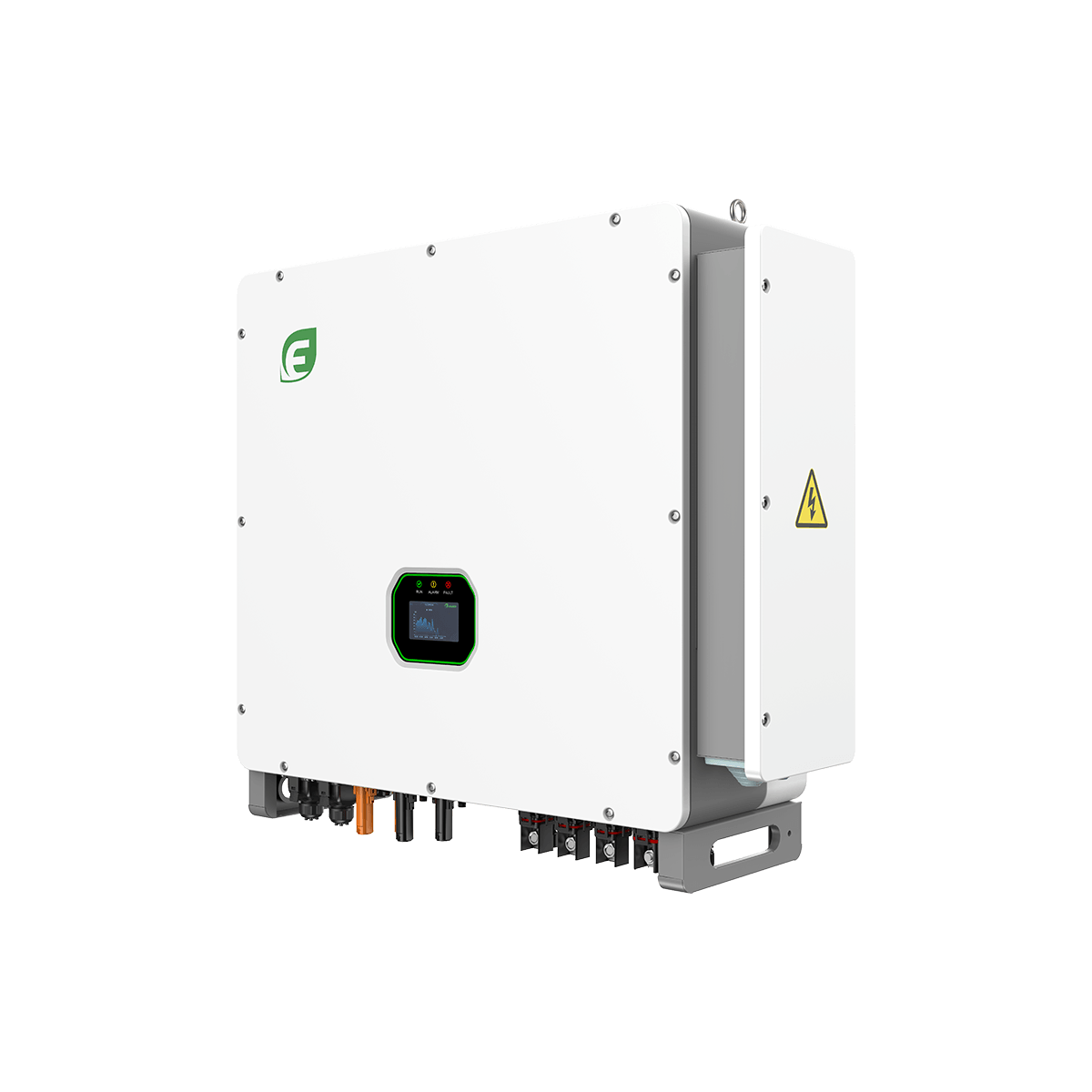
The growth of distributed solar, battery storage, and local energy management has increased demand for inverter systems that can do more than convert power. Commercial microgrids require equipment capable of maintaining stable operation, coordinating multiple energy sources, and supporting different operating modes.
A grid-forming inverter addresses these requirements by helping establish voltage and frequency references within an electrical system. For many commercial projects, the 75–125kW range provides a practical balance between system capacity and deployment flexibility.
We at Enjoypowers develop hybrid inverter solutions designed around real project requirements, where power conversion, energy storage coordination, and microgrid operation must work together.
Why Commercial Microgrids Need More Than Conventional Inverters
Traditional grid-following inverters rely on an existing grid signal to synchronize operation. They can effectively deliver renewable energy when connected to a stable utility network, but microgrid projects may require additional control during islanded or unstable grid conditions.
A grid-forming inverter works differently by helping establish electrical characteristics such as voltage and frequency. This capability becomes valuable when a commercial facility needs greater control over its local power system.
Commercial buildings, industrial facilities, and campuses often have complex energy patterns. Their loads may include HVAC systems, production equipment, charging infrastructure, and sensitive electrical devices that require stable operation.
A commercial PV hybrid inverter combines photovoltaic generation, battery storage coordination, and power conversion functions within one energy architecture. This allows facilities to manage renewable generation while maintaining greater control over energy availability.
The selection of inverter capacity depends on more than the size of the solar array or battery. Engineers must consider peak loads, critical equipment, operating schedules, and the role of the microgrid during different scenarios.
A properly selected inverter becomes a central control point that connects generation resources, storage assets, and facility demand.
How 75–125kW Systems Match Commercial Microgrid Design Logic
The 75–125kW power range is often suitable for commercial microgrid projects because it provides meaningful capacity without forcing the entire system into a single large-scale architecture.
Commercial facilities frequently expand in stages. A modular inverter approach allows project owners to install an initial system and add additional capacity as energy requirements increase.
A 75 kW hybrid inverter can serve applications where the facility requires moderate power conversion capacity while maintaining a compact system structure. Multiple units can potentially be combined to support larger projects depending on system design requirements.
The modular approach also supports project customization. Different buildings or operational zones may have different energy requirements, allowing designers to distribute power conversion capacity instead of concentrating everything in one location.
Another factor is operational resilience. A multi-unit architecture can provide flexibility because the system does not depend entirely on one conversion unit. Project designers can evaluate how power should be distributed based on facility priorities.
For commercial microgrids, this approach aligns with the need for adaptable energy infrastructure. The goal is not simply installing the largest available inverter but creating a system that matches present demand while allowing future adjustments.
Which Technical Factors Determine a Suitable Microgrid Inverter
Power rating is only one part of inverter selection. Engineers must evaluate whether the inverter’s operating characteristics match the requirements of the microgrid.
Grid-forming capability is a primary consideration. A microgrid inverter must respond effectively to changing generation and load conditions while maintaining stable electrical operation.
Battery integration is another important factor. Hybrid systems depend on coordinated operation between batteries, photovoltaic sources, and loads. The inverter must manage energy flow between these components according to the project strategy.
Communication and control functions also influence system performance. Commercial microgrids often include energy management platforms that coordinate different assets. The inverter must exchange information effectively with these control systems.
Environmental suitability should also be reviewed. Commercial installations may require equipment designed for different installation conditions, including outdoor locations or areas exposed to changing temperatures.
An IP66 hybrid inverter can provide a suitable option for projects where protection against dust and water exposure is required by the installation environment. The enclosure rating helps engineers evaluate whether equipment matches the planned deployment conditions.
We at Enjoypowers consider these technical factors together because inverter selection affects the entire microgrid architecture, not only the power conversion stage.
Designing Commercial Microgrids Around Flexible Power Conversion
The success of a commercial microgrid depends on how well individual components operate as a coordinated system. Inverter selection influences renewable utilization, battery operation, and the facility’s ability to respond to changing energy conditions.
A 75–125kW grid-forming inverter architecture provides a practical option for projects that require flexibility without moving immediately toward utility-scale equipment. It allows businesses to build systems that can grow with future energy needs.
Project teams should evaluate inverter capacity alongside facility objectives. A building focused on renewable self-consumption may have different requirements from a site prioritizing resilience or backup operation.
Through system-focused design, Enjoypowers helps commercial users connect inverter technology with storage assets, renewable generation, and operational needs.
Commercial microgrids are becoming more complex as businesses seek greater energy independence and control. The right inverter capacity helps create a foundation that supports reliable operation today while keeping future expansion possible.
For many commercial projects, 75–125kW grid-forming inverter systems provide a practical middle ground: enough capacity for meaningful energy management, combined with the flexibility needed for evolving microgrid designs.