
Energy storage system design has a direct impact on renewable energy utilization, operating efficiency, and long-term project value. As solar and battery technologies continue to develop, businesses are increasingly comparing DC-coupled and AC-coupled architectures to determine which approach better meets their energy goals. For commercial and industrial applications, reducing conversion losses and improving system flexibility are becoming essential considerations.
At Enjoypowers, we focus on advanced power conversion technologies designed for real-world energy applications. Our DC-coupled battery storage solutions combine photovoltaic conversion, battery management, and bidirectional power control to improve energy efficiency. Through technologies such as bidirectional DC converter systems and MPPT solar converter solutions, we help businesses maximize renewable energy output while creating more reliable energy infrastructure.
Understanding the Difference Between DC-Coupled and AC-Coupled Storage Systems
The main difference between DC-coupled and AC-coupled battery storage lies in how solar energy flows through the system. In an AC-coupled system, solar power generated by photovoltaic panels is first converted from DC to AC through a solar inverter. When the energy needs to charge batteries, it undergoes another conversion from AC back to DC through a battery inverter.
This multi-step conversion process provides flexibility but can introduce additional energy losses. Each conversion stage reduces overall efficiency, especially in applications where large amounts of renewable energy are stored and reused daily.
DC-coupled battery storage uses a shared DC bus to connect solar panels, batteries, and power conversion equipment. Because solar energy can flow directly between PV generation and battery storage without unnecessary AC conversion steps, the system can achieve higher efficiency and better energy utilization.
For commercial solar plants, microgrids, and industrial energy systems, reducing conversion losses can translate into more usable energy, lower operating costs, and improved return on investment.
How a Bidirectional DC Converter Improves Energy Flow Management
A key component of DC-coupled storage systems is the bidirectional DC converter. Unlike conventional converters that only control one-way power flow, a bidirectional DC converter manages both charging and discharging processes between batteries and the DC bus.
This capability allows energy storage systems to respond dynamically to changing energy conditions. During periods of high solar generation, excess photovoltaic energy can be stored in batteries. When electricity demand increases or solar production decreases, stored energy can be released to support loads.
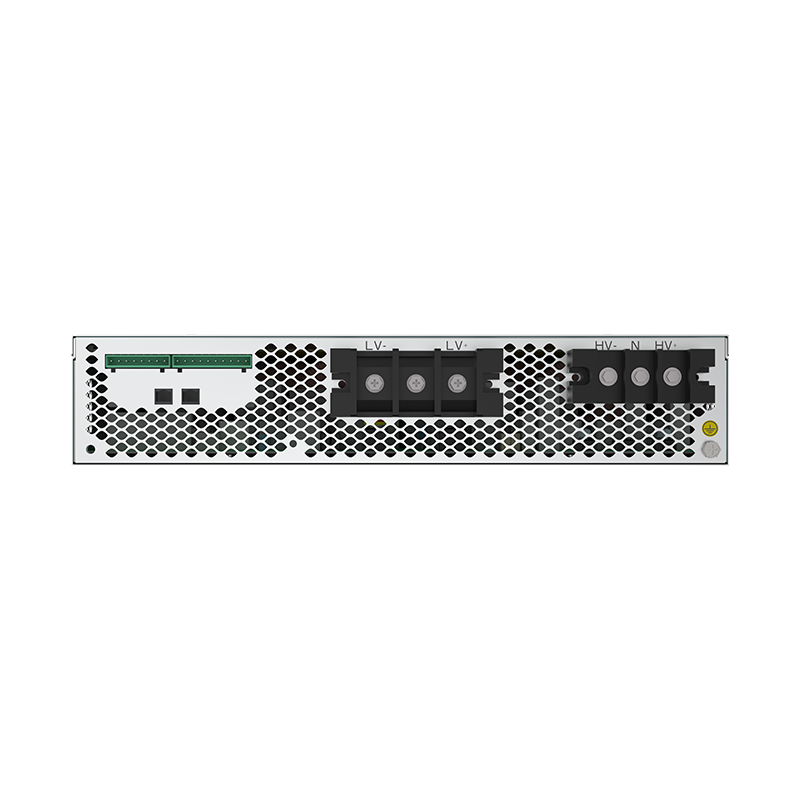
Our bidirectional DC-DC converter is designed for PV-coupled storage applications with a built-in MPPT function. The system connects batteries to a common DC bus, supports up to 16 units operating in parallel, and can switch between battery and PV modes through firmware control.
This flexible design enables one hardware platform to serve multiple roles, including PV input conversion, battery DC-DC conversion, and EV charging output. For businesses managing different energy applications, this reduces system complexity and simplifies maintenance requirements.
Improving Solar Harvesting with an MPPT Solar Converter
Solar energy generation is affected by changing environmental conditions such as sunlight intensity, temperature, and shading. To maximize photovoltaic output, storage systems require accurate control technology that can continuously track the optimal operating point of solar panels.
An MPPT solar converter helps improve renewable energy harvesting by adjusting operating conditions to capture the maximum available solar power. In DC-coupled systems, integrating MPPT functionality directly into the DC conversion stage creates a more efficient energy pathway between PV modules and batteries.
Our DCDC platform integrates MPPT technology and supports 1000 Vdc operation. It provides six firmware-selectable operating modes, including constant voltage, bidirectional constant voltage, constant current, constant power, boost MPPT, and buck MPPT.
This multi-mode capability allows the same hardware to adapt to different applications without requiring separate equipment designs. Businesses can use the system for PV conversion, battery management, or EV charging needs depending on project requirements.
Achieving Higher Efficiency with Advanced DC-Coupled Technology
Efficiency is one of the most important factors when evaluating energy storage solutions. Even small conversion losses can become significant in large-scale systems operating continuously throughout the year.
Our bidirectional DC-DC converter achieves up to 99% peak efficiency through a three-level topology and optimized switching frequency design. More importantly, the system maintains stable efficiency across a wide power range rather than only achieving high performance at peak conditions.
Higher efficiency directly reduces heat generation, lowers cooling requirements, and increases the amount of renewable energy delivered to the load. For industrial facilities and commercial energy projects, these improvements contribute to better system economics and more sustainable operation.
Another important feature is zero-voltage pre-charging capability. Deeply discharged batteries can create high inrush currents when connected to a live DC bus, potentially causing equipment stress or damage. Our specialized pre-charge mode enables safer connection of batteries at extremely low voltage conditions.
This function is particularly valuable for emerging battery technologies such as sodium-ion batteries, which may remain at 0V during storage, as well as cold-weather lithium iron phosphate battery recovery applications.
Building More Efficient Energy Systems with Enjoypowers
DC-coupled battery storage provides a more efficient approach for businesses seeking to maximize solar energy utilization and improve energy management. By reducing conversion steps, integrating advanced power control, and supporting flexible operating modes, DC-coupled systems can deliver long-term advantages for renewable energy projects.
At Enjoypowers, we develop intelligent power conversion solutions that support the future of clean energy. Our bidirectional DC converter and MPPT solar converter technologies help businesses build efficient, flexible, and reliable energy systems for solar storage, microgrids, and EV charging applications. Through continuous innovation, we aim to make renewable energy easier to manage and more valuable for commercial and industrial users worldwide.