IP66 Hybrid Inverter

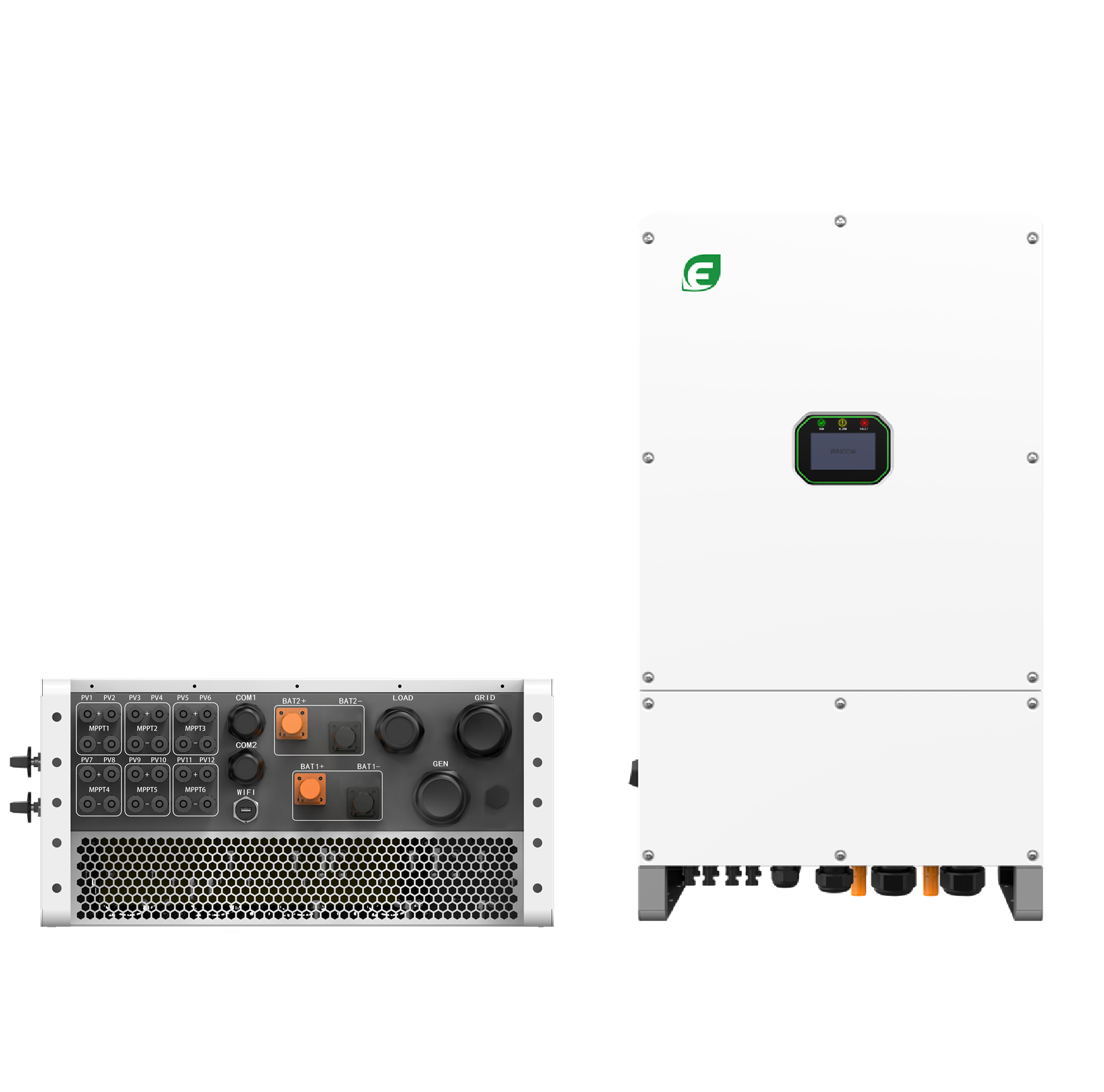
40/50/60kW PV+Battery Hybrid Inverter

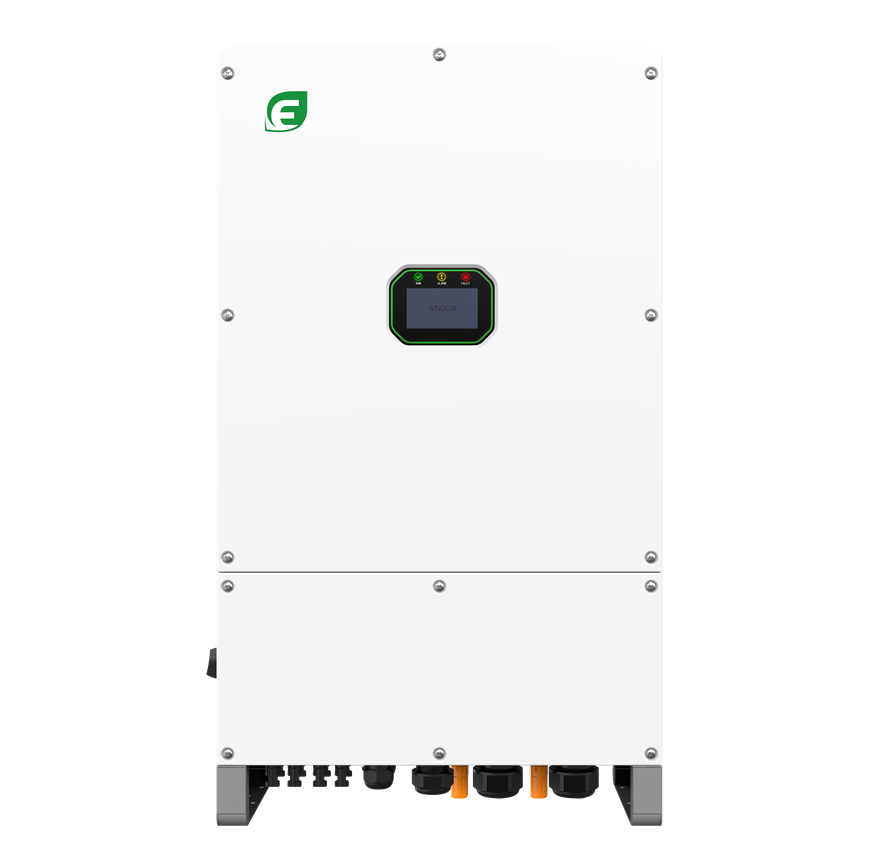
Three power ratings (40, 50, 60 kW) in one IP66 chassis. Integrates PV input, battery management, and on-grid/off-grid AC output. Designed for commercial rooftops, off-grid sites, and harsh outdoor environments.
IP rating
IP66
Max efficiency
98%
PV max
UP to 120 kWp
All-in-one integration

PCS+DCDC+MPPT+STS+EMS, 5 in 1

At 40-60kW the temptation is to default to indoor architecture with separate cabinets. The 40-60kW hybrid consolidates PV input, battery management, transfer switching, and EMS into a single IP66 outdoor enclosure.

PV array

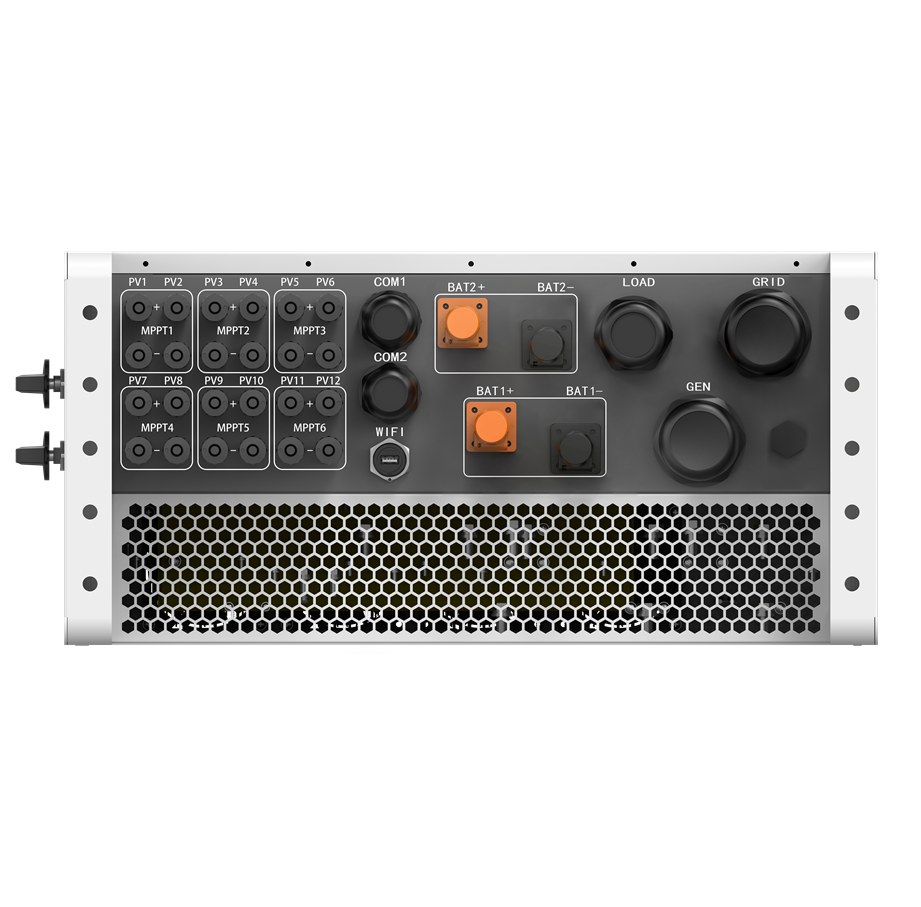
6 MPPT inputs

Battery

LFP / NMC 

AC grid

3-phase 400 V

Genset

Optional input

Critical load

On / off-grid
One outdoor enclosure consolidates PV conversion, battery DCDC, on/off-grid switching, and EMS.
Core capabilities

Outdoor-rated, integrated, multi-mode.

Four properties built into every EDCS module — whether sized for PV input, battery management, or EV charging output.

Highest power density at IP66 outdoor rating.

60kW continuous output in an IP66 chassis sized for outdoor wall or pad mount. 6 independent MPPT trackers handle complex commercial PV arrays. Replaces equivalent indoor inverter + battery PCS + ATS cabinet rooms at this power level.

< 10 ms grid/off-grid transfer.

Shared control bus between PV input, battery, and AC output enables sub-10 ms switching. Critical loads on the off-grid side stay powered through grid loss events. Within the ITIC curve for sensitive IT equipment.

98% peak efficiency.

Three-level topology with optimized switching frequencies. Higher efficiency than the 60 kW class — economies of scale on power components benefit the larger SKUs. Stable across the 30%-100% load range.

Five operating modes for commercial plants.

Self-consumption · peak shaving · time-of-use arbitrage · grid-tied / off-grid / hybrid mode · genset support. EMS coordinates PV/battery/grid/genset priorities automatically. For commercial PV plants, the typical config combines time-of-use arbitrage with peak demand reduction.

kEY Specifications

Core technical specifications.

For full technical parameters across communication, control, environment, and certifications, download the complete datasheet below.

AC Output
On-grid rated power
60 kW
Off-grid rated power
60 kW
Rated AC voltage
400 V (3-phase, 3P+N+PE)
Transfer time
< 10 ms · grid to off-grid and back
PV input
Number of MPPTs
6 independent MPPT trackers
PV max input current
40A×10
Battery
Battery voltage range
150–950Vdc (wide range covers LFP / NMC / Sodium-ion)
Common
Max efficiency
98% · 3-level topology
IP rating
IP66 (outdoor wall or pad mount)
Operating temperature
−40 to 60°C (derate above 50°C)
Cooling method
Smart forced-air with sealed compartment design
Compliant Standards
EN 50549-1&2/EN 50549-10, VDE-AR-N 4105, NTS 631, CEI 0-21, C10/11, NRS 097-2-1, TOR, G99, IEC 62116, IEC 61727, MEA, PEA, etc.
Safety & EMC Standards
IEC/EN 62109-1/-2, IEC/EN 61000-6-2/-4
Engineer FAQ

Questions engineers actually ask.

From procurement shortlists to commissioning — the ten questions we hear most often during technical due diligence.

40/50 kW: Designed for small-to-mid commercial buildings or large estates (2,000–5,000 m² facility, 60–100 kWp PV).
60 kW: Ideal for mid-size commercial sites, light industrial facilities, or as a modular unit in expanding parallel systems (5,000–7,500 m² facility, 100–120 kWp PV).

Yes, up to 5 units in parallel for a combined 600 kW-1 MW system. Parallel coordination is over CAN bus — units automatically share load and synchronize phase. Single master controller per parallel group.

LFP and NMC out of the box, with field-tested support for sodium-ion (validated since 2024) and lead-acid for retrofit applications. The wide DC voltage range (150-950 V) accommodates most commercial battery configurations.

For specific battery integration, contact engineering with your BMS protocol — we support Modbus RTU/TCP and CAN-based BMS communication. Most major BESS battery brands are pre-integrated.

Genset input is optional. When enabled, the inverter coordinates genset start/stop based on battery SoC and load demand. Configurable strategies: battery-first (genset only when SoC drops critical), genset-supplement (genset runs during peak demand), or scheduled (genset on time-of-use schedule).

The inverter handles voltage and frequency synchronization automatically — no separate ATS or paralleling controller needed.

Both supported. Wall-mount uses included bracket — load-bearing wall required (cement, concrete, or steel structure). Pad-mount uses optional base frame — concrete pad with conduit penetrations.

For wall mounting, allow 600 mm clearance on top and 300 mm on each side for service access. Cable entry is from the bottom panel.

Standard 2-year warranty on the inverter, extendable to 5 or 10 years through service contracts. Includes remote diagnostics support via the unit’s built-in 4G/LAN communication interface — most issues resolved without on-site visit.

For agricultural and off-grid sites with limited service access, we recommend the 5-year warranty option with annual remote health checks and quarterly firmware updates.

Application Cases

Related Case Studies​

Explore our real-world case studies to see how our energy Storage solutions empower global industries.

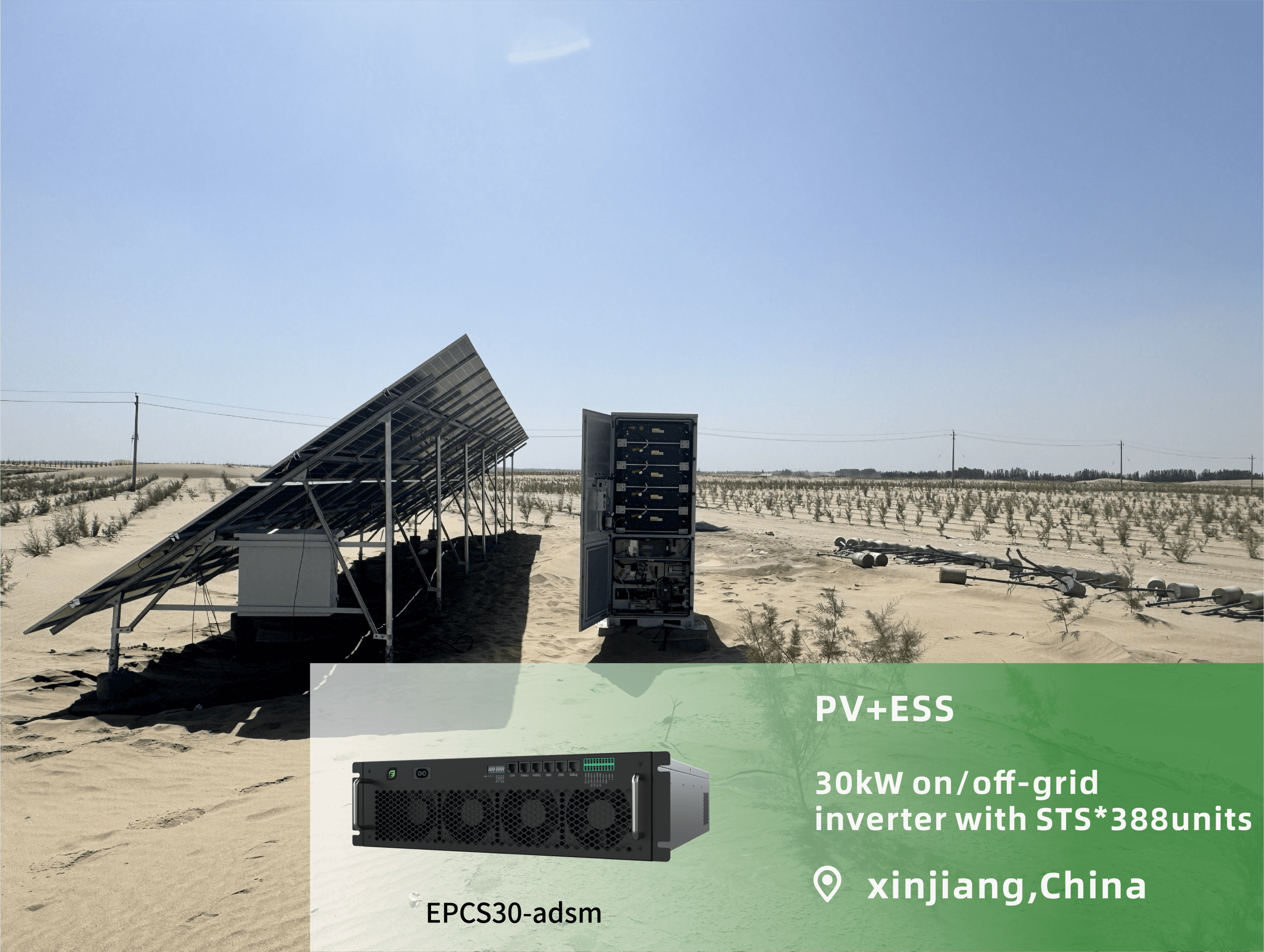
Desert Irrigation with Solar-Plus-Storage | Enjoypowers 30kW On/Off-Grid PCS Powers Sustainable Desert Control in Xinjiang

Project Background In Hotan, Xinjiang, combating desertification requires reliable power for large-scale irrigation systems. This project implemented a solar-plus-storage solution to provide continuous energy for water pumps, replacing traditional diesel generators and advancing green energy adoption. Project Challenges Remote Location: Limited or no grid access in desert areas Intermittent Solar

Read More »
Ready to spec it?

Send your site specs. We'll size the right hybrid in 48 hours.

Share your PV array size, battery configuration, load profile, and grid conditions. Our application engineers respond with a sized configuration and bill of materials within 2 business days.